

Sedona Hiking Footwear: What to Wear on Red Rock Trails
Choose Sedona hiking footwear by trail surface, season, and ankle support. Compare grip trade-offs, socks, and a compact packing plan for red rock trails.
On this page
Sedona trails rarely serve up one surface type. A route can start on packed dirt, climb onto smooth sandstone slickrock, and finish on loose gravel or rocky steps, all within a couple of hours. That variety is why the useful question isn't which shoe is best, but which shoe handles the surfaces you'll actually walk on.
A guiding company that leads hikes in Red Rock Country suggests sturdy mid- or high-top shoes with rubber lugged outsoles, well broken in before your trip, and advises against soles made only of foam as well as flip-flops or sport sandals as primary hiking footwear.
Treat everything below as editorial guidance rather than a rulebook. Fit, ankle strength, and how much weight you carry matter more than any single feature, so use these trade-offs to narrow your options and then test them on a local hill before you fly.
Match the Shoe to the Surface: Slickrock, Gravel, and Rocky Scrambles
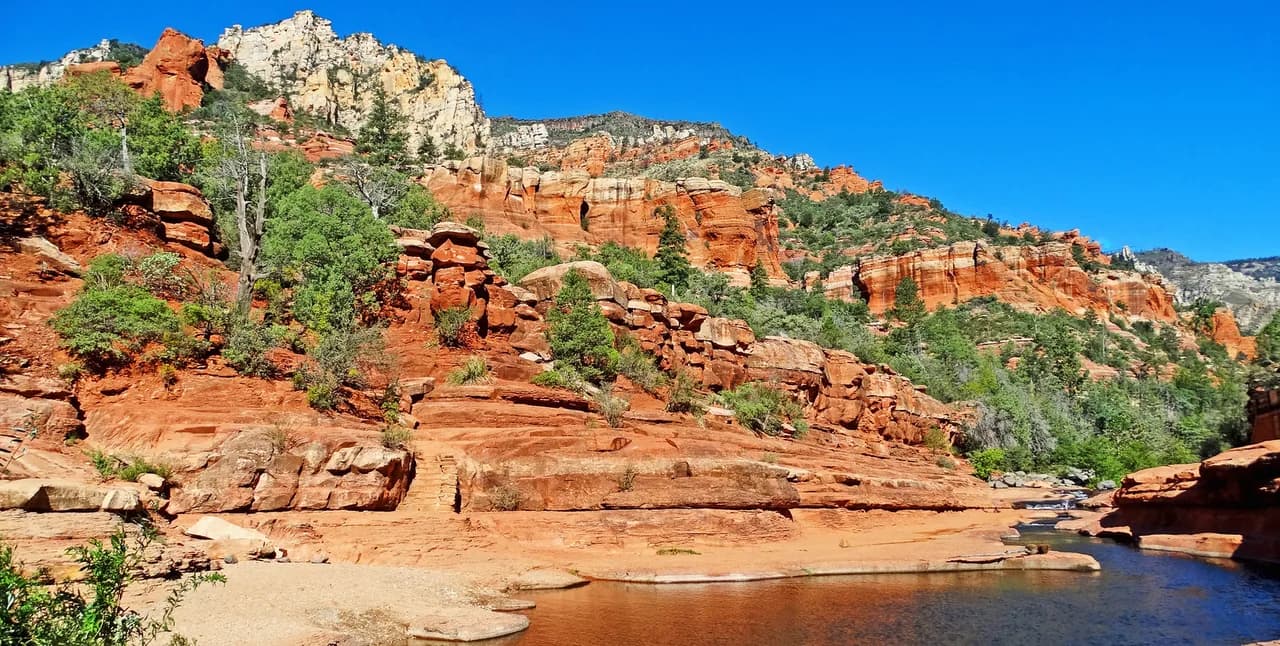
Smooth sandstone, often called slickrock, behaves unlike any dirt trail. It can be steeply pitched, it offers few edges to catch, and it becomes genuinely slick when wet or dusty. Many trails in the Sedona area involve hiking over slickrock, and at least one outdoor writer notes that good traction matters and that ordinary sneakers fall short.
Between the slickrock sections you'll find loose gravel, embedded rocks, and short scrambles where a stable platform underfoot matters more than pure stickiness. For that mix, a broken-in hiking shoe with a rubber outsole and a protective toe area gives you a workable compromise. If your trip centers on one long slickrock scramble, weight your choice toward the sandstone end of the trade-off.
Cathedral Rock and similar routes pair steep slickrock with rocky steps, while flatter loops around the base of the formations stay mostly on dirt and gravel. Knowing the dominant surface of your main hike is the single most useful piece of pre-trip research for your feet.
Traction Trade-Offs: When Aggressive Lugs Help and When They Don't
The common assumption that more traction always means more grip does not hold on smooth sandstone. Deep, hard lugs have less rubber in contact with the rock, so a softer, less aggressive sole can feel more planted on slickrock. One packing guide puts it plainly: despite the popular belief that more traction equals more grip, shoes with less traction can grip slippery sandstone surfaces better.
That same softer sole is a liability on loose gravel and steep dirt, where you want edges and lug depth to bite. The practical answer for a mixed itinerary is a moderate lug pattern on a rubber outsole, plus deliberate foot placement on rock. If you own two pairs, bring the grippier pair for gravel-heavy days and the smoother-soled pair for slickrock scrambles.
This is exactly why a single best shoe is the wrong frame. A trail runner with a shallow tread can be excellent on sandstone and mediocre on a loose descent, while an aggressive mountaineering-style sole does the reverse. Match the tread to your planned routes and accept a small compromise on the others.
There is no verified trail regulation requiring a particular sole type in Sedona, so treat this as a comfort and safety trade-off you decide for yourself. If a guided trip is part of your plan, check the operator's own gear page for any footwear requirements before you pack.
Ankle Support and Rock Protection: Low-Cut vs Mid- and High-Top
Low-cut trail shoes are lighter and cooler, which matters in desert heat, but they leave your ankle and the top of your foot more exposed to rolling on loose rock. Mid- and high-top shoes add stability and shield your ankle from scrapes against sandstone edges. The right choice depends on your ankle history, your pack weight, and how much scrambling your itinerary includes.
If you carry a heavier daypack or plan long descents over embedded rock, mids offer a reasonable middle ground between weight and support. If your trips are short, flat, and mostly on dirt, a low-cut shoe with a protective toe cap is often enough. Whichever height you pick, break the shoes in before the trip; new stiff boots on a rocky descent are a common source of misery.
Consider the sharp-rock factor separately from the ankle factor. Sedona's limestone and sandstone edges can bruise a thin-soled shoe, so a slightly stiffer midsole with a rock plate-style layer underfoot protects your feet on long rocky stretches, even if you choose a low-cut upper.
If you're planning a jeep tour before or after your hikes, footwear choices shift slightly toward something easy to get on and off and secure in an open vehicle. You can review options for what to pack for a Sedona jeep tour while keeping your hiking shoes as the primary trail pair.
Heat, Sun, and Breathability: Summer Footwear and Sock Choices
Sedona's summer afternoons can reach the mid-80s to high 90s Fahrenheit from June through September, based on the monthly averages published by a local visitor resource. That heat pushes breathability up your priority list: mesh panels, thin tongue padding, and moisture-wicking socks help more than any single shoe feature. Start hikes early to avoid the hottest part of the day and let your footwear dry between outings.
Sun protection extends to your feet only if you cover them. Breathable shoes with socks beat sandals for long hikes because they shield your skin from direct sun and dusty grit, and a wide-brim hat, UPF layers, and sunscreen handle the rest. A guided hiking operator recommends UV-protective shirts and sunscreen for hikes year-round, which is a useful reminder that sun exposure is not a summer-only issue at this elevation.
If you overheat easily, consider a lighter shoe for summer and save the heavy boots for cooler months. Just keep the rubber outsole trade-off in mind regardless of season. The calculation is straightforward: more ventilation and less weight versus less ankle support and less rock protection.
Socks Matter as Much as Shoes: Wool Blends and Blister Prevention
Sock choice does more for blister prevention than most shoe features. Wool and wool-blend hiking socks manage sweat and reduce friction better than cotton, which holds moisture against the skin. A Sedona-based hiking operator recommends padded wool hiking socks and explicitly cautions against cotton for exactly this reason.
A light or medium cushion works well for most desert hikes, and a thin liner sock underneath can help if you're prone to hot spots on long descents. Bring at least two pairs for a multi-day trip so you always have a dry set. On dusty trails, fine grit works into fabric, so shake socks out before putting them back on.
Fit matters as much as material. A sock that bunches at the heel or slips at the arch creates the friction that leads to blisters, no matter how good the wool is. Make sure your hiking socks match the shoe's volume so your foot stays locked in place on descents.
Creek Crossings and Swimming Holes: Water Sandals as a Secondary Pair
Oak Creek and Slide Rock draw swimmers and waders, and there water sandals shine. Use them as a secondary pair specifically for creek crossings, wading, and swimming, not as your main hiking shoe. A guided hiking operator states that water shoes or sport sandals are welcome as a secondary pair for creek crossings and swimming, while flip-flops and sport sandals are not acceptable as primary hiking footwear.
The reason is simple: a sandal exposes your toes to sharp rock and offers minimal support on uneven ground. Packing a light pair of water sandals alongside your hiking shoes covers both needs without much weight. Just stash them in a dry bag or outside pocket so wet footwear doesn't dampen the rest of your gear.
If your Sedona plans include a swim stop on a hot day, the sandals also double as camp shoes or town shoes. Keep them separate from your hiking pair so the hiking pair stays dry and clean for the next morning.
Season-by-Season Footwear Adjustments
Spring and fall bring mild days with crisp mornings and cool evenings, so footwear that breathes at midday while keeping your feet warm on an early start works best. Light layers and a light jacket are worth packing alongside your hiking shoes, and the local visitor resource lists highs from the mid-60s to low 80s Fahrenheit in spring and mid-60s to low 70s in fall. For a detailed month-by-month breakdown, see what to wear to Sedona in November if your trip lands in late fall.
Summer is when breathability earns its keep. Highs run from the mid-80s to high 90s Fahrenheit in June through September, again according to the published monthly averages, so mesh shoes and thin wool socks are the sensible pairing. The same source notes lows in the 50s and 60s Fahrenheit, which means an early start can still feel cool before the sun builds.
December through February turns colder, with highs from the mid-50s to low 60s Fahrenheit and occasional overnight snow dustings, per the same monthly table. Keep the same hiking shoes but add wool socks, a beanie, and gloves for early starts, plus a waterproof layer if precipitation is in the forecast. Slickrock and dirt can freeze overnight, so a sole with decent grip matters even more on winter mornings.
If your trip falls in early spring, the April transition brings warmer afternoons and cold mornings, so pack the same breathable shoe plus a warmer sock option. A dedicated guide to what to wear to Sedona in April can help you fine-tune the layer count alongside your footwear.
A Compact Packing Example for a Three-Day Sedona Hiking Trip
For a three-day trip focused on day hikes, pack one pair of broken-in mid-top hiking shoes with a rubber lugged outsole, plus a light pair of water sandals for creek stops and evenings in town. Add three pairs of padded wool socks, so you always have a dry set even if one gets dusty or damp. Wear the heaviest pair on the plane to save space and keep it from being crushed.
Round out the footwear kit with a thin sock liner if you blister easily, a small brush or cloth to knock dust off before re-lacing, and a spare pair of insoles if you use them. Your other layers, including a wide-brim hat, UPF shirt, and light jacket, follow the same early-start logic as the shoes. For a full trip checklist beyond footwear, see the Sedona packing list.
If your itinerary includes a vortex hike, the footwear advice stays largely the same, though those routes often involve short scrambles and uneven rock. It is worth checking what to wear for Sedona vortex hikes to align your layers with the sun exposure and walking pace typical of those outings.
What to Leave Behind
Leave flip-flops, foam-only soles, and everyday running sneakers at home as trail footwear. Foam compresses on sharp rock and offers little grip on sandstone, and open-toed sandals expose your feet to scrapes. A hiking operator's packing list explicitly rules out flip-flops and sport sandals as primary hiking shoes for exactly these reasons.
Also skip brand-new boots straight out of the box. Unbroken footwear plus rocky descents is a reliable recipe for hot spots, so wear your hiking pair on a few local walks before your trip. If you buy new shoes for Sedona, buy them at least a couple of weeks ahead.
You can also leave behind heavy, high-cuff boots if your entire itinerary is short and flat, because they add weight and heat without much benefit on smooth, gentle trails. Match the shoe to the plan rather than to an abstract idea of what serious hiking requires.
Check the Forecast Before You Pack
Sedona sits at high elevation, and the gap between morning and afternoon temperatures is wide in every season. Check the forecast in the days before you leave and again the night before each hike, then adjust socks, layers, and shoe choice accordingly. A dry, mild week calls for a lighter shoe and thinner socks, while a cold snap pushes you toward the mid-top pair and a warmer sock.
Summer afternoons can also bring monsoon-season storms, which change how slickrock feels underfoot. If rain is in the forecast, slickrock becomes genuinely slippery, so a grippier, softer sole and extra caution on exposed rock are the sensible adjustments. Pack a light rain shell so wet weather doesn't cut your hike short.
For the wider clothing picture, including sun protection and hydration gear, the Sedona packing list is a good backstop after your footwear decisions are made.
Plan Your Sedona Footwear Around Your Routes
Start with your main hikes, identify whether they lean toward slickrock, gravel, or a steady mix, and pick a broken-in shoe with a rubber outsole that fits that balance. Then layer in socks, water sandals for creek stops, and seasonal extras like wool layers or a rain shell. The whole kit should be adjustable, because Sedona weather can shift between an early start and an afternoon finish.
Check the forecast before you fly, and confirm any guided-tour gear expectations directly with the operator you book. With footwear sorted, the rest of your Sedona packing list falls into place quickly.
Frequently Asked Questions
What shoes should I wear for hiking in Sedona?
A broken-in mid- or high-top hiking shoe with a rubber lugged outsole is a practical starting point for mixed terrain. On smooth sandstone, a softer, less aggressive sole can actually grip better than a deep-lug design, while loose gravel and rocky scrambles favor more edge and tread. Match your main route's dominant surface rather than choosing one shoe for everything.
Are hiking boots or trail shoes better for Sedona?
It depends on your itinerary. Trail shoes are lighter and cooler for short, flat hikes and hot days, while boots offer more ankle stability and rock protection for long descents and loaded daypacks. Many hikers land on a mid-top as a middle ground that covers both. Break in whichever you choose before the trip.
Do I need ankle support for Sedona trails?
Not universally, but it helps on routes with loose rock, steep descents, or scrambling. If you have weak ankles, carry a heavier pack, or plan long rocky hikes, a mid- or high-top shoe adds useful stability. On smooth, gentle trails, a well-fitting low-cut shoe with a protective toe area is often sufficient.
Are sandals okay for Sedona hikes?
Not as your primary hiking shoe. Sandals expose your toes to sharp rock and offer little support on uneven ground, and one guided hiking operator in the area does not allow flip-flops or sport sandals on its outings as primary footwear. Water sandals are useful as a secondary pair for creek crossings and swimming.
What socks should I wear hiking in Sedona?
Padded wool or wool-blend hiking socks manage sweat and reduce friction better than cotton, which holds moisture against the skin. Bring at least two pairs on a multi-day trip so you always have a dry set, and consider a thin liner sock if you blister easily. Make sure the sock volume matches your shoe so your foot stays locked in on descents.
Should I bring water shoes for Oak Creek?
Yes, if your plans include wading, swimming, or creek crossings. Water sandals or water shoes work well as a secondary pair and pack down small. Keep them separate from your hiking shoes so the hiking pair stays dry for the next day's trail.
How do I pack for a three-day Sedona hiking trip?
Bring one broken-in pair of hiking shoes, one light pair of water sandals, and three pairs of wool socks. Add a wide-brim hat, UPF layer, light jacket, sunscreen, and a refillable water bottle, plus a small brush or cloth for dusty shoes. That kit covers most day hikes without overpacking.
Do I need different shoes for summer versus winter in Sedona?
The same hiking shoe can work year-round, but your socks and layers should change. Summer calls for maximum breathability and thin wool socks, while winter benefits from warmer socks, a waterproof layer, and extra caution on potentially icy morning rock. Check the forecast before packing, because conditions swing widely between morning and afternoon.
Sources
Free: The Ultimate Packing Cheat Sheet
A carry-on capsule wardrobe, the complete packing checklist, layering made simple, and what to wear by season — one printable page you'll use on every trip.
You might also like


Continue reading
More guides you'll find useful


