

Sedona Packing List: What to Wear for Red Rock Trails
Pack smart for Sedona with high-desert layers, sun protection, and trail-ready footwear for red rock hikes, town days, and cool desert evenings.
On this page
Sedona weather month by month
Typical conditions from 30 years of daily weather data — use it to see how much to pack for the month you are travelling.
| Month | High / low | Days with rain | Days with snow | Afternoon humidity | Daylight |
|---|---|---|---|---|---|
| January | 10° / -2°C (50° / 28°F) | 2 in 10 days | 1 in 10 days | 39% | 9.9 h |
| February | 12° / -1°C (53° / 31°F) | 2 in 10 days | 1 in 10 days | 38% | 10.7 h |
| March | 16° / 2°C (60° / 36°F) | 2 in 10 days | 1 in 10 days | 33% | 11.7 h |
| April | 20° / 6°C (68° / 43°F) | 1 in 10 days | Rare | 23% | 12.9 h |
| May | 26° / 11°C (78° / 52°F) | 1 in 10 days | Rare | 18% | 13.8 h |
| June | 32° / 17°C (89° / 62°F) | Rare | Rare | 13% | 14.3 h |
| July | 33° / 20°C (91° / 67°F) | 2 in 10 days | Rare | 26% | 14.1 h |
| August | 31° / 19°C (88° / 65°F) | 2 in 10 days | Rare | 30% | 13.3 h |
| September | 29° / 15°C (83° / 60°F) | 1 in 10 days | Rare | 27% | 12.2 h |
| October | 23° / 9°C (73° / 48°F) | 1 in 10 days | Rare | 27% | 11.1 h |
| November | 16° / 3°C (60° / 37°F) | 1 in 10 days | Rare | 31% | 10.1 h |
| December | 10° / -2°C (50° / 29°F) | 2 in 10 days | 1 in 10 days | 38% | 9.7 h |
Travelling on specific dates? Use our What to Wear Planner for the weather, outfits and a packing list for your exact days in Sedona.
Averages for 1991-2020, modelled from Copernicus ERA5-Land and ERA5 reanalysis via Open-Meteo open data (CC BY 4.0), adjusted to Sedona's elevation. Modelled afternoon highs can read 1–2°C below airport weather-station records.
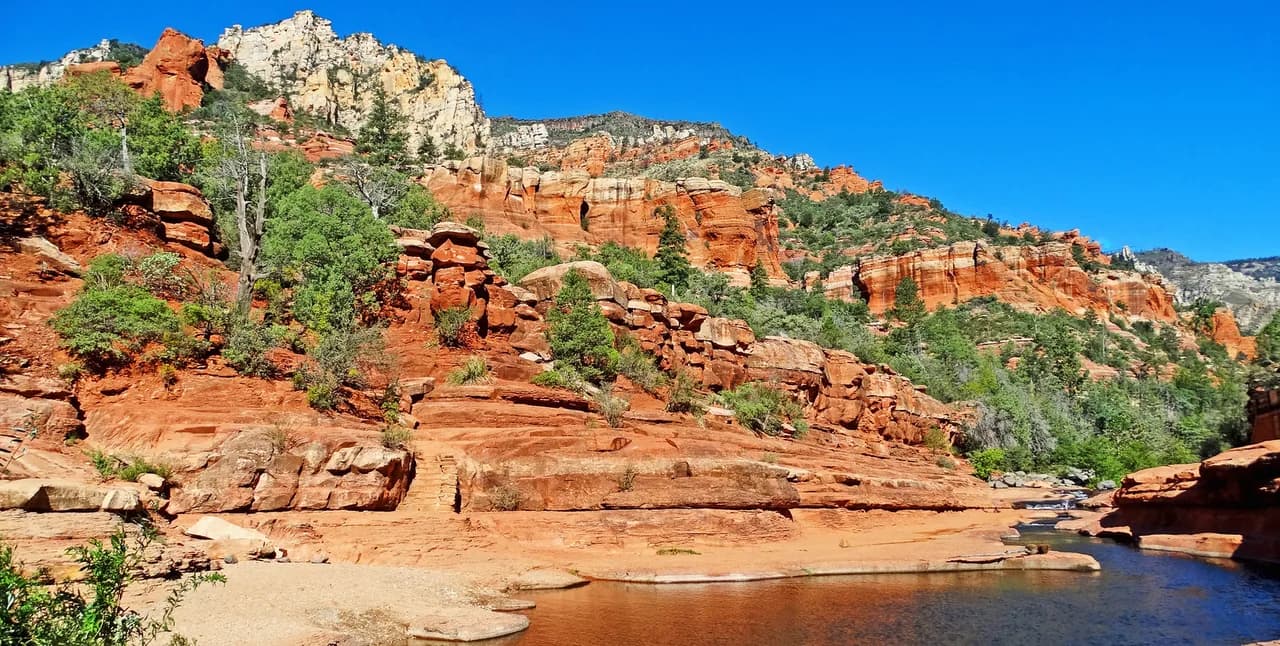
Sedona sits at roughly 4,300 feet in Arizona's high desert, where bright sun and dry air often mask how quickly temperatures fall once the sun drops. That combination makes layering the single most important packing decision, ahead of any specific item. Whether you visit during a mild winter day or a hot summer morning, the same three-part system of base layer, insulating midlayer, and windproof shell keeps you comfortable from trailhead to dinner.
This guide focuses on packing and what to wear for red rock country rather than a sightseeing itinerary. It separates editorial suggestions, like which fabrics work best on sandstone, from verified trail essentials published by local sources. By the end, you will know what to bring for a 3-day trip, what to leave at home, and how to check conditions before you fly.
Sedona Packing Essentials at a Glance
Start with a compact core that works in any season: moisture-wicking base layers, a warm midlayer, a packable wind or rain shell, broken-in trail shoes, wool or synthetic socks, a wide-brim hat, sunglasses, sunscreen, lip balm, a reusable water bottle, and a small daypack. These items cover the temperature swings, strong sun, and dry air that define Sedona. Add season-specific pieces from the sections below rather than duplicating gear.
For day hikes, Visit Sedona's Ten Essentials framework groups navigation, sun protection, insulation, illumination, first-aid supplies, fire, repair tools, nutrition, hydration, and emergency shelter into one system. A lightweight version fits in a small daypack and covers the unexpected, such as a twisted ankle or an unplanned longer route. The Ten Essentials list is a planning reference, not a requirement, so adjust it to your activity and comfort level.
High-Desert Layering System
Sedona's elevation drives sharp day-to-night temperature swings, so build your outfit in three layers you can add or remove quickly. A synthetic or merino base layer moves sweat away from skin; a fleece or lightweight puffer traps warmth; and a windproof shell blocks the breeze that picks up on exposed saddles. This system lets you start a morning hike in a jacket, strip to a tee by noon, and pull the layers back on for sunset.
Fabric choice matters more than brand. Cotton holds moisture and cools you down when wet, which is uncomfortable on a windy overlook, so save cotton tees for town days and choose merino or polyester for trails. A compact puffer that stuffs into its own pocket takes little room and handles the coldest part of a winter or shoulder-season morning. Add a beanie and light gloves for sunrise hikes, since fingers and ears feel the chill first.
Sun Protection Year-Round
Sedona's high altitude and clear skies mean UV exposure stays strong even on cool or overcast days. Pack sunglasses with UV protection, a wide-brim hat, and reef-safe sunscreen, and reapply on exposed skin during long hikes. Long-sleeve sun shirts and lightweight pants reduce the amount of sunscreen you need and protect against brush along narrower trails. The Ten Essentials guidance from Visit Sedona specifically lists sunglasses, sunscreen, and a hat as core sun-protection items, with long sleeves and pants as additional options.
Dry desert air also affects lips, eyes, and skin, so add lip balm with sunscreen, moisturizer, and lubricating eye drops if you wear contacts. A small tube of hand salve helps after handling rough sandstone. These accessories weigh almost nothing and prevent the cracked lips and dry skin that catch many visitors off guard.
Footwear for Red-Rock Trails
Sedona trails mix packed dirt, loose scree, and slickrock surfaces that demand different things from a shoe. A trail runner or light hiker with a grippy rubber outsole handles most routes, while a sturdier boot adds ankle support and protection on rockier descents. Avoid brand-new footwear; break shoes in before the trip to prevent blisters on the first mile. Pair them with wool or moisture-wicking socks that cushion impact and dry quickly after a stream crossing.
Slickrock is grippier than it looks when dry, but polished sections and loose gravel still require attention. If you visit during a winter cold snap, overnight frost or light snow can leave trails slick in shaded areas, so consider optional traction devices as an editorial suggestion rather than a requirement. Checking recent trail reports before you go is the most reliable way to decide whether to pack them.
Winter Packing Decisions
Sedona winters tend to bring daytime temperatures in the mid-40s to low-60s Fahrenheit and evening temperatures in the mid-20s to mid-30s Fahrenheit, according to Arroyo Pinion, an Ascend Collection Hotel. That translates to roughly 7 to 16 Celsius by day and about -4 to 1 Celsius at night. Light snowfalls occur a handful of times between December and February and typically melt within hours to a day. Pack accordingly: a lightweight puffer or insulated jacket, base layers for early starts, gloves, a beanie, and warm socks. Because the sun is still bright, keep sunglasses and sunscreen in your daypack even on cold mornings.
For evenings, add a cozy sweater or a nicer top if you plan dinners in Uptown or Tlaquepaque, along with comfortable pants. A scarf or neck gaiter helps on windy days, and a book or journal suits a fireplace evening. If your trip includes a jeep tour or a vortex hike, see what to wear to Sedona in November for a focused packing look at late-autumn conditions.
Spring and Fall Packing Decisions
Spring and fall bring some of the most variable conditions, with warm afternoons and chilly mornings that reward a true layering system. Expect wind on exposed trails and carry a light shell that blocks it without adding much weight. Sun exposure is intense on open routes, so a hat and long sleeves reduce the need to reapply sunscreen constantly. If your trip falls in April, see what to wear to Sedona in April for month-specific layering and footwear notes.
Transition-season evenings cool off quickly, so a compact puffer or fleece earns its place in your bag even when the forecast looks mild. Light gloves and a beanie take up little space and make sunrise photography or stargazing more comfortable. As with any season, check the forecast before you leave and adjust the exact pieces rather than the whole system.
Summer Packing Decisions
Summer in Sedona means heat and the chance of monsoonal moisture, so plan for early starts and afternoon storms. Breathable, quick-drying fabrics beat cotton, and a light rain shell adds little weight while keeping you dry if a cell moves through. Carry more water than you think you need, along with electrolytes for longer hikes. A wide-brim hat and high-SPF sunscreen are non-negotiable on exposed routes.
A small umbrella or pack cover protects your daypack and electronics during a sudden shower. Choose light-colored clothing that reflects sun, and consider a cooling towel or bandana for hot afternoons. Since summer conditions vary by elevation and year, check the local forecast the morning of your hike rather than relying on historical averages.
Activity-Specific Gear
For a day hike, add the Ten Essentials to your layering system: a map or offline navigation app, extra snacks, a headlamp, a basic first-aid kit, and an emergency shelter such as a space blanket. A scenic drive needs less, but keep water, sunglasses, and a layer in the car for spontaneous stops. A town day calls for comfortable walking shoes, a light sweater, and a small crossbody bag for shopping and gallery browsing.
A Sedona jeep tour adds dust and sun exposure, so pack a bandana or buff, sunglasses with a secure strap, and a jacket for open-air vehicles. For a vortex hike, that link covers terrain and pacing in more detail. For any activity, a compact daypack keeps your hands free and your essentials organized.
Compact Trip-Length Packing Example for a 3-Day Visit
For a 3-day trip, pack two moisture-wicking base layers, one fleece or puffer, one wind or rain shell, two pairs of hiking pants or shorts, three pairs of wool socks, one pair of broken-in trail shoes, and one pair of comfortable town shoes. Add a wide-brim hat, sunglasses, sunscreen, lip balm, a water bottle, a small first-aid kit, and a headlamp. This fits in a carry-on backpack and covers hiking, dining, and a scenic drive.
Use the rule of three for tops and two for bottoms, then adjust for the season; winter swaps shorts for warm pants and adds gloves and a beanie, while summer swaps the puffer for extra water capacity. Laundry access at your lodging can cut the list further. If you tend to run cold, add one extra midlayer rather than duplicating everything.
What to Leave Behind
Leave the formal wardrobe at home unless you have a specific dinner reservation that calls for it, and skip heavy cotton jeans for serious trail days since they soak up sweat and dry slowly. Multiple pairs of shoes beyond one trail pair and one town pair add weight without much benefit.
Avoid packing more camera gear than you will carry, and leave drone equipment unless you have confirmed it is allowed where you plan to fly it. A single versatile jacket beats three single-purpose layers. If you are unsure about an item, ask whether it serves at least two activities on your trip.
Before-Departure Weather Check
A few days before you fly, check the Sedona forecast for the dates of your visit, then recheck the morning you hike. Look at the daily high and low, wind speed, and precipitation chance rather than a single number. Snow and frost can change trail conditions quickly in winter, so a last-minute check may prompt you to add traction or switch to a lower-elevation route. For winter visits, the Arroyo Pinion guide notes that trails can be slick after snowfall or overnight frost and that early morning frost can make exposed rock slippery.
Pack a small stuff sack for layers you shed, and keep your rain shell at the top of your bag for quick access. If you are comparing destinations or seasons, an Austin packing list shows how another high-heat climate changes the same layering decisions. For a colder urban trip, a Boston packing list offers a different baseline. The goal is not to predict the weather but to be ready for the range your trip can bring.
Plan Your Visit
Sedona rewards a light, flexible bag built around layers, sun protection, and trail-ready footwear. Start with the core essentials, then add winter warmth or summer sun management as your dates require. Check the forecast before departure and adjust the specific pieces rather than the whole system.
With a compact packing list and a quick weather check, you can focus on the red rocks instead of your luggage. Whether you hike, drive, or wander town, the right layers and shoes make every day more comfortable.
More packing guides for USA
- Sedona Hiking Footwear: What to Wear on Red Rock Trails
- What to Pack for a Sedona Jeep Tour: Dust, Wind, and Sun
- What to Wear for a Sedona Spa Day: Comfortable Layers and Packing List
- What to Wear for Sedona Vortex Hikes
- What to Wear in Sedona in April: Spring Packing Guide
- What to Wear in Sedona in November: Layers for Cool Days and Cold Nights
- What to Wear Stargazing in Sedona: Layer for a Cold Desert Night
- What to Wear to Sedona Ruins and Archaeological Sites
- Napa Packing List: Wine Country Layers and Smart-Casual Outfits
- Santa Fe Packing List: Layers, Sun Gear, and Walking Shoes
Frequently Asked Questions
What should I pack for Sedona?
Pack moisture-wicking base layers, a warm midlayer, a wind or rain shell, broken-in trail shoes, wool socks, a wide-brim hat, sunglasses, sunscreen, lip balm, a water bottle, and a small daypack. Add a puffer, gloves, and a beanie for winter, or extra water capacity and quick-drying clothes for summer. Adjust the list to your activities and the forecast.
What to wear in Sedona in April?
April brings variable conditions, with warm afternoons and chilly mornings, so a three-part layering system works well. Bring a light shell for wind, a hat and long sleeves for sun, and comfortable trail shoes. For month-specific packing decisions, see the dedicated April guide.
Does it snow in Sedona in November?
Snow is possible but not guaranteed in November. Check the local forecast close to your travel dates and plan layers that handle both mild days and cold evenings.
Does it snow in Sedona in December?
December falls within the period when light snowfalls are most likely, and accumulation usually melts quickly. Pack warm layers, gloves, a beanie, and shoes with good grip for frosty or slick trails, and verify current conditions before hiking.
What shoes to wear in Sedona?
Choose a trail runner or light hiking boot with a grippy outsole for mixed dirt, scree, and slickrock. Break them in before your trip and pair them with wool or moisture-wicking socks. For icy winter mornings, consider optional traction devices based on trail reports.
What are the ten essentials for Sedona?
Visit Sedona lists navigation, sun protection, insulation, illumination, first-aid supplies, fire, repair tools, nutrition, hydration, and emergency shelter. A lightweight version fits in a daypack and covers common trail emergencies. Treat the list as a flexible framework rather than a fixed requirement.
Do I need hiking boots in Sedona?
Sturdy hiking boots help on rocky or steep trails by adding ankle support and protection, but many visitors hike comfortably in trail runners. The best choice depends on your route, fitness, and ankle stability. Whichever you choose, make sure the shoes are broken in and have reliable traction.
What should I leave behind when packing for Sedona?
Leave heavy cotton jeans for serious trail days, extra pairs of shoes beyond one trail pair and one town pair, and formal clothing unless you have a specific reservation that requires it. Skip bulky camera gear you will not carry and drone equipment unless you have confirmed where it is allowed.
Sources
Free: The Ultimate Packing Cheat Sheet
A carry-on capsule wardrobe, the complete packing checklist, layering made simple, and what to wear by season — one printable page you'll use on every trip.
You might also like


Continue reading
More guides you'll find useful


