
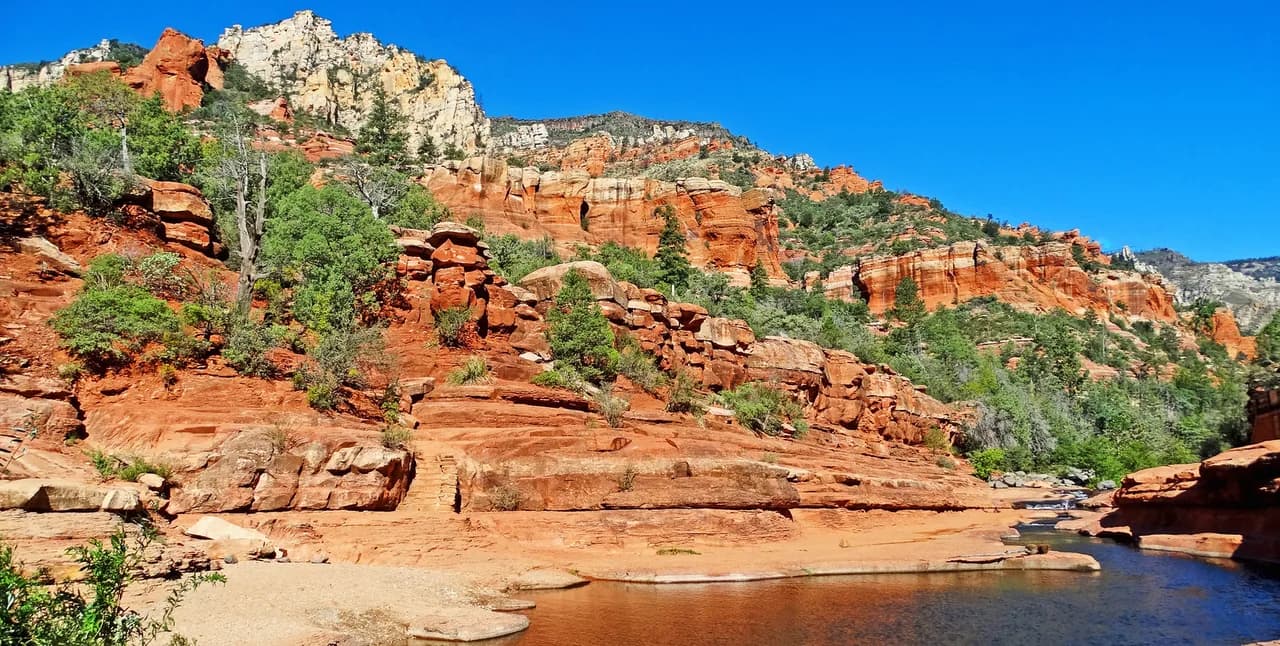
What to Wear to Sedona Ruins and Archaeological Sites
Packing and clothing advice for Sedona-area ruins: grippy closed-toe footwear, sun protection, breathable layers, and a compact daypack list for uneven terrain.
On this page
Clothing for Sedona-area ruins is less about any dress code and more about handling exposed rock, dusty surfaces, and long stretches in the sun. Several sites, including Honanki and Palatki, involve unpaved paths or rough access roads, while Montezuma Castle has a paved visitor trail. Treat every recommendation here as a practical suggestion, then confirm current site rules with the managing agency before you go.
The bigger packing decisions come down to three things: footwear that grips uneven ground, fabrics that breathe in the heat, and a layer that handles a cool morning start. A compact Sedona packing list built around mix-and-match pieces works better here than a separate outfit for each day. What you leave in the car matters too, because sandals, heels, and heavy denim are the usual regrets.
Why Ruins Outings Need Different Packing Than Other Sedona Days
A ruins visit often combines two environments in one trip: a rough drive in and a slow walk around fragile structures. Honanki sits west of Sedona along an unpaved forest road, and the approach can be difficult after bad weather or when the road has not been graded, so visitors driving independently should plan for rough access with a vehicle that has good clearance. Palatki and Honanki both involve walking around cliff dwellings and rock art rather than strolling a paved loop.
Guided archaeology tours from Sedona can cover similar ground. Operators such as Pink Jeep Tours run an ancient ruin tour that includes a walk of roughly three-quarters of a mile on an uneven trail, so comfortable walking shoes are recommended for that outing. Because routes, schedules, and availability can change, confirm the walking distance and terrain with the specific operator before booking. That single detail, more than any style choice, decides what goes on your feet.
Respect is part of the packing decision as well. Stay on designated trails, never climb on walls, avoid touching or marking rock art, and leave pottery fragments and stone tools exactly where you find them. Clothing that keeps you on the trail rather than scrambling over structures, such as shoes with grip and a layer you do not mind getting dusty, supports that approach.
Key Packing Principles for Ruins Days
Start with sun defense, because many archaeological sites sit in open, exposed settings with little natural shade. A wide-brimmed hat, sunglasses, and sunscreen applied before you arrive handle the basics, and a lightweight long-sleeve shirt adds coverage without bulk. Lighter colors generally feel more comfortable than dark ones in direct sun.
Choose breathable fabrics over heavy ones: cotton or a quick-drying synthetic blend will handle heat and dust better than thick denim or a stiff canvas. The trade-off is that very thin fabrics snag more easily on brush near trails, so a slightly denser weave often lasts better through a full day. If you carry a small daypack, a light layer folded inside covers a cool morning or an afternoon breeze without weighing you down.
Think in terms of a short walk versus a rough trail. Montezuma Castle National Monument has a paved path through a grove of sycamore trees, so comfortable everyday shoes are generally enough there. Honanki and Palatki call for sturdier closed-toe shoes because the ground is unpaved and uneven, and mixing these two kinds of visits in one day is where people usually mispack.
Historical Seasonal Tendencies and What to Check Before You Go
Sedona sits in high desert, and the area historically swings between cool mornings and warm afternoons, with summer heat and winter chill at the extremes. Those are general seasonal tendencies rather than a forecast, so check the current forecast for Sedona and the Verde Valley in the days before your visit. Site elevation and canyon location can shift conditions noticeably from one ruins site to the next.
Plan clothing that handles a temperature swing without a full wardrobe change: a base layer you can wear alone when it warms up, plus a light outer layer for the start of the day. In cooler months, add a warm mid-layer and something wind-resistant, and in warmer months prioritize shade and hydration over extra clothing. For late-fall layering in more detail, this guide to what to wear to Sedona in November walks through the same variables.
Check three things the day before: the local forecast, current road conditions on any unpaved approach, and the site's own visitor information. Confirm current hours, access, and pass requirements with the managing agency rather than relying on older trip reports, since these details change.
Footwear for Uneven, Unpaved Ground
Closed-toe shoes with a grippy tread are the single most useful item for ruins visits beyond a paved path. Trail conditions at sites like Honanki and Palatki include packed dirt, loose gravel, and rocky sections, and open sandals or flip-flops leave your toes and ankles exposed to both. If you are deciding between two pairs, bring the one with the firmer sole and better traction.
Try your shoes on with the socks you plan to wear, and break them in before the trip rather than on the trail. A common trade-off is weight versus support: lighter shoes feel cooler in the heat, while a slightly more substantial shoe handles rocky ground and longer walks better. Whichever you choose, keep it to one sturdy pair for ruins days so you are not juggling options.
Assess conditions rather than assuming. Unpaved roads west of Sedona can vary considerably after storms, and a route that was recently graded may still be rough. If you are not comfortable with the approach or the trail surface, a guided tour removes that uncertainty because the operator handles the driving and knows the current route.
Sun Protection for Open, Exposed Sites
Rock art panels and cliff dwellings often face open sky, so build your sun kit before you leave the car. A hat with a brim, sunglasses, and sunscreen belong in the daypack, and a light long-sleeve layer gives coverage you can add or remove as conditions change. Lighter colors are generally more comfortable than dark ones because they absorb less heat.
For tours, operators commonly recommend carrying water, sunscreen, and a hat, especially during warmer months. A refillable bottle beats a single disposable one because you can top it up before the drive out to a remote site, and several ruins locations have limited or no drinking water on site. Treat these as sensible habits rather than formal requirements.
Pack a small sun kit you can carry on the trail: a compact tube of sunscreen, a lip balm, and a packable hat that survives being folded into a bag. If you are combining ruins with other Sedona outdoor time, the what to wear for Sedona vortex hikes guide covers similar exposure decisions for exposed rock terrain.
Respectful Attire and Conduct at Fragile Sites
Modest, comfortable outdoor clothing is the practical default, and it also keeps you from treating a heritage site like a photo set. Archaeological sites are fragile and culturally significant, so staying on designated trails, not climbing on walls, and not touching or marking rock art are part of being appropriately dressed and prepared. Follow posted rules and any instructions from rangers, volunteers, or guides.
Leave artifacts alone. Pottery fragments, stone tools, and other objects should stay exactly where they are found, and moving even a small item can destroy archaeological context. Clothing choices support this: pockets you do not fill with souvenirs, and a bag you keep closed so nothing falls out near a site.
Approach tribal and cultural sites with the same care you would bring to any living heritage place. The Sinagua, ancestral to the Hopi, lived at Honanki from roughly 1100 to 1300, and the Yavapai and Apache later left their own marks on the area. Dressing for a full day outdoors rather than a quick photo stop naturally supports slower, more respectful visits.
What to Bring in a Daypack
A small daypack covers a half-day ruins outing without becoming a burden. Pack water, a hat, sunscreen, sunglasses, and a light layer, then add a snack and a charged phone. Technical gear, trekking poles, and formal clothing are unnecessary for the typical visitor walking designated paths and short trails.
If you are heading to a remote site like Honanki, add a little more water than you think you need, since there has historically been no drinking water available there and only a vault-type toilet. For paved sites such as Montezuma Castle, a lighter bag is usually enough. Matching your daypack to the site rather than the whole trip avoids overpacking.
Keep the bag organized so you are not digging around at a trailhead. A single pouch for sun protection and a separate spot for water makes it easy to restock between sites, especially if you visit more than one ruin in a day. Check local forecasts for rain chances before you leave, since unpaved roads can change quickly after a storm.
What to Leave Behind
Leave sandals, flip-flops, and high heels at the hotel if you plan to walk beyond a paved path. Heavy denim is also worth reconsidering in warm weather, because it dries slowly and feels stiff on dusty, uneven ground. Anything you would not want snagged on brush or coated in red dust belongs in the suitcase, not the daypack.
Skip formal clothing and anything dry-clean only. Ruins visits are outdoor, dusty, and often sunny, and there is no dress code that calls for a nicer outfit. If you have evening plans in Sedona afterward, keep a separate change of clothes in the car rather than wearing it to the site.
Leave behind heavy coolers, oversized bags, and anything you cannot carry comfortably for an hour or two. Remote sites have limited facilities, and a bulky bag is awkward on narrow paths around cliff dwellings. A compact setup also makes it easier to follow trail rules and keep your distance from fragile walls and rock art.
Sample Three-Day Ruins Packing List
For a three-day Sedona trip focused on ruins, build around three tops, two bottoms, one sturdy pair of closed-toe shoes, and one light layer. Choose colors that work together so every top matches both bottoms, which cuts the number of pieces without repeating an outfit. Add sleepwear, socks and underwear for three days, and a single hat.
The sun kit is the second half of the list: sunscreen, sunglasses, a brimmed hat, and a refillable water bottle. Pack a small daypack to carry it, plus a light long-sleeve shirt for coverage on exposed sections. If your trip includes a mix of sites, the one sturdy pair of shoes covers the unpaved ones while everyday shoes handle a paved path like the one at Montezuma Castle.
Finish with practical extras: a bandana or small towel for dust, a phone charger, and a layer for cool mornings. Everything should fit in a carry-on if you wear the bulky shoes on travel days. Adjust quantities for a longer trip by adding one more top and one more pair of socks rather than expanding the shoe collection.
Before You Go Checklist
Check the forecast for Sedona and the Verde Valley within a few days of your visit, and look at morning and afternoon temperatures separately so you can plan layers. Historical seasonal patterns are useful context, but they are not a forecast and should not replace a current check. If rain is possible, verify road conditions for any unpaved approach before you drive out.
Confirm site-specific rules directly with the managing agency. Palatki has used a timed reservation system, and a Red Rock Pass or another qualifying federal recreation pass has also been required for each vehicle, so visitors should verify current reservation and pass requirements before arriving. Montezuma Castle visitors view the cliff dwellings from the designated trail rather than entering them, which affects how much walking and standing you should plan for.
Pack the night before so you are not making decisions in the dark, and set out shoes, hat, sunscreen, and water where you can grab them. If you are visiting in a shoulder season, pair this list with month-specific guidance for late fall or spring to fine-tune your layers. Then enjoy the sites slowly and leave them as you found them.
Plan Your Visit
Packing for Sedona-area ruins comes down to a small set of decisions: grippy closed-toe shoes, breathable clothing, a real sun kit, and a light layer for temperature swings. Match those to whether your site has a paved path or an uneven, unpaved trail, and you will be comfortable without overpacking.
Before you go, verify current hours, road conditions, reservation requirements, and pass rules with the managing agency, and check the local forecast rather than relying on seasonal averages. Treat every clothing suggestion here as a practical starting point, then let the site's own guidance and the day's conditions shape the final call.
Frequently Asked Questions
What shoes should I wear to Sedona ruins?
Closed-toe shoes with a grippy sole are the most practical choice for sites with uneven, unpaved trails, including Honanki and Palatki. A paved path like the one at Montezuma Castle is easier on everyday shoes. If you only bring one pair, bring the one with firmer support and better traction.
Do I need a hat and sunscreen at Sedona archaeological sites?
Yes, they are worth carrying because many ruins sit in open, exposed settings with limited shade. A brimmed hat, sunglasses, and sunscreen cover the basics, and a light long-sleeve layer adds coverage you can adjust through the day. Bring water as well, especially for remote sites with no drinking water available.
Is there a dress code for Sedona ruins?
There is no published dress code for these sites. The practical approach is modest, comfortable outdoor clothing that keeps you cool and covered, plus shoes suited to the terrain. Respectful conduct matters more than style: stay on designated trails, do not climb on walls, and do not touch or mark rock art.
Should I bring a jacket to a Sedona ruins visit?
A light layer is a good idea because high desert mornings are often cool even when afternoons warm up. In cooler months, add a warmer mid-layer and something wind-resistant. Check the forecast for Sedona and the Verde Valley shortly before your trip, since conditions can change and canyon locations vary.
What should I leave behind when visiting Sedona ruins?
Leave flip-flops, sandals, and high heels at the hotel if you plan to walk beyond a paved path. Heavy denim, formal clothing, and anything you would not want dusty or snagged on brush are also better left behind. Carry a compact daypack instead of a bulky bag.
Do I need reservations for Palatki Heritage Site?
Palatki has used a timed reservation system, and a Red Rock Pass or another qualifying federal recreation pass has been required for each vehicle. Requirements can change, so confirm current reservation and pass rules with the managing agency before your visit rather than relying on older trip reports.
Can I visit Honanki without a tour?
Honanki can be visited independently when the site and access road are open. The approach is an unpaved forest road that can be rough after storms or when it has not been graded, so check road conditions and consider a vehicle with good clearance. Confirm current hours and access before you drive out.
How do I check conditions before a Sedona ruins visit?
Check the local forecast within a few days of your trip, verify current road conditions for any unpaved approach, and confirm site hours and rules with the managing agency. Guided tours can remove some of that uncertainty because the operator handles the drive and knows the current route. Historical climate patterns are context, not a forecast.
Sources
Free: The Ultimate Packing Cheat Sheet
A carry-on capsule wardrobe, the complete packing checklist, layering made simple, and what to wear by season — one printable page you'll use on every trip.
You might also like


Continue reading
More guides you'll find useful


