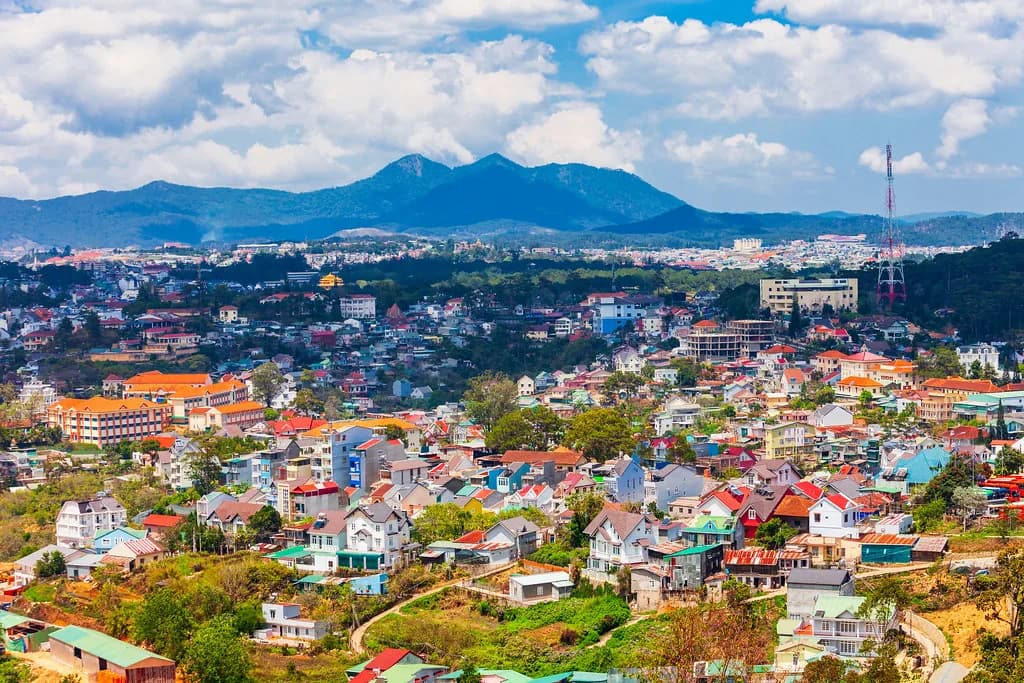
What to Wear in Da Lat in June: Rainy-Season Packing
June packing for Da Lat means rain shells, quick-dry layers, and cool-evening warmth. Build a small kit that copes with wet streets and misty highland air.
On this page
Da Lat in June: the weather in numbers
Typical June conditions from 30 years of daily weather data, split into early, mid and late month so you can match them to your travel dates.
| Dates | Early Jun (1–10) | Mid Jun (11–20) | Late Jun (21–30) |
|---|---|---|---|
| Afternoon high | 25°C (76°F) | 24°C (75°F) | 24°C (74°F) |
| Night-time low | 18°C (64°F) | 18°C (64°F) | 18°C (64°F) |
| Feels like (afternoon) | 26°C (79°F) | 25°C (78°F) | 25°C (77°F) |
| Range of afternoon highs | 23–26°C | 22–25°C | 22–25°C |
| Days with rain | 9 in 10 days | 9 in 10 days | 9 in 10 days |
| Afternoon humidity | 68% | 70% | 70% |
| Average wind | 6 km/h | 7 km/h | 8 km/h |
| Daylight | 12.7 h | 12.7 h | 12.7 h |
What this means for your suitcase
- Warm days: T-shirts and light trousers or skirts, plus one light layer.
- Heavy downpours are common — quick-dry clothes and shoes or sandals that cope with puddles.
Travelling on specific dates? Use our What to Wear Planner for the weather, outfits and a packing list for your exact days in Da Lat.
Averages for 1991-2020, modelled from Copernicus ERA5-Land and ERA5 reanalysis via Open-Meteo open data (CC BY 4.0), adjusted to Da Lat's elevation. Modelled afternoon highs can read 1–2°C below airport weather-station records.
Da Lat sits in Vietnam's Central Highlands, and June falls inside the region's rainy season. For packing, that reframes the whole task: instead of choosing one outfit for the day, you are managing dampness and cool air that can shift from misty morning to wet evening.
The goal is a small set of clothes that dries fast, a shell that keeps rain off, and shoes you can walk in when surfaces are slick. The sections below work through those decisions one at a time rather than repeating a single checklist.
What June Tends to Feel Like
Travel sources consistently place June within Da Lat's rainy season, and some describe rainfall as happening pretty much daily at the height of the wet months. One seasonal overview notes that the city sits at about 1,500 meters above sea level and is cooler than most Vietnamese cities, with misty mornings and breezy evenings. Treat this as a historical tendency rather than a forecast for your dates.
Local rainy-season guidance goes further for June and July, describing rain that continues day and night, a sharp drop in temperatures, and nights that can feel cold. That framing matters for packing: you are preparing for cool, wet conditions rather than tropical heat, and the cold usually arrives after dark.
The practical takeaway is a one-day range rather than one outfit. Mornings can be misty and cool, afternoons milder, and evenings wet and chilly enough that you will want a dry layer waiting for you.
The Layering Formula: Base, Mid Layer, Rain Shell
Think in three removable pieces: a light, quick-dry base layer against your skin, a warm mid layer you can add or shed, and a packable rain shell on top. Guidance for the warmer months in Da Lat recommends cool, sweat-absorbent clothing plus a light jacket or sweater in case the weather changes, which is exactly the flexibility a wet highland day rewards.
Three thin layers dry faster than one heavy jacket. If your base gets damp, you swap it, keep the mid layer on for warmth, and let the shell handle the rain.
Choose a shell that folds small enough to live in your day bag. In June the rain can arrive while you are already out, so carrying it beats leaving it at the guesthouse.
Rain Gear That Earns Its Space
A raincoat or poncho is the core item. Local advice for the wet months flags raincoats, wool hats, and glasses among essential items, and warns that getting around in this weather, especially by motorbike, is difficult. A thigh-length raincoat keeps more of your legs dry on a motorbike or during a sudden downpour than a short jacket does.
A compact umbrella pairs well with a shell for town days, though it is less useful on a moving motorbike. A thin beanie or light scarf travels small and takes the edge off a cool, wet evening.
Add a dry bag or a couple of light stuff sacks for electronics, phone, and a spare layer. On wet transit days, keeping one dry change of clothes sealed away is the difference between a comfortable evening and a soggy one.
Footwear: Grip, Drainage, and Comfort
June footwear is a trade-off rather than a single correct answer. Shoes with deep tread help on wet, uneven ground near waterfalls and lake paths, while a lighter pair with drainage holes dries faster if you are mostly on paved city streets. For wet-weather walking around Da Lat's waterfalls, the same balance of grip and drying speed applies.
Many travelers pair one closed, grippy shoe for wet walks with one quick-drying option for city days, plus sandals for short errands. If you plan steeper valley walks or canyoning, extra support and grip matter more than cushioning, but this is a comfort choice, not a formal requirement.
Whichever pair you bring, pack dry socks and consider a second insole. Wet shoes overnight are common in June, and a spare insole lets one pair dry while you wear the other.
Fabric Choices That Dry Fast
Local guidance favors light, sweat-absorbent clothing with a light jacket or sweater for changing temperatures. That points toward synthetic blends, thin merino, and lightweight technical fabrics over heavy cotton and thick denim, which hold water and dry slowly.
For bottoms, a quick-dry or lightweight synthetic pant handles drizzle and damp seating better than denim. If you want jeans for photos in town, save them for an evening when rain is not expected.
Wool and fleece stay warm even when slightly damp, which makes them a better mid layer than a bulky cotton hoodie. A thin wool beanie also packs small and helps on cool, wet evenings.
Evening and Misty-Morning Outfits
For a misty morning, start with a quick-dry base, add a light sweater, and carry the shell. A compact warm accessory such as a beanie or a light scarf handles the cool air without taking up much space.
For a cool wet evening, an easy combination is a long-sleeve quick-dry top under a fleece or light sweater, with a rain shell and water-resistant trousers. This is an editorial suggestion for comfort, not a dress code for any venue.
Keep one dry outfit folded in a dry bag for the evening. If you spend the afternoon in rain, changing into dry layers in the late afternoon makes dinner or a market visit far more enjoyable.
Indoor Backup Days: Cafes, Museums, and the Market
With rain likely on most June days, it helps to plan clothing for indoor time as well. Da Lat's June overview suggests indoor cafes, museums and galleries such as the Lam Dong Museum, and Da Lat Market as sensible stops when rain sets in.
For those days, pack a light layer you can remove indoors and a small quick-dry cloth to wipe down wet arms and legs. Sitting damp in a breezy indoor space is uncomfortable, so a change of socks and top helps.
A compact day bag with a waterproof section keeps a phone, wallet, and a dry layer separate from wet rain gear. That one habit covers market browsing, cafe stops, and museum visits without repacking.
A Compact Packing Example for a Short Trip
For a three- to four-day trip, think in categories rather than exact outfits. Clothing: two quick-dry base tops, one warm mid layer, one packable rain shell, one pair of quick-dry trousers, one pair of shorts for warmer afternoons, and one evening outfit kept dry. Footwear: one grippy closed shoe, one pair of sandals, and two pairs of socks with a spare insole.
Weather protection: a compact umbrella, a beanie or light scarf, and a dry bag for electronics. Small extras: a quick-dry towel, a few plastic bags for wet items, and a light daypack with a waterproof cover.
If your trip leans toward waterfalls or canyoning, trade one city outfit for a second quick-dry layer and confirm with your operator what they provide, since equipment policies vary by company. For a trip focused on town, cafes, and the market, a single reliable rain shell covers most situations.
What to Leave Behind
Leave the heavy winter coat and the bulky cotton hoodie at home; both take space and dry slowly. Layering thin pieces does more for a cool, wet June day than one thick garment.
Skip non-drying fabrics such as thick denim and heavy canvas if you only have room for one or two bottoms. Also leave behind shoes that stay wet for days, and any footwear you would not want muddy.
If your travel dates land in January instead, the packing logic shifts toward cooler, drier layers, so what to wear in Da Lat in January is a better starting point to compare.
Before You Go: Check the Forecast, Not Just the Averages
Historical June patterns describe a tendency, not the weather you will actually get. In the days before departure, check a current forecast for Da Lat and adjust how much rain gear and how many warm layers you pack.
Check whether your accommodation provides an umbrella or raincoat, and whether your planned activities include equipment such as canyoning gear. Confirming those details directly with the provider avoids packing duplicates.
If the forecast shows a drier stretch, you can drop one rain layer and add a warmer evening piece. If it shows persistent rain, prioritize drying speed over variety.
Plan Your Visit
For June in Da Lat, the core decisions are a quick-dry base layer, a warm mid layer, a packable rain shell, and footwear that balances grip with drying speed. Keep one dry outfit sealed away and plan an indoor backup for the wettest afternoons.
Use the historical patterns as a starting point, then check the current forecast before you pack. If your dates shift to a neighboring month, the May and July guides cover different conditions.
Frequently Asked Questions
Does it rain every day in Da Lat in June?
June falls within Da Lat's rainy season, and travel sources describe rainfall as frequent, sometimes as near-daily. That is a historical tendency rather than a guarantee, so check a current forecast for your specific dates before deciding how much rain gear to pack.
How cold does Da Lat get in June?
Historical sources describe June as cool rather than hot, with the coldest air arriving in the evening and after heavy rain. Because published ranges vary between sources, check a current forecast close to departure and pack a warm mid layer you can add or remove.
Do I need rain boots in Da Lat in June?
Rain boots are a common suggestion for the wet months because they keep feet dry in standing water. They are an editorial recommendation rather than a requirement, and many travelers do fine with a water-resistant shoe plus dry socks.
Can I wear shorts in Da Lat in June?
Shorts can work for warmer afternoons, but June evenings tend to be cool and wet, so pack trousers or a quick-dry bottom as well. A light layer and rain shell matter more than the length of your shorts.
What shoes are best for Da Lat in June?
A grippy closed shoe helps on wet, uneven paths near waterfalls and lakes, while a lighter quick-drying pair suits paved city days. Bringing a spare insole and dry socks lets one pair dry while you wear the other.
How many outfits should I pack for a few days in Da Lat in June?
For three to four days, two quick-dry tops, one warm mid layer, one rain shell, two bottoms, and one dry evening outfit cover most situations. Packing by category rather than by planned outfit keeps the bag small and the drying time manageable.
Is June a good time to visit Da Lat?
June suits travelers who accept wet conditions in exchange for lush scenery and full waterfalls. If dry, clear days matter more to you, a different month may fit better.
Sources
Free: The Ultimate Packing Cheat Sheet
A carry-on capsule wardrobe, the complete packing checklist, layering made simple, and what to wear by season — one printable page you'll use on every trip.
You might also like


Continue reading
More guides you'll find useful