
What to Wear in Da Lat in May: Layers and Rain Gear
Packing for Da Lat in May means mild days with cool mornings, mist and passing showers. Plan layers, a light rain shell, and shoes for damp streets.
On this page
Da Lat in May: the weather in numbers
Typical May conditions from 30 years of daily weather data, split into early, mid and late month so you can match them to your travel dates.
| Dates | Early May (1–10) | Mid May (11–20) | Late May (21–31) |
|---|---|---|---|
| Afternoon high | 26°C (78°F) | 25°C (77°F) | 25°C (76°F) |
| Night-time low | 18°C (64°F) | 18°C (64°F) | 18°C (64°F) |
| Feels like (afternoon) | 27°C (81°F) | 27°C (80°F) | 27°C (80°F) |
| Range of afternoon highs | 24–27°C | 23–27°C | 23–26°C |
| Days with rain | 8 in 10 days | 9 in 10 days | 9 in 10 days |
| Afternoon humidity | 62% | 65% | 67% |
| Average wind | 4 km/h | 5 km/h | 5 km/h |
| Daylight | 12.5 h | 12.6 h | 12.6 h |
What this means for your suitcase
- Warm days: T-shirts and light trousers or skirts, plus one light layer.
- Heavy downpours are common — quick-dry clothes and shoes or sandals that cope with puddles.
Travelling on specific dates? Use our What to Wear Planner for the weather, outfits and a packing list for your exact days in Da Lat.
Averages for 1991-2020, modelled from Copernicus ERA5-Land and ERA5 reanalysis via Open-Meteo open data (CC BY 4.0), adjusted to Da Lat's elevation. Modelled afternoon highs can read 1–2°C below airport weather-station records.
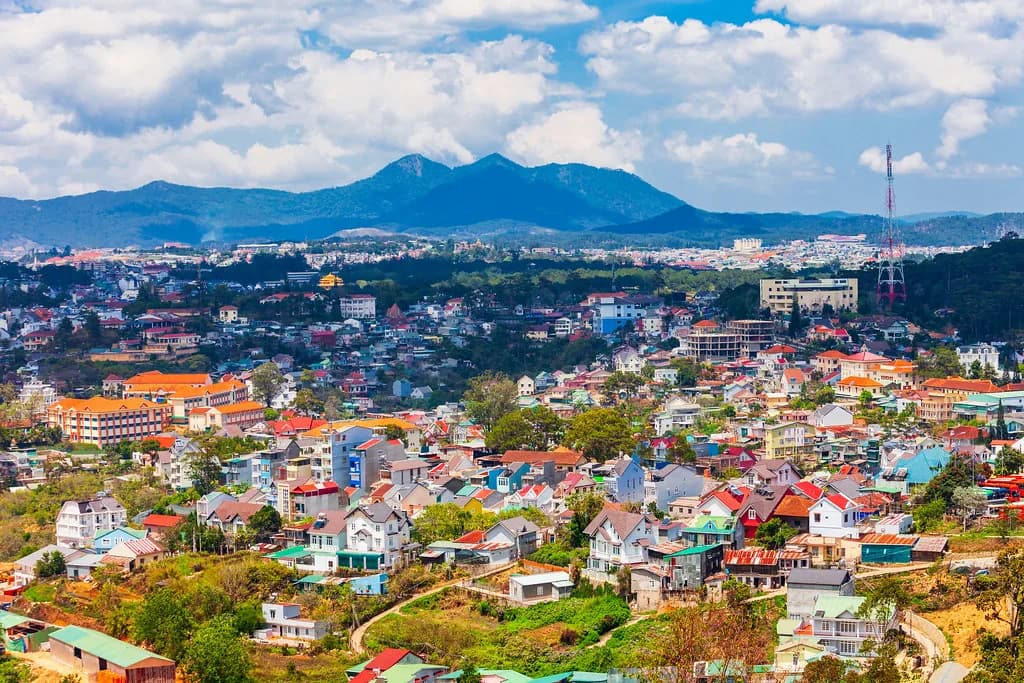
Packing for Da Lat in May is less about choosing summer or winter clothes and more about building one outfit that copes with a day of temperature swing. The city sits on the Lang Biang Plateau in Lam Dong Province, and the elevation is what keeps mornings and evenings cool even when afternoons feel comfortably warm. Mist and light fog are part of the texture of a May morning, and brief showers are a normal seasonal tendency rather than a fixed daily schedule.
That combination rewards layers you can add and remove rather than a single heavy garment you either wear all day or carry all day. Conditions shift hour to hour, so the practical goal is a small set of pieces that work together: a breathable base, one thin insulating layer, rain protection, and footwear that copes with damp streets. Treat everything here as an editorial starting point, not a dress code or a list of requirements.
Why May Is a Layering Problem, Not a Hot-or-Cold Problem
Published seasonal guidance for Da Lat describes May as mild, with cool mornings and evenings, comfortably warm afternoons, light fog, and brief showers. Temperatures are reported in a range of roughly 15°C to 27°C (about 59°F to 81°F), with the caveat that the month sits at the peak of the dry season from roughly December to May. Read those figures as historical tendencies, not as a forecast for your dates.
The summer framing of May through September is described differently again by Dalat Trip, which notes changeable weather often summarized as all four seasons in a day, cold nights, mist, and rainy conditions, with a raincoat and umbrella recommended. Both descriptions point the same direction for packing: plan for variation within a single day rather than settling on one uniform. If you prepare only for warm afternoons, the cool morning and evening hours are where your packing plan breaks down.
The most useful mindset is to pack for the coolest and wettest part of your day, then strip layers back as it warms. Evening guidance for the city leans toward warm clothing and a scarf after dark, plus a foldable hat and umbrella for changeable conditions. That is a reasonable editorial baseline, and it costs very little space if each piece is thin.
Build the Base Layer: Tops and Bottoms That Span the Day
Your base layer does the heavy lifting because it stays on from the cool morning through the warm afternoon. Choose two or three short-sleeve or light long-sleeve tops in a quick-drying synthetic or merino blend, and treat a light long-sleeve as your adjustable piece: sleeves up at midday, sleeves down when the mist rolls in. Two pairs of trousers in a light, stretchy fabric cover most May days better than one heavy pair plus one thin pair, because both options stay wearable if one gets damp.
Bottoms deserve more thought than tops in Da Lat, because you may be sitting on a scooter, walking uneven pavement, or stepping through a wet garden path. Lightweight trousers or trekking pants handle all three; shorts are workable for a warm afternoon but leave your legs exposed during the cool morning and evening stretch. A single pair of shorts in the bag is plenty as a midday option rather than a default.
Two or three tops and two bottoms is a volume that packs into a small cube and still gives you a clean swap if something gets soaked. If you are deciding how that base layer fits into a fuller kit, the wider Da Lat packing list is the place to check how many days of clothing the rest of your bag should cover.
Mid Layer and Outer Layer: One Thin Coat That Works at Midday
The mid layer exists for the cool morning and the cold night, not for the afternoon, so it should be something you can shed and stuff into a day bag without thinking. A thin fleece, a light knit, or a compact packable jacket all do the job; the trade-off is warmth versus bulk, and on a mild plateau trip, packability matters more than maximum warmth. A scarf earns its space more than a second sweater, because it adds noticeable warmth at the neck and weighs almost nothing.
Your outer layer is the piece that decides whether a surprise shower ruins an afternoon or just interrupts it. Something wind-resistant and water-repellent handles mist, light fog, and a passing shower; a fully waterproof shell handles a longer soak but is heavier and less pleasant to wear once the sun returns. There is a genuine trade-off between a shell that breathes for a warm afternoon and one that keeps you dry in a downpour, so pick based on how much time you plan to spend outside rather than on the worst case.
Travelers coming from a colder month should not simply reuse that kit. A January trip to Da Lat is built around genuinely cold mornings and evenings with a different layer count, so what to wear in Da Lat in January will feel like overpacking if you transplant it into May. May needs one insulating layer and reliable rain protection, not a full cold-weather stack.
Rain Protection: Raincoat, Umbrella, or Both
A raincoat and a compact umbrella solve different problems, and that difference is the whole decision. A raincoat keeps your torso and arms dry while leaving both hands free for a phone, a camera, or handlebars, which matters if you are on a scooter or a countryside road. An umbrella is faster to deploy in a short shower when you are already dressed for warm weather, but it is awkward on a motorbike and of little use in wind.
Bringing both is defensible for a longer trip with a mix of city walking and day tours, because each covers the other's weak spot. For a short trip built around the city center, one light raincoat plus a hat usually covers the same ground with less to carry, since a hood does the work an umbrella would. If you dislike carrying anything in your hands while walking, let that preference decide for you rather than packing for an abstract worst case.
Whichever you choose, add one small dry bag or a roll-top stuff sack for anything electronic. This is an editorial suggestion, not a requirement: it costs almost no space, and it is the difference between a wet afternoon being an inconvenience and being an expensive one. Keep it at the top of your day bag so using it is easier than skipping it.
Footwear: Closed Shoes Versus Quick-Drying Sandals
Wet pavement is the main footwear variable in May, and the choice between closed shoes and sandals is really a choice between grip and drying time. Closed shoes with a grippy sole handle slippery steps, uneven paths, and long walking days better, and they keep your feet warmer during a cool morning. The downside is that once a fabric shoe soaks through, it may still be damp the next morning unless it dries overnight.
Sandals with a secure strap dry fast and cope well with shallow puddles, and they are easier to rinse clean after a muddy walk. They offer less protection on rough ground and are cold on a misty morning, so they suit a traveler whose days mix town time with short outdoor stops rather than one planning long hikes. One pair of closed shoes plus one pair of quick-drying sandals covers nearly every May scenario, and the sandals take up little space.
If your plans lean toward trails, streams, and steep ground rather than streets, the footwear balance shifts toward grip and ankle stability. The specific trade-offs for wet rocks, mud, and stream crossings are worth checking against what to wear in Da Lat for a waterfall hike before you commit to a single pair of shoes.
Pack two pairs of socks per walking day in a quick-dry fabric, not cotton. Dry socks are the fastest fix for cold, damp feet, and they weigh less than a spare pair of shoes.
Fabrics That Make Sense and Fabrics That Do Not
Quick-drying synthetics, merino blends, and light technical fabrics are the most cooperative materials for a month with mist and passing showers. They shed light moisture, dry overnight in a guesthouse room, and stay comfortable across a temperature swing. Cotton is not forbidden, but a heavy cotton t-shirt takes far longer to dry and feels cold and clingy once damp, which is a poor combination on a cool evening.
Heavy denim is the piece most likely to frustrate you. Denim is bulky, slow to dry, and uncomfortable when wet, and it gives you no layering flexibility, so it earns little space in a May bag. If you want jeans for an evening out, one pair is a reasonable compromise; two pairs is weight you will resent.
Look at the seams and the weave as much as the label. A light synthetic with taped seams often outperforms an expensive heavy jacket for this kind of trip, because the goal is a fast-drying shell you will actually carry rather than the most durable garment on the market.
A Compact Packing Example for a Three-Day May Trip
This is an editorial example, not a rule, and the quantities are set for three days with a single laundry opportunity. Take three light tops, one of them long-sleeve, two pairs of lightweight trousers or one pair of trousers and one pair of shorts, three or four pairs of quick-dry socks, and three sets of underwear. Add one thin mid layer or scarf, one light rain shell, one small dry bag, and a compact umbrella if you prefer it to a hood.
Footwear for three days is one pair of closed walking shoes worn in transit plus one pair of quick-drying sandals in the bag. Rotate tops on a two-day cycle and let the long-sleeve piece do double duty as a mid layer under the rain shell on the coolest morning. For a longer trip, build from the Da Lat packing list rather than simply multiplying these numbers, since laundry access changes the math more than trip length does.
A tiny repair kit and a couple of zip bags round this out. Neither takes meaningful space, and both solve the small leak or tear that would otherwise dominate a wet afternoon.
What to Leave Behind
Leave the bulky cold-weather clothing at home. A puffer jacket, a heavy parka, or thick fleece layers belong to a different month and a different packing logic; in May they are weight you will carry without wearing. One thin insulating layer covers the coolest morning you are realistically likely to meet.
Leave the second and third pairs of heavy shoes behind as well. Shoes are the heaviest item in most bags, and two pairs total is enough for a short trip once you accept that a wet pair dries overnight in a ventilated room. If you are tempted to bring a third pair, that space buys more value as a dry bag, a spare top, or nothing at all.
Finally, leave behind rain gear you would not actually carry. A heavy poncho that stays folded in your suitcase protects nothing, so a lighter shell you will keep in your day bag is the better trade even if it is technically less waterproof.
Before-Departure Weather Check
Check the forecast for your actual travel dates in the last few days before you fly, not weeks ahead. Seasonal patterns tell you what to prepare for, but they cannot tell you whether your specific three days will be misty and cool or bright and warm, and that difference changes how many warm layers you want. Use a reliable forecast for Lam Dong Province along with the forecast on the booking platform or hotel page you are already using.
Let the final forecast change three decisions: how many warm layers you pack, whether you take the umbrella in addition to the shell, and whether you swap one pair of trousers for a second pair of shorts. Do not let it change your footwear plan unless it shows a genuinely sustained wet spell, because shoes are the hardest item to adjust on arrival.
Recheck once you land as well, since afternoon conditions can shift during a stay. A five-minute check each morning is usually enough to decide whether the rain layer goes in the day bag, and that single habit prevents most of the packing mistakes people make in a changeable month.
Plan Your May Layers Around Flexibility
The core of a good Da Lat May bag is a small, layered system rather than a single bet on hot or cold weather. A breathable base, one thin mid layer, a light rain shell, a scarf, and two considered pairs of shoes cover the range of what the month tends to produce.
Pack for three days with the quantities above, leave the heavy cold-weather gear and extra shoes at home, and confirm the actual forecast in the days before departure. That sequence keeps your bag light and your daily decisions simple once you are on the plateau.
Frequently Asked Questions
What is the weather like in Da Lat in May?
Published seasonal guidance describes May as mild, with cool mornings and evenings, comfortably warm afternoons, light fog or mist, and brief showers rather than constant rain. May also sits at the tail end of a drier stretch that runs roughly December to May, which is why some travelers arrive expecting dry conditions and are surprised by a damp morning. Treat these as historical tendencies, not a forecast for your dates, and check the actual forecast shortly before you travel.
What should I wear in Da Lat in May?
Build a layered outfit: a breathable short-sleeve or light long-sleeve top, lightweight trousers, a thin mid layer such as a fleece, knit, or scarf, and a light rain shell or compact umbrella. Shed the mid layer in the afternoon and add it back in the evening. Quick-drying fabrics work better than heavy cotton or denim, because damp clothing dries faster and feels less cold.
Should I bring a raincoat or an umbrella to Da Lat in May?
It depends on how you will be moving around. A raincoat keeps both hands free, which is useful on a scooter or a countryside road, while an umbrella is quicker for a short shower during city walking. Many travelers take one light raincoat with a hood plus a small packable umbrella, since together they cover each other's weaknesses. Bringing both is reasonable rather than excessive for a longer trip.
What shoes should I pack for Da Lat in May?
Two pairs usually cover a short trip: closed shoes with a grippy sole for walking, uneven steps, and cool mornings, plus quick-drying sandals for puddles and warm afternoons. Closed shoes offer better grip and protection but can stay damp overnight, while sandals dry fast but are cold on a misty morning. This is an editorial suggestion; you do not need specialized footwear for city days.
Do I need warm clothes for Da Lat in May?
You need one genuinely warm layer, not a full cold-weather kit. Mornings and evenings run cool on the plateau, and evening guidance for the city suggests warm clothing and a scarf, so a thin fleece, light knit, or scarf will be used regularly. A puffer or heavy parka is more likely to sit in your suitcase than on your back.
How many outfits should I pack for a three-day trip to Da Lat in May?
A practical editorial example is three light tops, two bottoms, three or four pairs of quick-dry socks, three sets of underwear, one thin mid layer, one light rain shell, and one small dry bag. That lets you rotate tops while one dries and still have a dry layer for a cool evening. Adjust upward only if you will not have laundry access.
Can I wear shorts in Da Lat in May?
Shorts are fine for a warm afternoon, but they leave your legs exposed during the cool morning and evening hours and offer little protection on a wet, muddy path. Packing one pair as a midday option is a reasonable compromise; treating shorts as your default bottom is where most people end up cold. There is no dress rule you need to follow, so this is purely a comfort decision.
What should I leave behind when packing for Da Lat in May?
Leave bulky cold-weather clothing, extra pairs of heavy shoes, and any rain gear you would not actually carry during the day. Heavy denim is also a poor fit for a month with mist and passing showers because it dries slowly and is uncomfortable when damp. Every item you remove frees space for the small dry bag or spare layer that will actually get used.
Sources
Free: The Ultimate Packing Cheat Sheet
A carry-on capsule wardrobe, the complete packing checklist, layering made simple, and what to wear by season — one printable page you'll use on every trip.
You might also like


Continue reading
More guides you'll find useful


