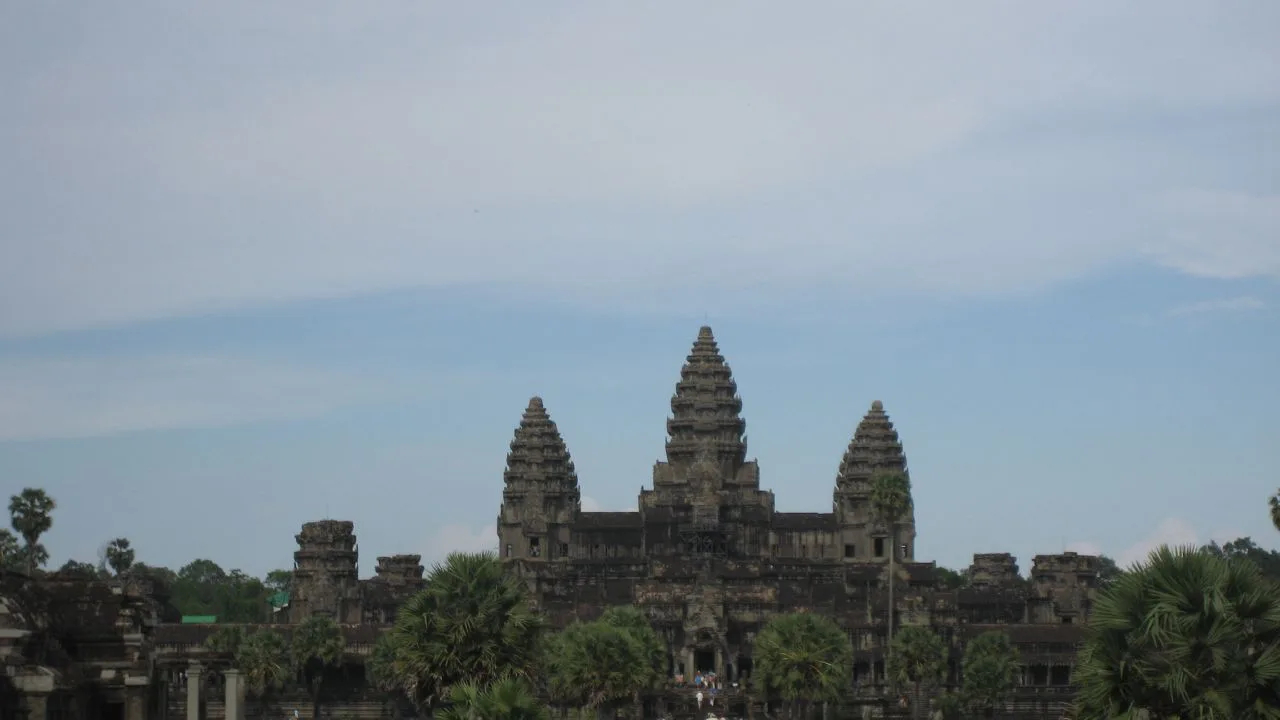
What to Wear in Siem Reap in November: Packing Guide
Plan November outfits for Siem Reap with quick-dry temple layers, a compact rain shell, and footwear for flooded laterite and dusty Angkor circuits.
On this page
Siem Reap in November: the weather in numbers
Typical November conditions from 30 years of daily weather data, split into early, mid and late month so you can match them to your travel dates.
| Dates | Early Nov (1–10) | Mid Nov (11–20) | Late Nov (21–30) |
|---|---|---|---|
| Afternoon high | 30°C (86°F) | 30°C (87°F) | 30°C (87°F) |
| Night-time low | 23°C (73°F) | 23°C (73°F) | 23°C (73°F) |
| Feels like (afternoon) | 33°C (91°F) | 33°C (92°F) | 33°C (91°F) |
| Range of afternoon highs | 28–32°C | 28–32°C | 28–33°C |
| Days with rain | 4 in 10 days | 3 in 10 days | 2 in 10 days |
| Afternoon humidity | 62% | 61% | 57% |
| Average wind | 8 km/h | 8 km/h | 8 km/h |
| Daylight | 11.5 h | 11.4 h | 11.3 h |
What this means for your suitcase
- Hot afternoons: loose, breathable fabrics like linen or cotton, short sleeves and a sun hat.
- Showers on roughly 3 in 10 days — a packable rain jacket or compact umbrella.
- Muggy air — moisture-wicking fabrics beat denim and heavy cotton.
Travelling on specific dates? Use our What to Wear Planner for the weather, outfits and a packing list for your exact days in Siem Reap.
Averages for 1991-2020, modelled from Copernicus ERA5-Land and ERA5 reanalysis via Open-Meteo open data (CC BY 4.0), adjusted to Siem Reap's elevation. Modelled afternoon highs can read 1–2°C below airport weather-station records.
November in Siem Reap is a transition month rather than a single-season one. The dry season is beginning, but the tail of the wet season can still send short showers across temple days, so your bag needs to handle both. Dress for heat and humidity first, then add a light rain layer rather than packing two separate wardrobes.
The practical goal is simple: stay cool, stay covered at sacred sites, and keep your feet comfortable on uneven ground. That means breathable fabrics, temple-appropriate coverage of shoulders and knees, and shoes that cope with both slick laterite and dry, dusty circuits. Most of what follows is editorial suggestion for comfort; actual requirements are set by the sites you visit and the operators you travel with, so check those before you go.
Why November Packing Feels Like Two Seasons in One Trip
Cambodia broadly divides into a dry season and a wet season, and November sits near the handover. Intrepid Travel describes travel from November to May as focused on staying cool through scorching days and muggy nights, with rain arriving as light showers that pass quickly.
Original Travel frames the same split from the other direction, noting that the dry season runs roughly November to April and the wet season from May to October. In practice, that means November clothing should dry fast and handle a sudden downpour without becoming heavy or see-through. Pack for the dry-season heat but keep one rain layer within reach.
Humidity easing does not mean cold mornings. Temple circuits often start before sunrise, when a light layer over your day clothes is welcome, and the same layer works for an evening out. The simpler your layering system, the less you repack each day.
Building a Temple Outfit That Covers Shoulders and Knees
The one rule that shapes every temple outfit is coverage. Intrepid Travel states that visitors to temples should cover from shoulder to below the knee, for all genders, and that a t-shirt with long trousers or a long skirt is fine at most sacred sites.
Some temples restrict access to upper levels or specific structures, and those are the points where coverage matters most. One traveler's account of an Angkor Wat temple day notes that certain parts of the temple have stricter rules than the wider complex, with the upper level being one example.
The easiest way to meet coverage without overheating is a light top with sleeves you can adjust and bottoms that fall below the knee without being tight. A krama, the Cambodian checked cotton scarf, doubles as shoulder cover, a sweat cloth and a dust mask on tuk-tuk rides. Keep it in your day bag rather than your suitcase.
Fabrics and Layers: Quick-Dry, Cotton and Linen for Humid Days
Loose, breathable clothing is the foundation. Intrepid Travel recommends fabrics such as linen or cotton and sweat-repelling athletic wear for the hot months, and notes that during wet-season travel you also want clothes that will not become transparent when soaked.
Original Travel makes the same material argument, favoring linen, cotton and moisture-wicking athletic wear for the dry season and adding quick-drying clothes plus a raincoat for the wet months. Because November can deliver either, a wardrobe that dries overnight gives you more freedom than one built purely for heat.
A workable ratio is one light long-sleeve layer, two or three short-sleeve tops and two bottoms made from quick-dry or natural fibers. Heavy cotton t-shirts hold sweat and take hours to dry after a shower, so treat them as a small minority of your bag. If you want a deeper base list, the Siem Reap packing list covers the full kit.
Footwear Trade-Offs: Trainers, Sandals and Closed-Toe Options
Angkor's paths are a mix of laterite, dirt and uneven stone, and many sites are unpaved. Intrepid Travel advises comfortable walking shoes and notes that shoes which can get wet are essential in the rainy season, when streets flood quickly.
Original Travel reaches the same conclusion, recommending comfortable footwear for uneven, unpaved sites and suggesting trainers plus sandals while leaving heels at home. For November, that pairing covers both a slick post-shower circuit and a dry, dusty afternoon.
Closed-toe trainers with grippy soles protect your toes on rubble and steep temple steps, while sandals win for tuk-tuk hops and wet ground. Expect to remove shoes at temples and some businesses, so quick-slip footwear saves time. A small foot brush or pumice in your day bag helps at the end of a dusty day.
Temple-Appropriate Coverage Across the Angkor Archaeological Park
Covered shoulders and knees are the working baseline across Cambodia's sacred sites. Intrepid Travel notes that singlets and shorts are acceptable in cities like Siem Reap, but that rural areas call for a t-shirt with shorts reaching the kneecap or lower.
If your route includes the wider Angkor circuit beyond the main temple, plan around a few days of the same coverage rather than one outfit. The Angkor temple circuit packing list works through what changes when you string several temple days together.
A light scarf is a useful extra layer for pagodas and shaded structures where you want a little more cover. Original Travel suggests a light silk or cotton scarf for draping over shoulders, as a towel, or as a dust barrier on tuk-tuk roads. Buy a krama locally and it does all three jobs.
Rain Shell and Quick-Dry Strategy for Passing Showers
November can still produce showers, so a compact rain shell earns its place even in a dry-season-leaning bag. Intrepid Travel puts a lightweight raincoat on its Cambodia packing list and suggests clothes that will not go see-through when wet.
Original Travel likewise recommends a raincoat, quick-drying clothes and waterproof shoes or sandals for wet-season travel, which makes those items a sensible hedge for a transition month. A packable shell plus two quick-dry tops covers most shower scenarios without adding bulk.
Temple stone can become slick during and after rain, and laterite paths turn muddy, so having a change of socks and a light dry bag for electronics matters more than a heavy coat. Keep the shell at the top of your day bag so you are not unpacking in a downpour. If you are traveling later in the season, compare against what to wear in Siem Reap in January, when conditions shift drier and hotter days dominate.
Evening Outfits and the Water Festival Period
Siem Reap evenings stay warm, and November often coincides with a busy festival period that brings crowds and evening activity to the city. Exact dates change each year, so check current festival information from official Cambodian tourism sources or your accommodation before you plan around it. A relaxed, breathable outfit and comfortable sandals work for most evening plans.
For dusk outings, a light top with a scarf or a loose long-sleeve shirt is usually enough, and it keeps shoulders covered if you stop at a pagoda. Insect repellent matters in the evening; Original Travel recommends packing it year-round and applying it regularly.
Keep one slightly smarter outfit in reserve for a nicer dinner, but nothing formal. If you are comparing shoulder-season months, what to wear in Siem Reap in June shows the opposite end of the weather pattern, when monsoon onset makes rain gear the priority.
A Compact 3- to 5-Day Packing Example for November
For a three-day temple-focused trip, pack three short-sleeve quick-dry tops, one light long-sleeve layer, two pairs of long trousers or a long skirt, and one set of sleepwear. Add a compact rain shell, a krama, a sun hat and one pair of trainers plus sandals. That mix handles two temple days, one sunset outing and a travel day without laundry.
For five days, the sensible change is more tops and socks rather than more bottoms, since tops are what sweat through first. Add one extra bottom, a second lightweight layer and a swimsuit if your hotel has a pool. Original Travel notes that swimwear is worth packing even away from the coast for hotel pools.
Use packing cubes to separate clean and damp items, and choose a day bag that keeps both hands free. Original Travel recommends a small rucksack or similar that holds your essentials comfortably on excursions.
What to Leave Behind: Heavy Denim, Formal Shoes and Excess
Heavy denim is the classic mistake: it is hot, slow to dry and bulky in the bag. Original Travel recommends long, loose-fitting clothing in natural fibers, which is the opposite of stiff jeans for temple days. Swap denim for lightweight trousers or a long skirt.
Leave heels and formal shoes at home. Original Travel states plainly that heels are best left behind, and Intrepid Travel points to unpaved, uneven sites where walking shoes matter.
Also cut back on bulky towels, multiple hats and a full second wardrobe. Hotels and guesthouses generally supply towels, and a single quick-dry travel towel covers temple and pool days. Fewer, faster-drying items beat a heavy suitcase every time.
Before You Go: Checking the Forecast and Final Checks
Treat seasonal patterns as tendencies rather than forecasts. A few days before departure, check a reputable weather service for Siem Reap and adjust the balance between rain gear and dry-season layers. If showers dominate the outlook, add a second quick-dry top and keep sandals accessible.
Confirm practical details closer to travel, including any specific site rules, airline baggage allowances and what your accommodation provides. These are set by operators and authorities, not by general packing advice, so verify with the relevant source. Recheck festival timing too, since it affects crowds and evening logistics.
Finally, cross-check your list against the Siem Reap packing list for items you may have missed, such as insect repellent, a reusable water bottle and sun protection. If your dates shift to a different month, what to wear in Siem Reap in March or what to wear Granada in November offer useful comparisons for hotter or cooler shoulder-season packing.
Plan Your Visit
November packing in Siem Reap comes down to one principle: dress for heat and humidity, then add a light rain layer and temple coverage. Stick to quick-dry fabrics, keep shoulders and knees covered, and pick footwear that handles both wet laterite and dry dust. That combination carries you through most of what the month can throw at you.
Check the forecast before you fly, confirm site rules and airline allowances with the relevant operators, and pack fewer items than you think you need.
Related packing guides
- Siem Reap Packing List: What to Wear for Angkor Temples
- What to Wear in Siem Reap in January: Cool-Start Temple Layers
- What to Wear in Siem Reap in March: Heat-Ready Packing
- What to Wear in Phnom Penh in November
- What to Wear in Beijing in November: Layering & Packing Guide
- What to Pack for Phuket in November: Beach Packing Guide
- What to Wear in Bangkok in November: Cool Season Packing Tips
Frequently Asked Questions
What should I wear to Angkor Wat in November?
Wear loose, breathable clothing that covers your shoulders and knees, with a light layer you can add or remove as the day warms. Quick-dry fabrics help in humidity, and a scarf or krama gives you extra coverage at pagodas. Keep a compact rain shell in your day bag in case a shower passes through.
Do I need a raincoat in Siem Reap in November?
November sits near the end of the wet season and the start of the dry season, so short showers are still possible. A packable rain shell is a sensible hedge rather than a necessity, and it takes up very little space. If the forecast turns wet before you leave, add a second quick-dry top.
What shoes are best for temple days in Siem Reap?
Comfortable trainers with grippy soles work best for uneven, unpaved temple paths, while sandals suit tuk-tuk rides and wet ground. Bring both if you can, since you will remove shoes at temples and some businesses. Leave heels and formal shoes at home.
What should women wear in Siem Reap in November?
For city days, loose tops and shorts are accepted, while temples call for covered shoulders and knees. A t-shirt with long trousers or a long skirt satisfies most sites, and a krama or scarf adds flexible coverage. Choose breathable fabrics so you stay comfortable through humid afternoons.
What should men pack for Siem Reap in November?
Men can pack light short-sleeve shirts, lightweight long trousers for temples, and comfortable walking shoes. Note that temple visits require shoulders and knees to be covered for all genders. One light long-sleeve layer covers early mornings and evening outings.
What should I not wear in Siem Reap?
Avoid heavy denim, tight clothing and formal shoes, which are uncomfortable in heat and slow to dry. At temples, skip strapless tops and anything above the knee, since coverage is expected. Heels are impractical for uneven and unpaved ground.
How many outfits do I need for a 3-day Siem Reap trip?
Three short-sleeve tops, one long-sleeve layer and two bottoms are enough for three days if you choose quick-dry fabrics. Add one temple-appropriate outfit, sleepwear and a rain shell. Tops are what you will want to change most often in humid conditions.
Is November a good time to visit Siem Reap?
November can be a rewarding month because it sits between the wet and dry seasons, with humid days and a chance of passing showers. It is also a busy period, so plan temple days early to avoid the hottest hours. Check current festival timing and the forecast before finalizing your itinerary.
Sources
Free: The Ultimate Packing Cheat Sheet
A carry-on capsule wardrobe, the complete packing checklist, layering made simple, and what to wear by season — one printable page you'll use on every trip.
You might also like


Continue reading
More guides you'll find useful