What to Wear in Strasbourg in January: Packing Guide
Plan your Strasbourg January wardrobe with our packing guide. Learn how to layer for cold, frosty days and occasional snow, choose right footwear, and pack light.
On this page
Strasbourg in January: the weather in numbers
Typical January conditions from 30 years of daily weather data, split into early, mid and late month so you can match them to your travel dates.
| Dates | Early Jan (1–10) | Mid Jan (11–20) | Late Jan (21–31) |
|---|---|---|---|
| Afternoon high | 6°C (42°F) | 6°C (42°F) | 5°C (41°F) |
| Night-time low | 0°C (32°F) | 0°C (31°F) | -1°C (30°F) |
| Feels like (afternoon) | 2°C (35°F) | 2°C (35°F) | 1°C (34°F) |
| Range of afternoon highs | -1–11°C | 2–11°C | 1–10°C |
| Days with rain | 5 in 10 days | 4 in 10 days | 4 in 10 days |
| Days with snow | 1 in 10 days | 1 in 10 days | 1 in 10 days |
| Afternoon humidity | 68% | 66% | 64% |
| Average wind | 10 km/h | 9 km/h | 9 km/h |
| Daylight | 8.2 h | 8.5 h | 8.9 h |
What this means for your suitcase
- Cold days: a winter coat, hat, gloves and a thermal base layer.
- Snow falls on about 1 in 10 days — waterproof boots with good grip.
- Rain on about 4 in 10 days — a waterproof jacket and water-resistant shoes.
- Day-to-day swings: afternoon highs range from about 0°C to 10°C, so pack for both.
Travelling on specific dates? Use our What to Wear Planner for the weather, outfits and a packing list for your exact days in Strasbourg.
Averages for 1991-2020, modelled from Copernicus ERA5-Land and ERA5 reanalysis via Open-Meteo open data (CC BY 4.0), adjusted to Strasbourg's elevation. Modelled afternoon highs can read 1–2°C below airport weather-station records.
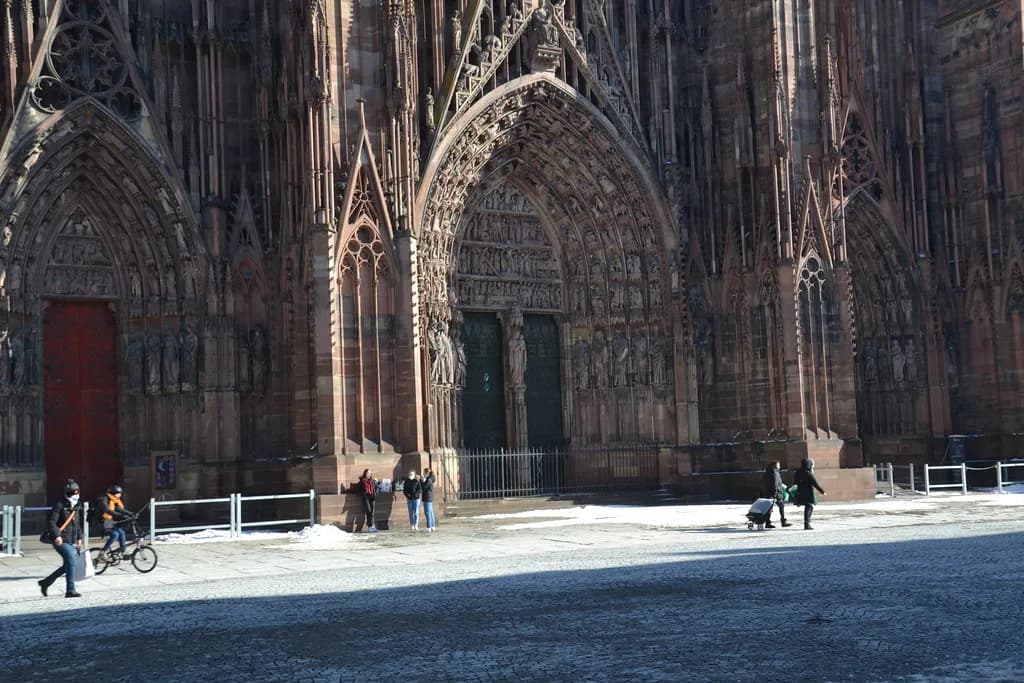
January in Strasbourg is the city at its most wintry: the coldest month of the year, with average highs around 5°C and lows near freezing, and the post-holiday quiet offers a more intimate look at the half-timbered houses and canals of La Petite France. The festive lights have mostly gone, leaving frosty mornings and the occasional dusting of snow on cobblestones.
Because the city is built for walking, with cobbled lanes and riverside paths, the right clothing is less about fashion and more about staying warm and sure-footed. This guide focuses on January-specific decisions, not the packed December Christmas market season or the early spring thaw. As one regular traveller to Strasbourg notes, if you keep to a one- or two-shoe rule, you also avoid the bulk of a large winter wardrobe. For a broader look at what to pack for the city, see the Strasbourg packing list.
What’s the weather really like in January?
January is Strasbourg’s coldest month, with an average temperature of 2.6°C, a daily minimum of -0.2°C, and a maximum of 5.3°C, according to 1991-2020 climate data. On the coldest nights it can drop to around -9°C, while the warmest days might reach 13.5°C, so the range is wide enough to demand flexible layering. For precise figures, consult the climate tables.
Precipitation is relatively light, about 35mm spread over 8 days, but that can include snowfall or freezing rain. Days are short and grey, with an average of just two hours of sunshine per day, so a practical waterproof and a reflective mindset help.
These are historical tendencies, not forecasts, so check a reliable forecast a few days before you leave to see if a cold snap or a milder Atlantic spell is predicted.
The core principle: layering for cold that changes
The key to dressing for Strasbourg in January is a three-layer system that you can adjust as you move between icy outdoor squares and warm museums, shops, and winstubs. The base layer should be a thin merino or synthetic thermal top that wicks moisture and fights odor, since you will likely be re-wearing it more than once during a week-long trip.
Your mid layer is usually a wool sweater or fleece that can be removed indoors, while the outer shell must block wind and resist light precipitation. A packable insulated jacket works well, but for January’s potential cold snaps, a heavier down or long wool coat often feels more appropriate for time spent outside.
This approach to layering is common advice for travelers to cold European cities, and it makes sense in Strasbourg where both indoor and outdoor conditions vary throughout the day.
Essential clothing: base layers, mid layers, outer layer
Start with thermal underwear: a merino or synthetic base layer long-sleeve top and leggings that fit under your normal clothes. They add warmth without bulk and are surprisingly easy to pack small.
Then choose your mid layers: a couple of wool sweaters and a fleece or cardigan that you can rotate. Dark neutral colours, like charcoal and navy, are practical for hiding possible urban grime and pair well with the city’s muted Franco-German style.
The outer layer is your main defence against January weather. A heavy winter coat with a hood—whether down-filled, wool, or a synthetic insulated parka—keeps out the chill while you are walking along the Ill river or crossing the Place Kléber. If you run warm, a packable insulated jacket under a waterproof shell offers the same comfort with more flexibility.
Footwear: waterproof, insulated, and with grippy soles
Boots are non-negotiable for a January trip. The combination of wet cobblestones, possible snow, and streets that stay damp in the shade means you need waterproofing, insulation, and a sole that grips the polished stone. Look for ankle-height boots with a rubber outsole, a low heel, and perhaps a fleece or wool lining.
Many travellers recommend comfortable leather sneakers with a grippy sole for general sightseeing in Strasbourg, but in January the risk of slipping on frost or snow makes boots the safer choice. You might still pack a pair of neat trainers for tram days or dry spells, but your primary footwear should be the boots you’d gladly wear all day.
For the evenings, a pair of compact foldable flats can be stashed in a day bag for after-dinner walks, but you will likely be happy to stay in your boots.
Accessories: hat, scarf, gloves, and more
A woollen beanie that covers your ears, a thick scarf that can be pulled up over your chin, and insulated gloves—fingerless styles allow phone use—are the difference between a pleasant stroll and a miserable one. Also pack a small, windproof travel umbrella, as rain can fall as a cold drizzle or wet snow.
Lip balm and a moisturiser with SPF are worth carrying, because dry indoor heating and low sun angles leave skin chapped. If you are prone to cold feet, wool-blend socks are more breathable and warm than pure cotton, and a pair of thin liner socks can help prevent blisters on long walks.
What to wear for typical January activities
A typical January day might involve a morning visit to the Cathédrale Notre-Dame, a stroll through La Petite France, coffee in a cafe, then an evening at a winstub. For that, a smart-casual outfit of dark jeans or wool trousers, a sweater, and your winter coat strikes the right balance between keeping warm and not feeling out of place.
If you are heading out early for a frosty photo walk along the canals, the same base layers will serve you, and you can add a scarf and gloves. Because light is limited, plan your packing to be comfortable for short outdoor bursts and longer indoor spells, rather than assuming you will be outside all day.
There is no need to dress formally beyond smart-casual for most restaurants in Strasbourg; a simple pair of dark trousers and a clean knit will see you through.
What to leave behind
Leave heavy denim jackets, thin fashion coats, cute but unpractical heeled ankle boots, and shorts at home—they won’t keep you warm or get you around comfortably.
Also skip formalwear or anything that can’t be layered: a January trip is not the time for evening gowns or bulky suits unless you have a specific event. And while it’s tempting to pack for the city’s festive side, by January the Christmas markets have mostly closed, so you only need your everyday winter wardrobe.
A compact packing list for a week in January
For a 7-day trip, a carry-on plus a personal item can be enough if you plan to do a mid-trip laundry. Here is a concise list: two pairs of thermal leggings and two thermal tops, three wool sweaters, two long-sleeve shirts, one comfortable pair of trousers, one pair of dark jeans, waterproof insulated boots, one pair of grippy sneakers for indoor or dry days, heavy coat, scarf, hat, gloves, and six pairs of wool-blend socks.
If you prefer not to carry bulky knitwear, consider mid or lightweight layers you can wash and rotate. For general advice on visiting the city in any season, see our guide to Strasbourg packing list.
Before you go: check the forecast
Because January weather can swing from a damp Atlantic thaw to a cold snap with temperatures that typically stay around freezing, checking a reliable short-term forecast before departure is wise. The historical data gives you a baseline, but a forecast will tell you whether you need your heaviest coat and extra thermal layers or whether a mid-weight insulated jacket with a shell will suffice.
Also monitor local news or the city’s tourism website for any weather-related transport disruptions, though these are rare. With that check done, you’ll pack with confidence.
Frequently asked questions
Below, we answer common questions about dressing for a January visit to Strasbourg. Find more tips in our guide for March as you plan ahead.
Plan Your Visit
Packing for Strasbourg in January is all about being prepared for the cold and the wet, not about chasing the festive crowds. With a solid layering system, waterproof insulated boots, and a warm hat and gloves, you’ll be free to enjoy the city’s quiet winter beauty—the glistening canals, the cathedral’s pink stone under a grey sky, and the convivial warmth of an Alsatian wine bar.
Start with the essentials, check the forecast, and consider what you can leave behind. And before you finish your planning, browse other seasonal guides, like What to wear in Strasbourg in March, to notice how dramatically your packing changes by spring.
Frequently Asked Questions
What is it like to visit Strasbourg, France, in January?
January in Strasbourg is quiet and cold, with occasional snow and frost. The festive atmosphere of December has faded, leaving a more peaceful, authentic feel. You’ll enjoy fewer crowds and lower accommodation costs, but you’ll need serious winter clothing to be comfortable while exploring.
Is January the coldest month in Strasbourg?
Yes, January is typically the coldest month in Strasbourg. Based on 1991-2020 averages, the average temperature is 2.6°C, with lows near freezing. Be prepared for possible cold snaps that can push temperatures well below zero.
Do I need snow boots for Strasbourg in January?
Snow is not guaranteed, but a waterproof, insulated boot with a good grip is essential because streets can be wet, frosty, or snowy. Choose a boot with a rubber sole and low heel to handle slippery cobblestones safely.
Can I wear sneakers in Strasbourg in January?
You can, but they aren’t ideal for the coldest or wettest days. Leather sneakers with a grippy sole work for dry spells or tram days, but your main footwear should be boots. If you pack sneakers, bring them as a backup and choose a style that doesn’t slip on wet cobbles.
Sources
Free: The Ultimate Packing Cheat Sheet
A carry-on capsule wardrobe, the complete packing checklist, layering made simple, and what to wear by season — one printable page you'll use on every trip.
You might also like


Continue reading
More guides you'll find useful