What to Wear in Strasbourg: A Complete Packing List for Every Season
Plan what to pack for Strasbourg with this season-by-season guide. Get outfit ideas, footwear tips for cobblestones, and what to leave behind.
On this page
Strasbourg weather month by month
Typical conditions from 30 years of daily weather data — use it to see how much to pack for the month you are travelling.
| Month | High / low | Days with rain | Days with snow | Afternoon humidity | Daylight |
|---|---|---|---|---|---|
| January | 5° / 0°C (42° / 31°F) | 4 in 10 days | 1 in 10 days | 66% | 8.5 h |
| February | 7° / 0°C (44° / 31°F) | 4 in 10 days | 1 in 10 days | 60% | 9.9 h |
| March | 11° / 2°C (52° / 36°F) | 4 in 10 days | Rare | 55% | 11.6 h |
| April | 15° / 5°C (59° / 42°F) | 4 in 10 days | Rare | 51% | 13.4 h |
| May | 19° / 10°C (66° / 49°F) | 5 in 10 days | Rare | 53% | 15 h |
| June | 23° / 13°C (73° / 56°F) | 4 in 10 days | Rare | 53% | 15.9 h |
| July | 25° / 15°C (76° / 60°F) | 4 in 10 days | Rare | 52% | 15.5 h |
| August | 25° / 15°C (76° / 60°F) | 4 in 10 days | Rare | 52% | 14.2 h |
| September | 20° / 12°C (68° / 53°F) | 3 in 10 days | Rare | 56% | 12.3 h |
| October | 15° / 8°C (59° / 46°F) | 4 in 10 days | Rare | 62% | 10.5 h |
| November | 9° / 3°C (49° / 38°F) | 4 in 10 days | Rare | 68% | 8.9 h |
| December | 6° / 1°C (43° / 33°F) | 5 in 10 days | 1 in 10 days | 70% | 8.1 h |
Travelling on specific dates? Use our What to Wear Planner for the weather, outfits and a packing list for your exact days in Strasbourg.
Averages for 1991-2020, modelled from Copernicus ERA5-Land and ERA5 reanalysis via Open-Meteo open data (CC BY 4.0), adjusted to Strasbourg's elevation. Modelled afternoon highs can read 1–2°C below airport weather-station records.
Packing for Strasbourg is less about one perfect outfit and more about building a flexible capsule. The city's position in the Rhine Valley gives it a semi-continental climate, with cold winters, warm summers, and spring and autumn that can swing between chilly mornings and mild afternoons, sometimes within the same day. Canal breezes along the Ill and the shaded lanes of La Petite France add another layer of variability. For a deeper look at cold-weather dressing, see What to wear in Strasbourg in January.
What makes Strasbourg distinctive is the need to weigh comfort against smart-casual style. You will walk on uneven cobblestones, possibly climb the cathedral tower, and step into winstubs and museums where a neat appearance helps. This guide breaks down what to wear by season, which shoes truly earn their place in your bag, and what is better left at home. If you are visiting in the shoulder season, the guidance in What to wear in Strasbourg in March is particularly relevant.
Strasbourg's Climate at a Glance
Strasbourg has a semi-continental climate, according to the Climates to Travel guide, with cold winters and relatively warm summers. The average temperature ranges from about 2.5°C (36.5°F) in January to about 20.5°C (69°F) in July and August. Precipitation is spread fairly evenly through the year, with May and June tending to be wetter due to afternoon thunderstorms.
For packing, plan for temperature swings and the chance of rain in any season. A light waterproof layer and a versatile mid-layer are never a mistake. Rather than relying on a single heavy coat, combine pieces you can add or remove as the day warms up or cools down.
The Layer System: Your Strasbourg Backbone
Layering is the single most useful strategy in Strasbourg because it lets you adapt to changing conditions without carrying a different outfit for every hour. Start with a breathable base layer, such as a merino wool or cotton-blend tee, that wicks moisture and resists odor. Add a mid-layer like a fine knit sweater or a shirt, then finish with an outer shell or coat depending on the season.
Look for layers in muted tones that mix and match, so you can create several outfits from a few pieces. A well-chosen scarf also works double duty, adding warmth on a chilly tram ride and serving as a modest cover-up when you enter the cathedral. This approach keeps your case light and your wardrobe flexible.
Footwear: Conquering Cobblestones and Rain
Your shoes will matter more than almost anything else in Strasbourg. The historic center, including La Petite France, is paved with worn cobblestones that become slick when wet. You will also spend hours on your feet exploring, so prioritize comfort and grip over fashion. As Packfits notes, cushioned leather sneakers with a grippy rubber sole are a solid base choice for most trips.
For rainy days or colder months, waterproof ankle boots with a low heel and non-slip sole keep your feet dry and stable. If you plan to mix in nicer dinners or evenings, a pair of foldable flats can be tucked into your bag for the walk to a restaurant, saving you from wobbling on heels across uneven stones.
When deciding how many pairs to bring, think about your trip length. For most one to two-week trips, two pairs of shoes, one for day and one for evening or wet weather, plus a pair of comfortable travel shoes, will cover every occasion. Choose styles that are already broken in to avoid blisters on your first day.
Rain Gear: Jacket vs. Umbrella
Rain is possible throughout the year in Strasbourg, so you need a practical strategy. A compact, packable waterproof jacket with a hood is the most versatile option because it keeps you dry without taking up much space and can be layered over a sweater or under a warmer coat. Choose one that is breathable enough for active days.
An umbrella is a useful backup, but it can be less convenient in narrow lanes or crowded markets. If you prefer an umbrella, choose a small, windproof model that fits in your daypack. Many travelers find a jacket sufficient, especially if it has an adjustable hood that stays put on windy canal walks.
Dressing for the Cathedral and Other Sacred Sites
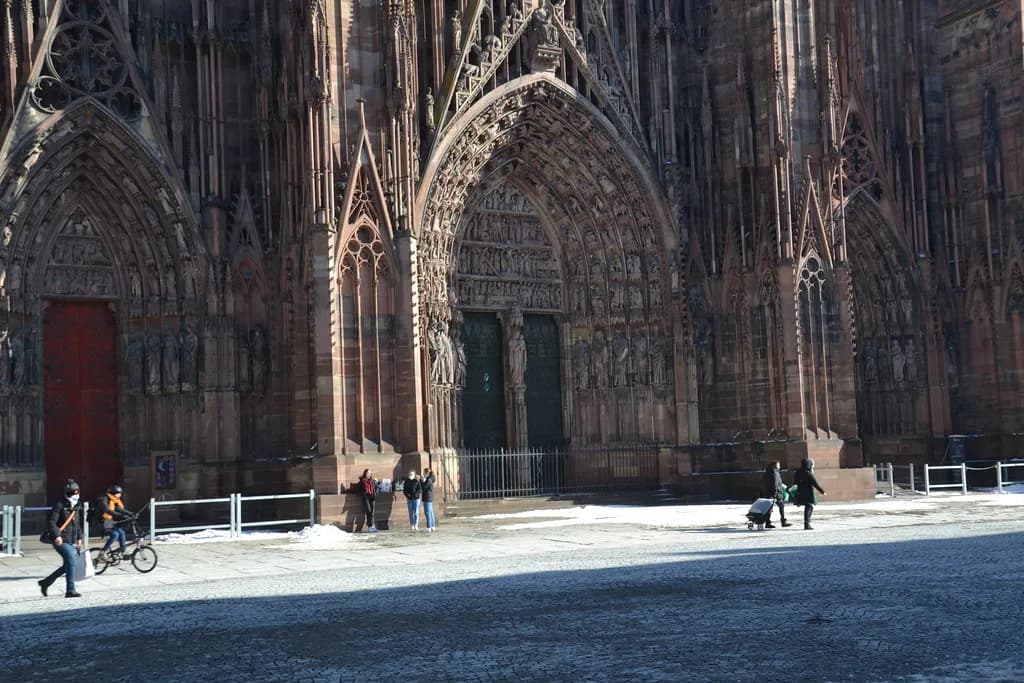
Strasbourg Cathedral is a functioning religious site, and visitors are expected to show respect. While there is no strict dress code posted, the generally accepted practice is to keep shoulders and knees covered. A light scarf or cardigan is an easy way to ensure you are appropriately covered without changing your whole outfit.
The same principle applies when visiting other churches in the city, many of which have similar expectations. For men, long trousers are customary, and for women, skirts or trousers that fall at or below the knee are common. A neat, covered look also aligns with the overall smart-casual style that Strasbourg visitors tend to adopt.
Day-Trip Layers: Vosges and Black Forest
A advantage of basing yourself in Strasbourg is easy access to the Vosges Mountains in France and the Black Forest in Germany. These areas sit at higher elevations and can be noticeably cooler and windier than the city, even in summer. If you plan a day trip, add a light fleece or insulated layer and a windproof outer shell.
For hikes or long walks in the Vosges, you will want supportive walking shoes or boots with good tread, and a small daypack to carry water and snacks. The Black Forest trails are similar, so the same footwear works. If you are only visiting for the day, your regular city shoes may suffice for short strolls, but proper walking shoes are a worthwhile addition.
Season-by-Season Packing Picks
Spring brings changeable weather, with cool mornings that can warm up or turn rainy by afternoon. Focus on layers: a few long-sleeve shirts, a light jacket or trench, and a pair of water-resistant sneakers. A thin scarf and an umbrella complete the spring capsule.
Summer is warm but can include rain showers. Lightweight, breathable fabrics like cotton and linen are comfortable, and a packable rain shell is handy for sudden downpours. Comfortable walking sandals or leather sneakers work well, and a sun hat is a good idea for midday exploring.
Autumn is possibly the most beautiful season, but it also brings cold, damp days and fog. A medium-weight coat, knit sweater, and sturdy boots are the core items. Add a scarf and gloves for cooler mornings, and keep a waterproof outer layer ready.
Winter requires serious warmth. A heavy coat, thermal base layers, a warm scarf, gloves, and a hat are essential, along with insulated, waterproof boots with good grip. Even if snow is not guaranteed, the cold and rain call for items that lock in heat and keep moisture out.
What to Leave Behind
Avoid bulky extras that take up space and add weight. Skip heavy boots if you are visiting in summer, and leave formal wear that requires dry cleaning. High heels are not practical on cobblestones, so leave them for beach vacations. Also, avoid carrying large amounts of cash; cards are widely accepted, though a small amount for markets is wise.
Before You Zip Up: A Pre-Departure Weather Check
Weather can vary from year to year, so check a reliable forecast a few days before you leave and adjust your packing accordingly. For example, if the forecast shows a warm spell in April, you might swap a heavy sweater for a lighter one. Keep an eye on the rain probability and daytime highs.
Remember that historical climate data is a guide, not a guarantee. Even in summer, a cool evening can feel chilly after sunset, so having a light jacket in your bag is always a good call. The goal is to be prepared, not overloaded.
Plan Your Visit
Packing for Strasbourg is about flexibility and practicality. Build your capsule around layers, sturdy shoes, and a reliable rain shell, and you will be ready for whatever the city throws at you. This approach works for any season, so you can book your trip with confidence.
Before you go, double-check your packing against the current weather forecast and your planned activities. If your itinerary includes cathedral visits or day trips to the mountains, make the small additions that ensure comfort and respect. With this guide, you will travel light and feel at ease in this beautiful corner of Europe.
More packing guides for France
- What to Wear in Strasbourg in April: Packing Guide
- What to Wear in Strasbourg in August
- What to Wear in Strasbourg in December: Full Packing Guide
- What to Wear in Strasbourg in January: Packing Guide
- What to Wear in Strasbourg in July
- What to Wear in Strasbourg in June: Packing Guide
- What to Wear in Strasbourg in March
- What to Wear in Strasbourg in May: Packing Essentials & Tips
- What to Wear in Strasbourg in November: A Winter Packing Guide
- What to Wear in Strasbourg in October: Layer Up for Cobblestones and Crisp Days
- What to Wear in Strasbourg in September: Packing Guide
- Bordeaux Packing List & What to Wear: A Seasonal Guide
- What to Pack for Paris: A Complete Guide for Every Season
Frequently Asked Questions
What should I pack for a week in Strasbourg?
For a week in Strasbourg, plan a capsule of 4–6 mix-and-match tops, 2–3 pairs of trousers or skirts, a light jacket or coat, one smart-casual outfit for evenings, and 2 pairs of comfortable shoes. Add a waterproof layer, a scarf, and a foldable tote for purchases.
What shoes are best for Strasbourg's cobblestones?
Choose flat, cushioned shoes with grippy rubber soles, such as leather sneakers or low-heeled waterproof boots. These provide traction on uneven, sometimes slick cobblestones and keep your feet comfortable for long walking days.
Do I need a rain jacket in Strasbourg?
Yes, a compact waterproof jacket with a hood is highly recommended because rain can occur in any season. It is often preferred over an umbrella, especially in narrow streets or crowded areas.
What should I wear to Strasbourg Cathedral?
To show respect at the cathedral, cover your shoulders and knees. A light scarf or cardigan is an easy way to stay covered, and it is also useful for cool weather inside the building.
What is the weather like in Strasbourg in spring?
Spring (March–May) is changeable, with temperatures gradually warming from cold starts. Expect cool mornings, possible frost in March, and rain. Layering is essential, and a water-resistant jacket is advisable.
What should I pack for a winter trip to Strasbourg?
For winter, pack a heavy coat, thermal base layers, a warm scarf, gloves, a hat, and insulated, waterproof boots with good grip. Temperatures can hover near freezing, so prioritize warmth and protection from cold and rain.
What should I pack for a day trip to the Black Forest?
For a Black Forest day trip, add a warm mid-layer like a fleece and a windproof outer shell, plus sturdy walking shoes or boots with grip. Bring a daypack with water and snacks, as trails can be rugged and weather varies.
Sources
Free: The Ultimate Packing Cheat Sheet
A carry-on capsule wardrobe, the complete packing checklist, layering made simple, and what to wear by season — one printable page you'll use on every trip.
You might also like


Continue reading
More guides you'll find useful