Pisa Packing List: What to Wear for Cobblestones & Climate
Wondering what to pack for Pisa? Cover shoulders in churches, wear cushioned shoes for cobblestones, and layer for sea breezes.
On this page
Pisa weather month by month
Typical conditions from 30 years of daily weather data — use it to see how much to pack for the month you are travelling.
| Month | High / low | Days with rain | Afternoon humidity | Daylight |
|---|---|---|---|---|
| January | 11° / 4°C (51° / 39°F) | 3 in 10 days | 61% | 9.1 h |
| February | 12° / 4°C (53° / 39°F) | 3 in 10 days | 58% | 10.3 h |
| March | 14° / 6°C (58° / 43°F) | 3 in 10 days | 57% | 11.6 h |
| April | 17° / 9°C (63° / 48°F) | 4 in 10 days | 58% | 13.2 h |
| May | 21° / 13°C (70° / 55°F) | 3 in 10 days | 59% | 14.5 h |
| June | 25° / 17°C (77° / 62°F) | 3 in 10 days | 58% | 15.2 h |
| July | 28° / 20°C (82° / 67°F) | 2 in 10 days | 55% | 15 h |
| August | 28° / 20°C (83° / 68°F) | 2 in 10 days | 56% | 13.8 h |
| September | 24° / 16°C (76° / 62°F) | 3 in 10 days | 57% | 12.3 h |
| October | 20° / 13°C (67° / 55°F) | 4 in 10 days | 62% | 10.8 h |
| November | 15° / 9°C (59° / 48°F) | 4 in 10 days | 64% | 9.4 h |
| December | 11° / 5°C (52° / 41°F) | 4 in 10 days | 63% | 8.8 h |
Travelling on specific dates? Use our What to Wear Planner for the weather, outfits and a packing list for your exact days in Pisa.
Averages for 1991-2020, modelled from Copernicus ERA5-Land and ERA5 reanalysis via Open-Meteo open data (CC BY 4.0), adjusted to Pisa's elevation. Modelled afternoon highs can read 1–2°C below airport weather-station records.
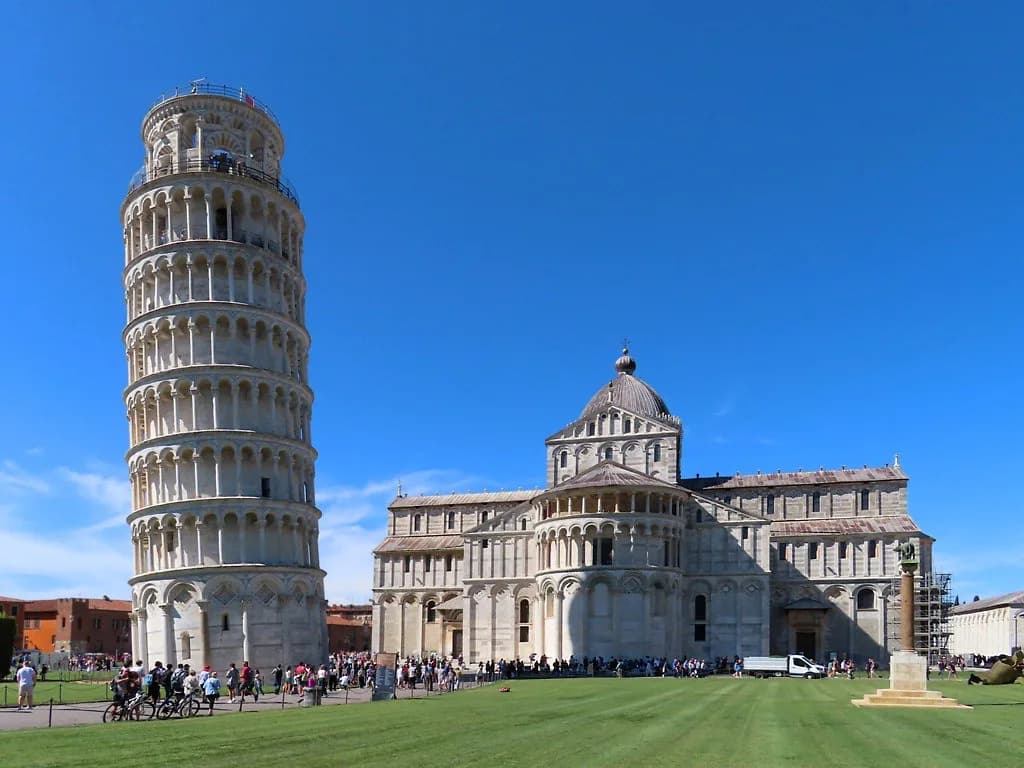
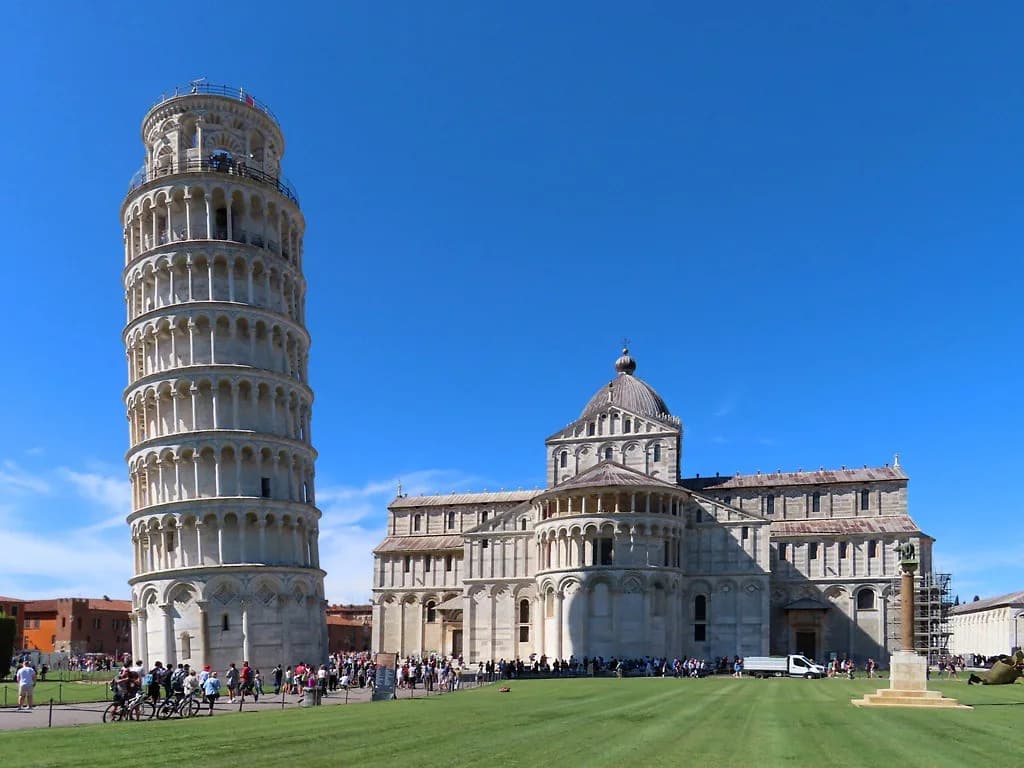
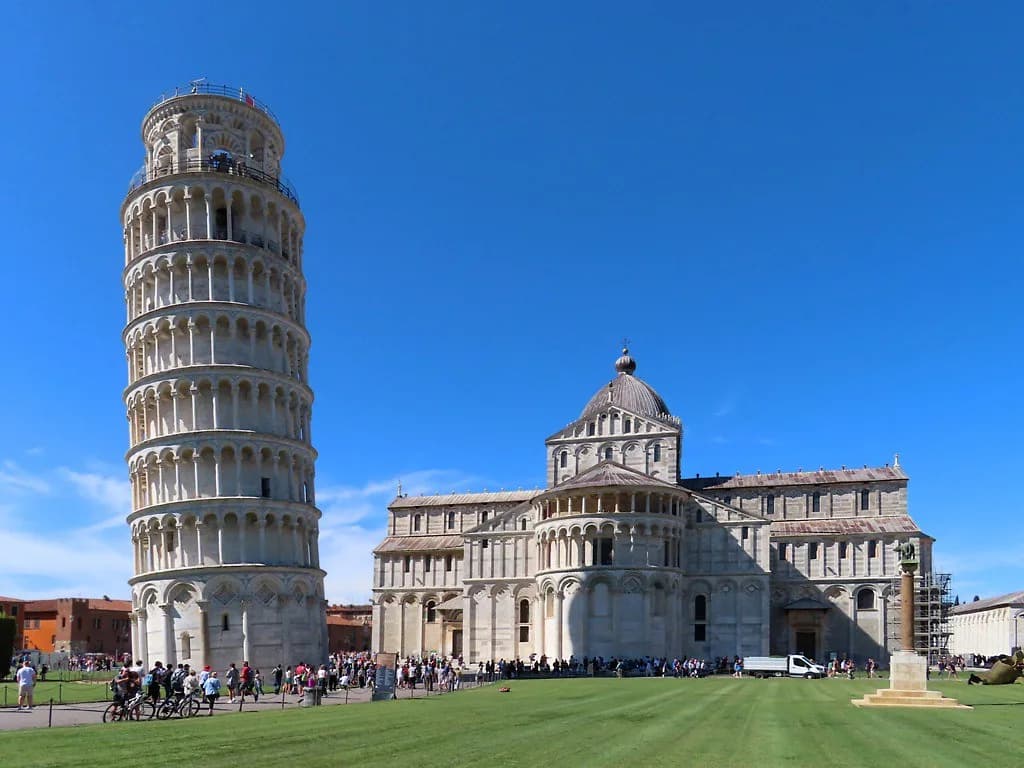
Pisa rewards travelers who come prepared for its unique mix of stone streets, marble monuments, and a Mediterranean climate that shifts with the seasons. Your packing choices can make the difference between a day spent nursing sore feet and one spent happily climbing the 294 steps of the Leaning Tower or strolling the Arno riverfront.
This guide focuses on practical decisions: which shoes handle wet cobblestones, how many layers you need for cool sea breezes, and what to pack for a smart evening out. You'll also find trip-length examples and a pre-departure checklist.
Pisa Weather at a Glance
Pisa enjoys a Mediterranean coastal climate: hot, sun-bright summers with daytime highs around 25–32°C (77–90°F) and mild winters near 5–12°C (41–54°F). Spring and autumn range from about 10–22°C (50–72°F) and bring the occasional quick shower, while sea breezes can cool evenings by the Arno or the coast. These figures are based on historical averages from Packfits' weather guide.
Because temperatures can shift from morning to night, layers work year-round. A lightweight cardigan or thin wool sweater is useful even in summer for air-conditioned museums and after sunset dinners. These are historical tendencies, not a forecast, so always check the current outlook before you leave.
Footwear First: Cobblestones and Marble Steps
The surfaces around the Piazza dei Miracoli—including the Leaning Tower’s marble steps—and the narrow streets of the historic center are notoriously uneven. High heels and very flat shoes without grip raise your risk of twisted ankles and will quickly tire your feet. Prioritize supportive, cushioned walking sneakers with grippy soles.
Pack supportive leather flats for dinners or church visits, and strappy sandals with arch support for warm days. Avoid flimsy flip-flops for sightseeing; they offer little on wet stones. If you're visiting in winter or during a wet spell, a water-resistant pair of shoes with good traction is a smart swap.
The Packing Core: Breathable Layers and One Smart Outfit
For any season, base your wardrobe on breathable fabrics: linen shirts, cotton tees, and merino or technical tops that wick sweat and dry quickly. These keep you cool on hot days and layer neatly under a cardigan when the sea breeze picks up.
Include one smart evening outfit—a tailored dress for women or a crisp shirt and trousers for men—that suits a riverside trattoria dinner or an evening piazza stroll. In religious buildings, you’ll need to cover shoulders and knees, so a dark scarf or wrap doubles as a respectful cover-up and a stylish layer.
Season-by-Season Adjustments
Spring (March to May) brings temperatures in the 10–22°C (50–72°F) range with possible showers. By March and April, you can shed the heavy coat and rely on peelable layers like a light jacket and a cardigan, plus a compact umbrella in your day bag. For the cooler start of the season, see the guidance for January and February.
Summer (June to August) is hot, often above 30°C (86°F). Opt for loose-fitting natural fibers, a wide-brim hat, high-SPF sunscreen, and supportive sandals or sneakers. Evenings can be cool, so carry a light layer. Autumn (September to November) is pleasant but variable, with temperature ranges similar to spring; think layered knits, a light wool jacket, and ankle boots for cobblestones.
Winter (December to February) is mild but damp, with daytime highs around 8–12°C (46–54°F). Pack a light wool coat, a scarf, and water-resistant shoes. For the deepest months, see the specific guidance for January and February.
Church-Appropriate Clothing
When visiting the Duomo or other churches in Pisa, modesty is required: shoulders and knees must be covered. This is not a local style mandate but a religious dress code enforced at the entrance. A simple scarf, shawl, or light cardigan in your day bag ensures you’re never turned away.
For women, a dress that falls below the knee or pants with a longer top work well; for men, long trousers and a collared shirt are a safe bet. If you want to blend in, smart casual with a touch of elegance is typical—many locals dress neatly even for sightseeing, avoiding overly athletic wear.
Day-Trip Add-Ons
If you plan to use Pisa as a base to explore Florence, Cinque Terre, or the Tuscan coast, pack a compact daypack that can hold a water bottle, camera, and a light layer. For beach towns, add swimwear, a quick-dry towel, and those supportive sandals you already have.
On a train day trip, keep valuables in a crossbody bag worn in front—busy stations and tourist sights can attract pickpockets. A secure zip and a slash-resistant fabric are useful features, as are RFID-blocking pockets to help protect your cards. These are precautionary suggestions, not guarantees.
What to Leave Behind
Skip the high heels: pair them with cobblestones and the result is aching ankles and a wardrobe malfunction. Also leave behind flimsy flip-flops (reserve them for the beach) and heavy outerwear, since even in winter a light wool coat suffices. Cut-off denim, athletic wear, and oversized clothing may stand out as touristy—but feeling comfortable and stylish is more about fit than fashion.
Packing Example: 5–7 Days
For a five-to-seven-day stay, aim for a capsule wardrobe that mixes and matches. Start with 3–4 lightweight tops (linen or cotton), 2–3 pairs of trousers or jeans that can be dressed up or down, 1–2 smart evening pieces (a dress or shirt), and 1–2 light layers (cardigan and jacket).
Add 2–3 pairs of shoes: comfortable walking sneakers, supportive sandals (summer) or leather flats (cooler months), and possibly a water-resistant pair. Include accessories—scarf or shawl for churches, sunglasses, a hat for sun protection—and don’t forget a reusable water bottle to stay hydrated while exploring.
Before You Zip: Check the Forecast and Final Prep
A few days before you leave, check the extended forecast for Pisa. This helps you decide between extra layers or a lighter kit. Keep in mind that your airline may have specific baggage allowances; weigh your bag in advance and stick to carry-on size if possible to avoid fees.
A few days before you leave, check the extended forecast for Pisa. This helps you decide between extra layers or a lighter kit. Also, confirm your airline's baggage allowance before packing to avoid last-minute surprises.
Plan Your Visit
Packing for Pisa is really about choosing pieces that are versatile and comfortable for its historic terrain. By prioritizing cushioned footwear, breathable layers, and one smart outfit, you’ll be ready for everything from the Leaning Tower’s marble steps to an evening along the Arno.
Remember to check the specific month you’re traveling for more detailed clothing advice, and always verify any church dress codes or venue restrictions before you go.
More packing guides for Italy
- What to Wear in Pisa in April: Layers, Shoes & Packing Tips
- What to Wear in Pisa in August: Heat, Humidity & Style
- What to Wear in Pisa in December
- What to Wear in Pisa in February
- What to Wear in Pisa in January
- What to Wear in Pisa in July: Packing Tips for Hot Days
- What to Wear in Pisa in June
- What to Wear in Pisa in March: Packing Guide for Spring
- What to Wear in Pisa in May: Packing List & Outfit Ideas
- What to Wear in Pisa in November: Rain-Ready Layers
- What to Wear in Pisa in October
- What to Wear in Pisa in September: Packing List & Outfit Ideas
- Rome Packing List: What to Wear Year-Round
- What to Wear in Rimini, Italy: Seasonal Packing Guide
Frequently Asked Questions
Can tourists wear jeans in Italy?
Yes, jeans are perfectly acceptable in Italy for casual sightseeing. Many locals wear well-fitted denim, and it’s a practical choice for walking on cobblestones. For smarter dinners or churches, you might opt for dark, neat jeans paired with a blouse or shirt. Just avoid distressed, faded, or overly baggy styles if you want to blend in.
What should you not forget to pack for Italy?
Beyond clothing, don’t forget sunscreen, a reusable water bottle (public fountains are common in many Italian cities), a power adapter for Italy's sockets (types C and L), and a crossbody bag to keep valuables secure. Also pack a light scarf or shawl to cover shoulders in churches and a compact umbrella for possible showers.
What shoes should I wear for the Leaning Tower of Pisa?
The Leaning Tower has 294 marble steps that are worn smooth and slightly tilted. Cushioned walking sneakers with good grip are ideal; they provide stability and reduce fatigue on the uneven surface. Avoid high heels, flimsy flip-flops, or slippery-soled shoes, as they increase the risk of slipping.
Do I need a jacket in Pisa in the evening?
Even in summer, evenings can feel cool due to sea breezes, especially near the Arno. A light cardigan, denim jacket, or packable shell is a good idea for dinner outdoors or a stroll after sunset. In spring and autumn, a warmer jacket is essential.
Sources
Free: The Ultimate Packing Cheat Sheet
A carry-on capsule wardrobe, the complete packing checklist, layering made simple, and what to wear by season — one printable page you'll use on every trip.
You might also like


Continue reading
More guides you'll find useful