What to Wear in Whistler Village at Night: Evening Packing
Plan Whistler Village evening outfits with smart-casual layers over long underwear, waterproof boots for icy walkways, and a warm compact jacket for lodges.
On this page
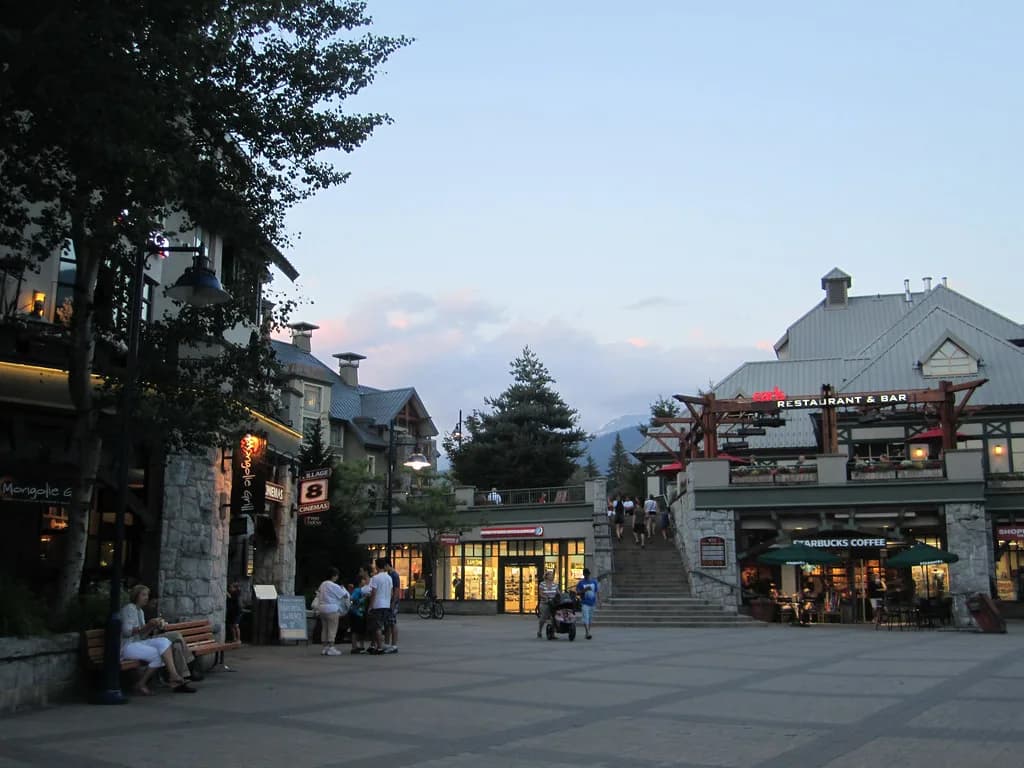
Whistler Village evenings are a wardrobe transition problem. You finish a ski day in sweaty base layers, then head out for dinner on walkways that may be slushy, icy, or wet depending on the season. The outfit that works on the mountain rarely works unchanged at night in the Village.
The practical answer is a compact evening kit: a base layer you keep on, a mid-layer you can show off indoors, and a warm jacket you can shed at the table. Everything is editorial guidance rather than a local uniform, because Whistler's evening dress is casual and practical. A packing list built around layers adapts better than one built around single-purpose outfits.
This guide focuses on packing decisions: what layers to bring, which footwear handles Village walkways, what to leave at home, and how to check conditions before you go. It deliberately avoids restaurant recommendations and venue-specific rules, which change and are best confirmed directly with each business.
Why Village Evenings Differ From Mountain Days
Whistler sits in the Coast Mountains within a temperate rainforest environment, and moisture shapes the weather more than most visitors expect. Conditions can shift quickly, so the Village base can be warmer and wetter than the upper mountain. That gap matters at night, when you are walking rather than skiing.
Day layers are engineered for sweat and snow, while evening layers need to handle warmth indoors and cold outdoors in the same hour. A ski shell over a baselayer looks and feels wrong at a restaurant table, but a smart-casual mid-layer over that same baselayer works. The trick is choosing pieces that survive both environments without a full change.
Approach the seasons as historical tendencies, not forecasts. Winter in Whistler has traditionally brought cold temperatures and snow, with slush and rain possible at the Village base, while fall and spring have been transitional and variable. The Whistler fall dressing guide notes that this time of year can throw hail or snow regardless of what the previous day looked like.
The Core Formula: Base Layer, Mid-Layer, Compact Jacket
Three layers do most of the work for a Village evening. A thin merino or synthetic base layer keeps you warm on the walk, a smart-casual mid-layer handles the indoor look, and a compact insulated jacket adds warmth without bulk. Each layer should be thin enough that wearing all three still fits comfortably.
Merino wool earns its space because it manages moisture and temperature without the clammy feel of cotton. A wool sweater or a plaid flannel works as a mid-layer you can keep on indoors, while a packable down or synthetic jacket handles the outdoor stretch. The Sundial Hotel's seasonal packing guide recommends layering smart rather than heavy, favoring lightweight pieces and packable puffers over bulky sweaters.
If you already own a waterproof ski jacket, you can wear it in the Village. The winter fashion guide notes that wearing a ski jacket around town is a common practical choice in Whistler. But if you want a sleeker evening look, a compact down jacket under or instead of the shell reads more smart-casual. Either way, waterproofing matters because wet outer layers stop being warm outer layers.
Smart-Casual Tops That Work Over Long Underwear
The cleanest evening solution is a mid-layer that looks intentional on its own. A wool sweater, a flannel shirt, or a draped cardigan all sit smoothly over a thin base layer without announcing that there is long underwear underneath. Avoid thick cable knits that bunch under a jacket and overheat the moment you sit down indoors.
For a slightly dressier option, a sweater dress over fleece-lined leggings gives you a one-piece evening outfit with warmth built in. If you ski or ride during the day, your legs may already be in long underwear, so choose mid-layers that pair with those rather than competing with them. The goal is one change of top layer, not a full wardrobe swap.
Sweaters and thin knits also dry faster than cotton if they get damp on the walk. If your evening includes a hot tub or spa stop before dinner, a quick-drying synthetic or wool top avoids the cold, wet feeling of cotton against skin. That single material choice makes a difference in a damp mountain climate.
Why Waterproof Boots With Grip Beat Heels on Village Walkways
Village walkways can be slushy, icy, or wet, and the surface changes through the evening as temperatures drop. Traction is the deciding factor, not style, which is why high heels are a poor fit for the walk between lodges and restaurants. The Whistler winter fashion guide puts it bluntly: leave the heels at home, because they are impractical on the Village's winter surfaces.
Waterproof leather boots and insulated winter boots both handle the walk, and wool socks underneath keep feet warm even when the ground is cold. The same fashion guide notes that Blundstone-style boots are a common practical choice around the Village, with insulated winter boots as the natural runner-up. Whichever you bring, look for tread that grips wet or icy pavement.
Rubber rain boots are a trade-off worth understanding: they keep water out but conduct cold, so your feet get chilly on a long winter walk. The fall dressing guide recommends gumboots for wet days, which makes sense in fall, while a transition to insulated boots makes more sense for deep winter. Rotate according to the season you are actually visiting.
Whichever boot you bring, it should be the one you can wear all evening without changing. Packing a single reliable pair rather than two competing pairs saves luggage space and avoids the mid-evening shoe swap. For a broader look at footwear recommendations for different seasons, see what to wear in Whistler in November.
Bottoms That Move From Après-Ski to Dinner
Pants are the non-negotiable bottom for a Village evening in the cold months. Bare legs or a short skirt with no tights means standing in a line outdoors with nothing between you and the cold. The winter fashion guide recommends simply wearing pants, especially when snow is past your ankles.
Dark denim and black jeans are the most versatile options, pairing with both flannels and sweaters. Fleece-lined leggings work as a base under trousers or as a layer under a longer top or sweater dress. If you are coming straight from the slopes, ski pants are for the mountain, not the Village.
Cotton denim is a poor choice in wet conditions because it holds moisture and takes hours to dry once soaked through. If your evening involves walking through slush, consider a water-resistant pant or a synthetic blend over denim. That trade-off matters more on a long Village Stroll than it does in a short walk from a car.
Accessories That Earn Their Space: Toque, Liner Gloves, Scarf, Wool Socks
A toque, liner gloves, a scarf, and wool socks are the accessories that do the most work per gram. A toque worn over the ears keeps heat in, and it doubles as an apres-ski style piece in a laid-back mountain town. The winter fashion guide treats the toque as a Whistler staple, noting that it goes over the ears rather than above them.
Liner gloves are more practical than full snow mitts in the Village because they keep your hands functional while walking between venues. Wool socks keep feet dry and warm inside boots, which is especially important when walkways are wet. A scarf adds warmth on the outdoor stretch but does not belong on a chairlift, since it can catch wind and tangle.
An umbrella can be useful for a short stroll through the Village, though it is less practical on forest trails. That distinction makes it an evening-only accessory for many trips. Packing one compact umbrella for a short stay is usually worth the space if the season has been wet historically.
A Compact Three-Night Evening Packing Example
For three nights in the Village, aim for one pair of boots, two layers of bottoms, and three top-layer options that all mix and match. A reasonable editing of the wardrobe: one thin merino or synthetic base layer, one or two mid-layers you can wear indoors, and one compact insulated jacket. That combination covers a range of indoor and outdoor temperatures without a checked bag full of options.
Bottoms: one pair of dark jeans and one pair of fleece-lined leggings, plus a water-resistant trouser if your trip falls in a wet stretch. Socks: two or three pairs of wool socks, because a wet pair overnight dries slowly in humid mountain air. Footwear: one pair of waterproof boots with good tread, which serves the whole trip.
Accessories: one toque, one pair of liner gloves, one scarf, and one compact umbrella. If you are traveling with ski gear, your ski jacket can serve as the evening outer layer, which means you only need one warm compact jacket beyond what is already packed. A Whistler packing list for a week in winter suggests long-sleeve tees for layering and a sweater dress for easy nights out, reflecting Whistler's casually practical style.
What to Leave Behind
High heels are the first thing to cut, because they are unstable on slush and ice and almost never stay on someone's feet through an evening in the Village. The winter fashion guide notes that heels are impractical in Whistler and can lead to ankle injuries when mixed with slippery ground. Waterproof boots cover more situations and free luggage space.
Thin fashion jackets and leather jackets are poor choices for the same reason. A leather jacket does not shed rain or slush, and the winter fashion guide suggests leaving leather jackets at home in favor of waterproof outerwear. If you want a dressed-up layer, choose one that still has weather resistance.
Cotton denim in wet conditions is the third item worth reconsidering. Deliberate about which bottoms you pack, because wet denim in a humid climate dries slowly and feels cold against the skin. A single pair of denim for dry evenings plus a water-resistant alternative covers both cases.
Before You Go: A Quick Evening Weather Check Routine
Check the forecast the day before departure and again on the morning of arrival, and adjust the layers you set aside for evening use rather than repacking everything. Look for overnight lows, precipitation, and whether the Village is forecast to be above or below freezing. Those three points tell you whether to prioritize insulation, waterproofing, or both.
If the forecast shows wet conditions, put the waterproof outer and waterproof boots in your day bag and keep the smarter mid-layer for indoors. If it shows a dry cold snap, you can leave the rain shell packed but swap in a warmer insulated jacket. If the forecast calls for warm, dry weather, one lightweight layer is enough for the walk between lodges.
Remember that Village conditions change from what the upper mountain reports. Base areas can be slushy and wet while the alpine is dry and cold, so a forecast for the mountain is not a forecast for your evening walk. For month-specific guidance on deeper winter trips, see what to wear in Whistler in December and what to wear in Whistler in January.
Pack for the Village, Not the Mountain
The core evening formula for Whistler Village is one thin base layer, one smart-casual mid-layer, and one compact warm jacket, all supported by waterproof boots with grip. Every layer should be able to transition indoors and outdoors, because the evening is a series of short walks bracketed by warm interiors. That is what keeps the outfit workable without a full change.
Pack compactly for the evenings alone: one pair of boots, two bottoms, and three layering options cover a three-night stay. Leave the heels, leather jacket, and extra cotton denim at home. If your trip spans regions, see what to pack for Whistler and Vancouver to avoid overpacking for village strolls in both cities.
Frequently Asked Questions
What should I wear in Whistler Village at night?
A smart-casual mid-layer worn over a thin base layer, paired with pants and waterproof boots. Add a warm compact jacket for walking between venues. The Village is laid-back and practical rather than formal, so an outfit you can wear indoors and outdoors without changing works best.
Do I need a warm jacket for Whistler Village in the evening?
Yes, a warm jacket is a sensible core piece. Evenings in the Village are cooler than the daytime, and the walk between restaurants and lodges is outdoors. A compact insulated jacket layers over base and mid-layers without bulk, and a waterproof ski jacket can serve the same purpose.
Are heels practical for walking around Whistler Village at night?
They are generally not practical. Village walkways can be slushy, icy, or wet, and heels offer poor traction on those surfaces. Waterproof boots with good tread are the more reliable choice for the walks between venues.
What kind of boots should I wear in Whistler Village in winter?
Waterproof boots with good tread are the priority, whether that means leather boots, insulated winter boots, or another style with grip. Wool socks underneath keep feet warm. Rubber rain boots are colder on long winter walks, so consider insulated boots for deep winter.
Can I wear my ski jacket out in Whistler Village at night?
Yes, ski jackets are commonly worn around the Village in winter and serve as a practical outer layer. If you want a sleeker evening look, a compact down jacket works over the same base and mid-layers. Just make sure whatever you wear is waterproof enough for wet or slushy walkways.
How many evening outfits should I pack for a short Whistler trip?
For three nights, one base layer, one or two mid-layers, and one compact warm jacket cover the evenings when combined with one pair of waterproof boots and two pairs of bottoms. Wardrobe pieces that mix and match reduce weight more than adding more options does.
Sources
Free: The Ultimate Packing Cheat Sheet
A carry-on capsule wardrobe, the complete packing checklist, layering made simple, and what to wear by season — one printable page you'll use on every trip.
You might also like


Continue reading
More guides you'll find useful