
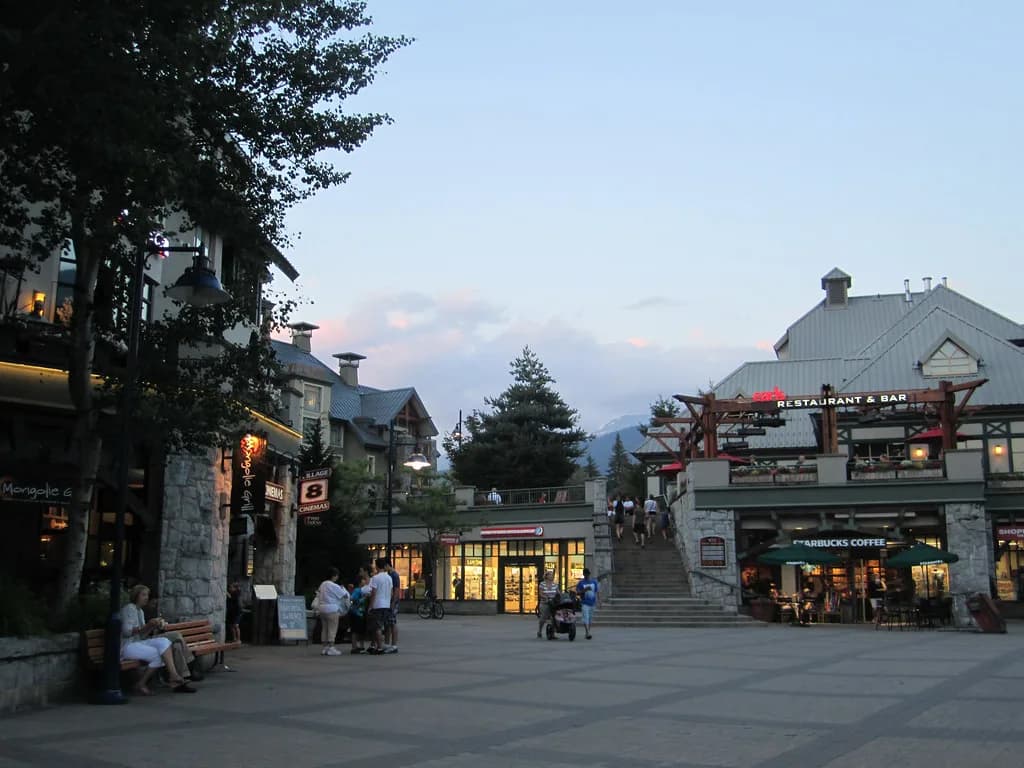
What to Wear in Whistler in December: Winter Packing Guide
December in Whistler means deep snow, cold lift rides, and festive village evenings. Pack these layers, boots, and evening pieces to stay warm and dry.
On this page
Whistler in December: the weather in numbers
Typical December conditions from 30 years of daily weather data, split into early, mid and late month so you can match them to your travel dates.
| Dates | Early Dec (1–10) | Mid Dec (11–20) | Late Dec (21–31) |
|---|---|---|---|
| Afternoon high | 0°C (32°F) | 0°C (32°F) | -1°C (31°F) |
| Night-time low | -5°C (24°F) | -4°C (25°F) | -5°C (23°F) |
| Feels like (afternoon) | -3°C (26°F) | -3°C (26°F) | -4°C (24°F) |
| Range of afternoon highs | -5–5°C | -5–4°C | -5–4°C |
| Days with rain | 6 in 10 days | 7 in 10 days | 6 in 10 days |
| Days with snow | 6 in 10 days | 7 in 10 days | 6 in 10 days |
| Afternoon humidity | 57% | 60% | 58% |
| Average wind | 4 km/h | 5 km/h | 4 km/h |
| Daylight | 8 h | 7.9 h | 7.8 h |
What this means for your suitcase
- Cold days: a winter coat, hat, gloves and a thermal base layer.
- Snow falls on about 6 in 10 days — waterproof boots with good grip.
- Heavy downpours are common — quick-dry clothes and shoes or sandals that cope with puddles.
- Day-to-day swings: afternoon highs range from about -5°C to 4°C, so pack for both.
Travelling on specific dates? Use our What to Wear Planner for the weather, outfits and a packing list for your exact days in Whistler.
Averages for 1991-2020, modelled from Copernicus ERA5-Land and ERA5 reanalysis via Open-Meteo open data (CC BY 4.0), adjusted to Whistler's elevation. Modelled afternoon highs can read 1–2°C below airport weather-station records.
December lands in Whistler's early-season window, and Whistler Blackcomb reports an average of about 227 centimetres of snowfall for the month, with the holiday period bringing some of the busiest days of the winter. That combination means two packing jobs at once: gear that works on a cold, snowy mountain and a compact evening layer that handles a festive village stroll. Whistler Blackcomb notes that early-season precipitation can arrive as a mix of rain and snow, so your shell matters as much as your insulation. Plan around layers you can add and remove rather than one heavy coat for everything.
The single biggest mistake is packing for one temperature. Whistler Village sits in the valley while the ski terrain climbs into the Coast Mountains, and Tourism Whistler reports that alpine temperatures run roughly 7 to 10 degrees Celsius cooler than the valley through winter. A jacket that feels right while you wait for a table in the village can feel thin on an exposed upper-mountain chair. Build your kit so the same base and midlayer work in both places, with the shell and accessories doing the adjusting.
What December Conditions Mean for Your Bag
Tourism Whistler lists village daily highs near -1°C (30°F) and lows near -5°C (23°F) for December, with alpine temperatures colder still. Those are historical tendencies, not a forecast for your dates, so treat them as a starting point for how much insulation to bring. Snowfall is the bigger variable: December has delivered anywhere from roughly 74 to 373 centimetres in the recorded years on Whistler's own snowfall table, a wide range that argues for waterproof outer layers rather than a fixed amount of warmth.
If you are weighing December against a shoulder-season trip, the earlier month trades snow coverage for milder walking conditions, which the what to wear in Whistler in November guide covers in detail. December adds real winter footwear demands and colder lift rides, so insulated, waterproof gloves and a proper snow boot become essential rather than optional. The packing list for Whistler expands on how these pieces fit into a broader winter kit.
The Three-Layer System for Ski and Snowboard Days
Start with a thin synthetic or merino base layer that sits against your skin and moves moisture away, because a cotton T-shirt under a shell gets cold and stays cold once you stop moving. Add an insulating midlayer, then finish with a waterproof and breathable shell that has a hood you can pull over a helmet. Tourism Whistler's own packing advice describes a light shirt, turtleneck, thin fleece, and a wind- and waterproof shell as the core combination, which is a useful sanity check on your own stack.
Two base layers and two midlayers for a four- to five-day trip let you rotate one set while the other dries, which matters more than packing a different outfit for each day. On a mild, wet December day, a shell over a light fleece can be enough; on a clear, cold morning the same shell over a down midlayer makes more sense. Whistler Blackcomb's early-season guidance suggests waterproof, breathable outerwear is the priority when precipitation can fall as rain or snow.
Fleece or Down: Choosing Your Midlayer
A fleece midlayer is the better call for active skiing because it breathes well under a shell and keeps working if it gets slightly damp, which suits the mixed rain-and-snow days early season can produce. A down or synthetic-insulated midlayer adds far more warmth for the same bulk and is the smarter pick for cold, dry days, long gondola rides, and standing around in the village after dark. If your bag only has room for one midlayer, a midweight synthetic-insulated jacket covers more situations than fleece alone.
Think about where the midlayer will be worn rather than how warm it is on its own. A slim insulated jacket that sits cleanly under your shell does double duty as an evening layer with jeans, while a bulky fleece usually stays in the lodge. Whistler is a laidback ski town, and Tourism Whistler notes that smart-casual dress is acceptable even for finer dining, so one neat midlayer covers most evening plans.
Hands, Head, and Face on Cold Lift Rides
Lift rides are where December cold bites hardest, because you sit still in moving air with no way to warm up until you reach the top. Insulated waterproof gloves or mittens plus a thin liner pair give you flexibility: wear the liners alone for fiddling with buckles, then add the outer glove for the ride. A fleece hat that fits under a helmet and a neck warmer that pulls up over your chin keep exposed skin comfortable on the coldest mornings.
Pack a spare set of liners or a second hat, since a damp hat from a snowy morning is miserable by the afternoon. Goggles handle wind and snow far better than sunglasses on a stormy day, so bring both if conditions look mixed. These small accessories are cheap in weight terms and are the first thing you will regret leaving behind when the temperature drops on the upper mountain.
Snow Boots and Traction for the Village
Whistler Village in December is often packed snow and ice, so a waterproof boot with a deep, grippy tread is the practical choice for walking between your lodging, the lifts, and restaurants. Tourism Whistler recommends good-quality boots with waterproof soles for anyone heading out on foot, and that applies to a ten-minute village walk as much as a snowshoe outing. Look for a sole with defined lugs rather than a smooth fashion sole, and check that the boot is tall enough to keep snow out when you step through a drift.
Ski and snowboard boots live in a locker or on the mountain, so your walking footwear is separate and worth the luggage space. If you plan tubing, snowshoeing, or a valley walk on a rest day, the same waterproof boot covers those activities without a second pair. Bring one pair of boots you trust and leave the dress shoes at home unless a specific plan requires them.
Evening Outfits That Work Over Ski Clothes
The trick to festive village evenings is one compact layer that upgrades your daytime kit instead of replacing it. A clean sweater or a midweight insulated jacket over the base layer you already wore works for dinner, and a scarf and hat you already packed finish the look. Whistler's casual, laidback character means you do not need a separate formal wardrobe, and smart-casual pieces handle everything from a pub to a nicer restaurant.
For a holiday evening, choose a darker sweater and a simple pair of dark jeans or trousers that survive a snowy walk, because slush at the curb ruins light-coloured hems quickly. If you have plans around the New Year period, note that the village fills with holiday crowds and reservations matter more than dress, so confirm your plans rather than packing extra outfits. U.S. News Travel describes late December through March as Whistler's festive high season, when the village fills with holiday lights and entertainment.
A Four- to Five-Day December Packing Example
For a five-day trip, bring two base-layer tops and one base-layer bottom, one fleece midlayer, one insulated midlayer, and one waterproof shell with a hood. Add insulated gloves, liner gloves, a fleece hat, a neck warmer, goggles, and one pair of waterproof snow boots. Two pairs of ski or snowboard socks plus a couple of everyday socks cover the rotation without overpacking.
For evenings, pack one smart-casual sweater, one pair of dark trousers or jeans, and one compact insulated jacket that packs small. Swimwear is worth including if your lodging has a hot tub, and a small dry bag keeps wet gloves and socks away from everything else. If you are combining Whistler with a coastal stop, the what to pack for Whistler and Vancouver guide explains how to adjust for the milder, wetter city climate.
What to Leave Behind
Leave the umbrella, the heavy cotton layers, and the extra pairs of jeans at home. Cotton holds moisture and loses insulation when it gets wet, and December in Whistler is precisely when that happens; jeans are also slow to dry after a snowy walk. Ski or snowboard equipment is bulky and widely available to rent, so unless you are committed to your own gear, renting frees a lot of bag space.
Skip multiple pairs of dress shoes and anything you would only wear indoors in a warm climate. A single versatile boot and one evening shoe cover almost every December scenario, and the weight you save is better spent on a warm midlayer. If you forget something, Tourism Whistler notes Whistler has plenty of shops where you can find winter clothing, so a missing glove liner is not a trip-ending problem.
Check the Forecast Before You Fly
Historical averages tell you how to pack; a forecast tells you what to wear on a given day, and December conditions at Whistler can swing from mild and wet to clear and very cold within a single trip. Check Whistler Blackcomb's mountain conditions and webcams in the days before departure to see current snow depth, precipitation type, and alpine temperatures. If a cold, dry pattern is setting up, add the down midlayer; if a wet system is arriving, make sure your shell is genuinely waterproof and pack a second pair of gloves.
Keep your essentials in a carry-on if you are flying in, since a delayed bag on a ski trip means renting or buying replacements on arrival. Pack your base layers, gloves, and goggles in the cabin bag and check the shell if you must, because those small pieces are the hardest to replace in the right size. Recheck the forecast the morning you leave and make one final adjustment to your midlayer choice.
Plan Your December Layers
December packing for Whistler comes down to a flexible three-layer system, a warm midlayer you can also wear at dinner, and a waterproof boot you trust on packed snow. Build around one good shell and one insulated midlayer rather than a single heavy coat, and let the forecast on the day settle the rest. With two base-layer sets, insulated gloves, and a compact evening layer, a four- to five-day bag stays light and still covers the mountain and the village.
For the full seasonal kit and additional month-by-month detail, the Whistler packing list ties the winter pieces together, and the sibling guides cover what to wear in Whistler in January and what to wear in Whistler in February if your plans extend later into the season. Pack for the cold you are likely to get, keep an eye on conditions before you fly, and you can spend your trip skiing rather than shopping for forgotten gloves.
More packing guides for Whistler
Frequently Asked Questions
What should I wear in Whistler in December?
Plan around layers: a moisture-wicking base layer, an insulating midlayer, and a waterproof, breathable shell with a hood. Add insulated gloves, a fleece hat, and a neck warmer for cold lift rides, and a waterproof snow boot for walking through the village. Keep a compact smart-casual layer for dinners and evenings so you are not changing your whole outfit.
Do I need a down jacket in Whistler in December?
Not necessarily, but an insulated midlayer helps on cold, dry days and long chairlift rides. A fleece midlayer under a shell is often enough on milder or wetter days, while a down or synthetic-insulated jacket adds more warmth for less bulk. If you only bring one midlayer, a midweight synthetic-insulated jacket covers more December conditions than fleece alone.
What kind of boots should I bring to Whistler in December?
Bring waterproof boots with a deep, grippy tread for packed snow and ice around the village. Tourism Whistler recommends good-quality boots with waterproof soles for anyone heading out on foot, which covers a walk to dinner as well as a snowshoe outing. Leave dress shoes behind unless you have a specific plan that requires them.
What should I wear in Whistler Village in the evening?
Smart-casual clothing is the practical choice, since Whistler is a laidback ski town and Tourism Whistler notes that smart-casual attire is appropriate even for fine dining. A clean sweater or compact insulated jacket over your daytime base layer, with dark trousers or jeans and your snow boots, handles most restaurant and après-ski plans. A hat and scarf make the walk between venues far more comfortable.
How many layers do I need for skiing in Whistler in December?
Three working layers cover most days: a base layer against your skin, an insulating midlayer, and a waterproof shell. Carry one extra base layer and one extra midlayer so you can adjust for a cold, clear morning or a milder, wet afternoon. Alpine temperatures run cooler than the village, so the same stack that feels light in the valley may need the insulated midlayer higher up.
Sources
Free: The Ultimate Packing Cheat Sheet
A carry-on capsule wardrobe, the complete packing checklist, layering made simple, and what to wear by season — one printable page you'll use on every trip.
You might also like

Continue reading
More guides you'll find useful


