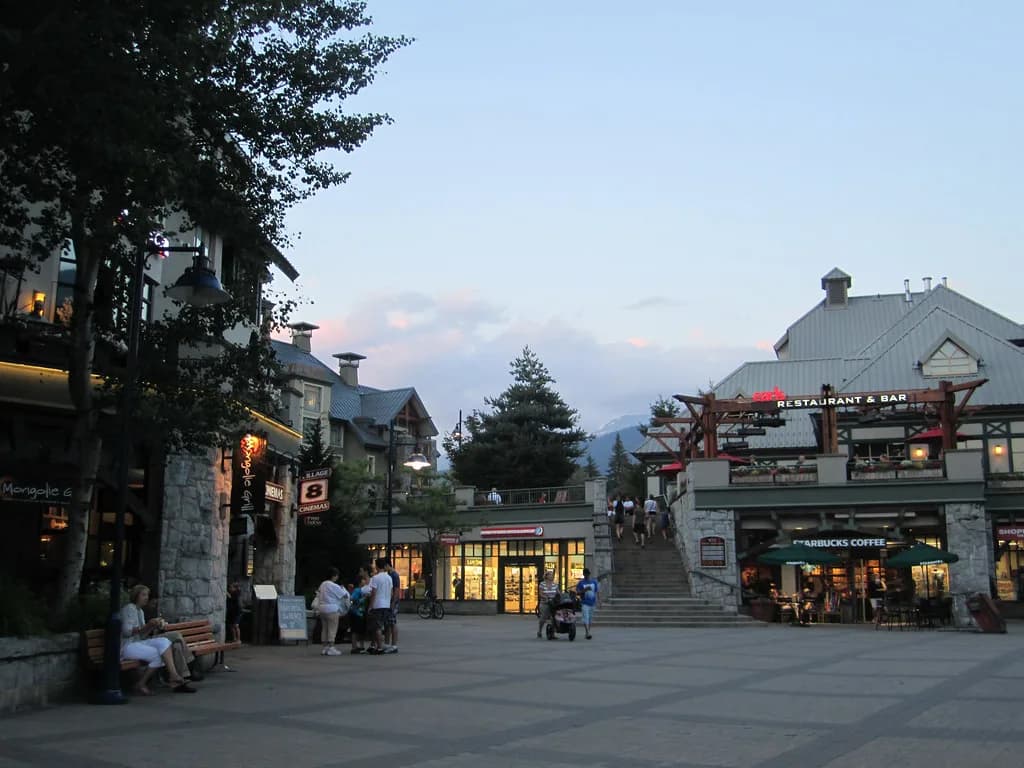
What to Wear in Whistler in November: Rain, Slush, and Early Snow
Pack for Whistler in November with waterproof shells, damp-friendly insulation, and grippy boots for valley rain and early alpine snow at the resort.
On this page
Whistler in November: the weather in numbers
Typical November conditions from 30 years of daily weather data, split into early, mid and late month so you can match them to your travel dates.
| Dates | Early Nov (1–10) | Mid Nov (11–20) | Late Nov (21–30) |
|---|---|---|---|
| Afternoon high | 5°C (41°F) | 3°C (38°F) | 2°C (35°F) |
| Night-time low | 0°C (31°F) | -1°C (30°F) | -3°C (26°F) |
| Feels like (afternoon) | 2°C (35°F) | 0°C (32°F) | -2°C (28°F) |
| Range of afternoon highs | 1–8°C | -1–7°C | -3–5°C |
| Days with rain | 6 in 10 days | 7 in 10 days | 6 in 10 days |
| Days with snow | 6 in 10 days | 7 in 10 days | 6 in 10 days |
| Afternoon humidity | 58% | 60% | 59% |
| Average wind | 4 km/h | 4 km/h | 4 km/h |
| Daylight | 9.2 h | 8.7 h | 8.3 h |
What this means for your suitcase
- Cold days: a winter coat, hat, gloves and a thermal base layer.
- Snow falls on about 6 in 10 days — waterproof boots with good grip.
- Heavy downpours are common — quick-dry clothes and shoes or sandals that cope with puddles.
- Day-to-day swings: afternoon highs range from about -1°C to 7°C, so pack for both.
Travelling on specific dates? Use our What to Wear Planner for the weather, outfits and a packing list for your exact days in Whistler.
Averages for 1991-2020, modelled from Copernicus ERA5-Land and ERA5 reanalysis via Open-Meteo open data (CC BY 4.0), adjusted to Whistler's elevation. Modelled afternoon highs can read 1–2°C below airport weather-station records.
November in Whistler sits between autumn and winter, and the packing problem is elevation rather than outright cold. The village sits low in the valley, where the month often brings rain or wet snow, while the upper mountain can hold drier, colder snow at the same hour. That split means your bag has to solve two climates at once: a damp valley stroll and a snow-covered alpine viewpoint.
The local climate is coastal rather than continental, which changes what warmth means. A heavy puffy jacket that works in a dry cold can struggle under sustained rain, while a proper waterproof shell over a damp-friendly mid-layer keeps you functional in both. Insulation still matters, but waterproofing is the first filter for almost everything you pack.
Treat November conditions as a historical seasonal tendency, not a forecast for your dates. Before you zip the bag, check Whistler Blackcomb for the current snowline, lift status, and trail openings, then adjust layers and footwear accordingly. Use the decisions below as a system you can trim or expand once you see real conditions.
November in Whistler: A Month That Swings Between Fall and Winter
Historically, November in Whistler behaves like a shoulder month: rain, snow, sunshine, or a mix of all three can appear in the same week, and the resort's climate is coastal rather than continental. Valley temperatures from September through December are generally unlikely to drop far below freezing, but the alpine runs noticeably colder than the village. Treat those as typical patterns and confirm current conditions before departure rather than relying on any single month's reputation.
The month also marks a transition in what the resort offers. Skiing typically begins around mid-November, sometimes a little earlier, so early-season terrain is limited and conditions vary day to day. That means your clothing has to serve both a wet village walk and a colder, snowier mountain upload without a full wardrobe swap.
Daylight shortens noticeably through the month, so late-afternoon temperatures can drop while you are still out on the Valley Trail or wandering the village. Plan layers you can add mid-afternoon without returning to your room, and keep a small pack or tote for shedding or adding a mid-layer.
The Elevation Split Is the Whole Packing Problem
Whistler Village sits low in the valley, and the surrounding mountains rise well above it, which is why rain at the base and snow up high is a normal November pairing. The village can be slushy and wet underfoot while the alpine is colder and snow-covered. Packing for the colder end only leaves you soaked in the village; packing for the village only leaves you cold on the mountain.
The practical fix is a shell-and-layer system rather than one heroic coat. A waterproof shell handles valley rain and wet snow, while a fleece or light down mid-layer underneath handles the colder alpine air. Because the difference is elevation-driven, the same outfit can be adjusted with one zip rather than replaced.
If your trip includes a gondola upload or the Peak 2 Peak crossing, expect the top stations to feel colder and windier than the village in any season. Carry a warm layer even on a mild-looking morning, because the temperature at the base tells you little about conditions at the top.
If you drive the Sea to Sky Highway from Vancouver, the elevation change happens quickly and road conditions can differ from the village. Check DriveBC before setting out and treat the drive as a separate decision from what you wear on the mountain.
Build Your System in Three Layers: Base, Mid, Shell
Think of your clothing as three jobs: move sweat away from your skin, trap warmth that still works when damp, and block wind and water. A moisture-wicking base layer does the first job, a fleece or light down mid-layer does the second, and a waterproof shell does the third. When the village is raining and the alpine is snowing, this system lets you stay comfortable at both elevations without carrying two outfits.
This is the framework most Whistler packing advice converges on, and the same layered approach appears in this coast-focused Whistler packing list. The system matters more than any single piece, because you will likely add and remove layers several times in one day.
For a starting point on which specific pieces belong in each tier, work from a broader packing list built for wet coastal mountain weather, then trim it once you see the actual forecast.
Base Layers: Skip Cotton, Choose Merino or Synthetic
Cotton is the one fabric to leave out of your active layers. When it gets wet, it holds moisture against your skin and stops insulating, which is exactly the wrong behaviour in a wet-snow climate. Merino wool or a synthetic base layer moves moisture away and keeps working when damp, which is why both show up repeatedly in coastal Whistler packing guidance.
For November, a mid-weight merino or synthetic long-sleeve top and matching bottoms cover most days. If you run warm, a lighter base layer with a warmer mid-layer is easier to manage than a heavy base layer you cannot remove. Bring two base-layer sets for a longer trip so one can dry while you wear the other.
If you like working from a checklist, run through a general packing list to confirm you have base layers covered before you start adding extras.
Mid-Layers: Insulation That Still Works When Damp
Mid-layers do the warmth work, and in a wet coastal climate the key question is how they behave when they get damp. Fleece is the reliable choice: it insulates when damp, dries relatively quickly, and layers cleanly under a shell. A light down or synthetic puffy adds more warmth for cold alpine mornings but is less forgiving if it soaks through, so it works best under a genuinely waterproof shell.
A useful November combination is a fleece for active village walking and a packable puffy for gondola uploads, summit time, or evenings. If you only bring one mid-layer, bring the fleece and rely on the shell for weather protection. If you run cold, bring both and accept the extra packing space.
This is the tier where the December version of the trip starts to differ. For colder, snowier days see what to wear in Whistler in December for a mid-layer comparison. November demands more rain tolerance; December demands more raw warmth.
The Shell Is Your Most Important Piece for This Month
In a coastal mountain climate, a waterproof and windproof shell is worth more than an extra sweater. Look for a jacket with a proper waterproof rating rather than a water-resistant coating, ideally with taped seams and a hood that fits over a hat. A shell also protects whatever insulation you wear underneath, which is why it is the piece to prioritise when packing.
Waterproof trousers or shell pants are the often-forgotten half of the equation. In valley rain or wet snow, wet legs make the rest of the outfit miserable very quickly, and they also block wind on a cold gondola ride. If you only add one thing beyond a jacket, add waterproof leg coverage.
A compact umbrella is optional in the village but useless on the mountain, where wind makes it a liability. Rely on a hood and shell instead, and keep the umbrella for short village walks between meals or shops.
Footwear: Waterproof, Grippy, and Ready for Slush
November footwear has to handle mud, slush, wet pavement, and possibly ice. Insulated waterproof boots with a deep, grippy tread are the safest default for the village, the Valley Trail, and the base areas. If you plan to walk the valley paths frequently and icy patches are present, pack or buy a pair of ice cleats that fit over your boots.
Bringing a second pair of shoes is a trade-off worth considering. Waterproof boots for the outdoors plus a lighter, dry pair for indoors lets your boots dry out and keeps you from tracking slush through a restaurant. If you only have room for one pair, make it the waterproof boot and accept it as your everything shoe.
Ski boots, if you are renting, are typically fitted at the resort, so your travel footwear only needs to get you from the lodge to the lift. Check the mountain's conditions page for the current base and lift status before deciding how much time you will spend on snow versus in the village.
Socks, Hats, Gloves, and Small Accessories That Save the Day
Wool or synthetic socks beat cotton for the same reason base layers do: they keep insulating when damp. Pack one pair per day of outdoor activity, and resist the urge to wear two pairs inside a tight boot, which can restrict circulation and make feet colder. A spare pair in your pack is genuinely useful if you step in a puddle.
A warm hat, often called a toque in Canada, plus gloves and a neck gaiter or scarf cover the small skin areas that lose heat fastest. Bring two pairs of gloves if you plan to be on the mountain: one pair will likely get wet, and dry spare gloves change the day. Waterproof or water-resistant gloves are worth the upgrade in a wet-snow climate.
Small extras that pay off in November include sunglasses or goggles for bright snow days, lip balm, a power bank because cold drains batteries, and a reusable water bottle. Noise-cancelling headphones are a good option for the flight or a bus ride, but they are not hearing protection. A packable tote or small backpack lets you carry layers as the day warms or cools.
What to Wear in the Village vs. Up the Mountain
For a village day, think waterproof boots, wool socks, jeans or hiking pants, a base layer, a fleece or light sweater, and a waterproof shell. The village is walkable and compact, so the outfit only needs to handle rain, slush, and cool air, not deep snow. A scarf, hat, and water-resistant gloves round it out for late-afternoon walks.
For a mountain day, add waterproof shell pants, a warmer mid-layer, goggles or sunglasses, and insulated waterproof gloves. If you are uploading by gondola, carry a packable puffy in your daypack for the cold top stations, and keep your shell on for the ride down. Ski or snowboard boots replace your village boots once you are on the snow, so travel footwear stays light.
An evening outfit can be simpler than many visitors expect: Whistler is a casual mountain town, so a warm sweater, jeans, and waterproof boots cover most restaurants and bars. Pack one slightly nicer layer for a special dinner and leave the formal wear at home.
A Five-Day Packing Example for One Carry-On and One Personal Item
For a five-day November trip, start with two merino or synthetic base-layer sets, one fleece, one packable puffy, one waterproof shell jacket, and one pair of waterproof shell pants. Add two pairs of wool socks plus a spare, two pairs of gloves, a hat, and a neck gaiter. That covers the rain-to-snow range without duplicating function.
For footwear, wear your waterproof boots on the plane and pack one lighter pair for indoors, plus ice cleats if you plan to walk the Valley Trail. Clothing for the village can be two pairs of pants, two mid-layers, and a handful of shirts, since the shell and mid-layers do most of the visible work.
Wear your bulkiest items in transit to save space, and use packing cubes to keep wet outerwear separate from dry base layers. If you are also continuing to the coast, the packing overlap is substantial; see what to pack for Whistler and Vancouver for a two-destination version of the same system.
What to Leave at Home, and Why
Leave dry-cold specialist gear, cotton layers, and a single pair of gloves at home. Equipment rated for a dry continental climate often fails in coastal sleet, and cotton works against you in exactly the conditions November delivers. One pair of gloves almost guarantees wet hands by lunch.
Formal shoes, multiple heavy sweaters, and more than one bulky jacket are easy cuts. Whistler is casual, so a single waterproof shell over interchangeable mid-layers covers more situations than a wardrobe of statement coats. If you plan to ski, rent equipment locally rather than flying with it; rental fleets are tuned for local conditions.
Leave backcountry goals at home unless you have the training and equipment for them. Most visitors experience November from the village, the Valley Trail, and open resort terrain, and those do not require avalanche gear. For what the resort does and does not open in early season, check its own conditions page.
Check the Forecast Before You Zip the Bag
Historical patterns only narrow your packing choices; they do not predict your specific week. Check Whistler Blackcomb's conditions page for the current snowline, open lifts, and weather, and cross-reference a general forecast for Whistler, British Columbia for temperature and precipitation trends. That two-source check tells you whether to emphasise rain gear or bring an extra insulating layer.
Look specifically at the freezing level and the difference between valley and alpine forecasts, because that gap determines whether you need shell pants and goggles or just a rain jacket. If rain is likely at village level, prioritise waterproof footwear and shell trousers. If cold and snow are more likely, lean on base layers and a warmer mid-layer.
Pack the morning of departure with a final look at the forecast rather than locking your bag days earlier. November conditions shift quickly, and a small adjustment such as adding gloves or swapping a fleece for a puffy can change how comfortable the week feels.
Plan Your Visit
Packing for Whistler in November comes down to a waterproof shell, damp-friendly insulation, non-cotton base layers, and grippy waterproof footwear. If you build those four pieces first, the rest of the bag falls into place around short daylight, slushy village walks, and colder alpine air.
If your dates sit later in the season, compare this system with the colder-weather advice for what to wear in Whistler in January, and adjust mid-layers and gloves rather than rebuilding the whole approach. For a wider framework covering all seasons, the Whistler packing list ties these month-specific choices together.
Related packing guides
- Whistler Packing List: A Year-Round Layering Guide
- What to Wear in Whistler in December: Winter Packing Guide
- What to Wear in Whistler in January: Winter Packing Guide
- What to Wear in Victoria in November: Rain-Ready Layers
- What to Wear in Guadalajara in November
- What to Wear in Calgary in November: Late-Fall Packing Guide
- What to Wear in Montreal in November: Packing Guide
Frequently Asked Questions
Is there snow in Whistler in November?
Historically, November is a transition month: the village can see rain or wet snow, while higher elevations often collect early snow. Skiing typically begins around mid-November, sometimes earlier. Conditions vary year to year, so check Whistler Blackcomb's current snow and lift status before you travel.
What should I wear in Whistler in November?
Plan on three layers: a merino or synthetic base layer, a fleece or light down mid-layer, and a waterproof shell jacket with waterproof trousers. Add wool socks, a warm hat, gloves, a neck gaiter, and insulated waterproof boots with grip. This system handles both valley rain and colder alpine conditions.
Do I need waterproof boots for Whistler in November?
Waterproof boots with deep tread are the most practical single footwear choice for November, because the village and Valley Trail can be muddy, slushy, or icy. If you will walk the valley paths often, pack or buy a pair of ice cleats that fit over your boots. A lighter indoor pair is a useful second option if you have room.
How cold is Whistler in November?
The valley generally stays above deep freezing through the fall period, while the alpine runs noticeably colder than the village. Exact numbers change year to year, so check the current forecast for Whistler, British Columbia before you pack. The elevation difference matters more than any single number because it determines whether you meet rain or snow.
Can I ski in Whistler in November?
Skiing typically starts around mid-November, sometimes earlier, though early-season terrain depends on conditions. Not every run or lift is open at the start, so check Whistler Blackcomb's conditions page for open terrain and lift status. If you ski, plan on waterproof shell pants and insulated waterproof gloves in addition to your village layers.
Sources
- The Ultimate Packing Guide for Your Winter Getaway in Whistler — Extremely Canadian
- Weather in Whistler » Harmony Whistler Vacations
- Whistler Blackcomb Ski Season Guide – Month-by-Mon | Snow.com
- What to Pack for a Week in Whistler • The Blonde Abroad
- Whistler Winter Packing List | The Listel Whistler, a Coast Hotel
Free: The Ultimate Packing Cheat Sheet
A carry-on capsule wardrobe, the complete packing checklist, layering made simple, and what to wear by season — one printable page you'll use on every trip.
You might also like

Continue reading
More guides you'll find useful