What to Wear in Cortina d’Ampezzo in May: Packing for Late Spring
What to wear in Cortina d’Ampezzo in May: discover layering tips, waterproof boots, and sun protection for cool mornings, muddy trails, and warm afternoons.
On this page
Cortina d’Ampezzo in May: the weather in numbers
Typical May conditions from 30 years of daily weather data, split into early, mid and late month so you can match them to your travel dates.
| Dates | Early May (1–10) | Mid May (11–20) | Late May (21–31) |
|---|---|---|---|
| Afternoon high | 12°C (54°F) | 14°C (57°F) | 16°C (61°F) |
| Night-time low | 3°C (38°F) | 5°C (41°F) | 6°C (43°F) |
| Feels like (afternoon) | 10°C (50°F) | 12°C (53°F) | 14°C (58°F) |
| Range of afternoon highs | 8–17°C | 9–19°C | 11–21°C |
| Days with rain | 7 in 10 days | 8 in 10 days | 7 in 10 days |
| Days with snow | 2 in 10 days | 1 in 10 days | 1 in 10 days |
| Afternoon humidity | 52% | 52% | 49% |
| Average wind | 4 km/h | 5 km/h | 4 km/h |
| Daylight | 14.4 h | 14.8 h | 15.2 h |
What this means for your suitcase
- Cool days: a warm sweater and a proper jacket — think wool or a light insulated coat.
- Snow falls on about 1 in 10 days — waterproof boots with good grip.
- Heavy downpours are common — quick-dry clothes and shoes or sandals that cope with puddles.
- Day-to-day swings: afternoon highs range from about 9°C to 20°C, so pack for both.
Travelling on specific dates? Use our What to Wear Planner for the weather, outfits and a packing list for your exact days in Cortina d’Ampezzo.
Averages for 1991-2020, modelled from Copernicus ERA5-Land and ERA5 reanalysis via Open-Meteo open data (CC BY 4.0), adjusted to Cortina d’Ampezzo's elevation. Modelled afternoon highs can read 1–2°C below airport weather-station records.
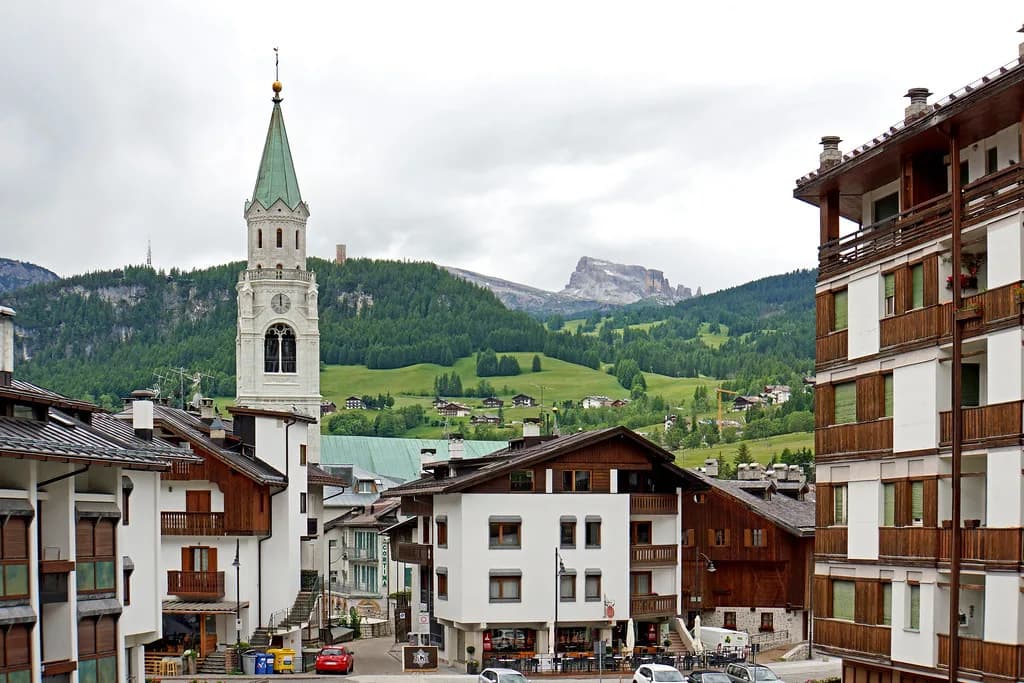
May in Cortina d’Ampezzo is a beautiful, complicated month. The valley floor begins to green up and Corso Italia catches afternoon sun, while the mountains above still hold snow and the trails that lead to them stay muddy and cold. It is a time of transition, which makes packing for Cortina in May a bit of a puzzle.
You won't need ski gear, but you also can't rely on warm-weather hiking clothes alone. The key to enjoying May here is a smart layering system that handles cool mornings, quick afternoon warm-ups, and the occasional rain shower. Shopping for that mix means choosing items that work on both an early hike and a lazy village stroll.
Cortina in May: Weather patterns and what they mean for your suitcase
Cortina d’Ampezzo sits at about 1,224 meters (4,016 feet) above sea level, and because weather here changes with altitude, the village and the high trails can feel like two different seasons. According to the official tourism site, conditions can shift quickly as you move higher, so plan to dress in layers you can adjust during the day; check the weather guide before heading out.
Long-term climate data for Cortina shows that May is cooler and wetter than many visitors expect. One climate source lists an average temperature of 5.7°C (42.2°F), with average highs around 10.2°C (50.3°F) and about 16 rainy days in the month (Climate-Data.org). A Dolomites-specific report gives May highs near 23°C (73.4°F) and lows around 9°C (48.2°F) (Dolomite Mountains). The discrepancy reflects different measurement periods and altitudes, so treat extremes as likely rather than guaranteed.
Plainly, you need to be ready for a bit of everything: near-freezing starts at altitude, spring-like afternoons, wind, and rain at some point. Snow remains possible on trails above roughly 2,000 meters, and it has been known to fall even in the valley in early May. Packing for a season, not a single forecast, is what gets you comfortable in these conditions.
The Core Principle: Build a Layering System, Not an Outfit
Forget trying to find one perfect outfit for a May day in Cortina—you will be shedding and adding layers all day. A layering system means having a breathable base, an insulating mid, and a protective outer that you can add or remove as the temperature swings and as you move between sun and shade. This approach is exactly what most expert hikers recommend for the Dolomites, no matter the season. To see how other months compare, check out the general [What to Pack for Cortina d’Ampezzo](/what-to-pack-cortina-d-ampezzo) guide. For a taste of true winter layering, see our [What to Wear in Cortina d’Ampezzo in January](/what-to-wear-cortina-in-january) guide.
The goal is to stay dry, not just warm. When you hike uphill, you’ll generate heat and sweat; when you stop for a snack or crest a windy ridge, that dampness will chill you fast. A good system actively pulls moisture away from your skin and traps warmth in when you need it, so you don’t have to suffer through either extreme.
As a rough guide, plan to start mornings with three layers on top—a base, a fleece, and a shell—and strip down to two or even one as the sun climbs. Wear bottoms that can handle mud and a little rain, and always carry a dry layer in your pack for when the wind picks up or the clouds roll in.
Base Layers: Moisture-Wicking Tops for Changing Activity Levels
Your base layer is the foundation of the whole system, and it needs to keep you dry no matter how much you hike. Choose a lightweight merino wool or synthetic tee that wicks sweat away, and skip cotton, which stays wet and cold against your skin. For May, a short-sleeve or thin long-sleeve works well; if you run warm, wear the short-sleeve and rely on a mid layer for insulation.
You don’t need heavy thermal underwear for May valley walks, but you might appreciate a lightweight long-sleeve base for high-altitude or early-morning trails. Pack one or two, depending on how many days you’ll be hiking. Since you’ll be changing activity levels from village strolls to strenuous climbs, choose a fabric that also resists odour so you can re-wear it across a few days.
Mid Layers: Fleeces and Lightweight Jackets for Cool Mornings
The mid layer is your primary warmth, so it should be easy to add and remove. A medium-weight fleece or a soft-shell jacket is a great choice for May because it provides insulation without being too heavy, and it packs down easily in your daypack. If you’re hiking at altitude or on cooler, windier days, you’ll appreciate a slightly warmer insulated jacket instead.
Think about style too—Cortina has a smart casual vibe, and you might want a fleece that looks decent when you duck into a rifugio or stroll down Corso Italia in the evening. A tailored fleece or a packable down vest can work both on the trail and in town, saving you from carrying extra clothes for dinner.
Outer Layers: Waterproof Shells and Rain Protection
A reliable waterproof jacket is the single most important piece of outerwear for May in the Dolomites. Rain can appear suddenly, and even a light drizzle is unpleasant if you’re not protected. Look for a model with sealed seams, an adjustable hood, and pit zips so you can vent heat on uphill stretches. If your jacket also has a small packable design, that’s ideal for carrying in your daypack all day.
A rain poncho or packable waterproof is a lighter alternative for shorter hikes, but a true shell offers better wind protection and durability on exposed trails. Choose a breathable membrane rather than a simple coated nylon, so you don’t get soaked from the inside with sweat on a grey day. For extra coverage, you can rely on a waterproof backpack cover—essential if you’re carrying electronics or extra layers.
Remember that rain in the mountains is often accompanied by wind, which makes the air feel much colder. Wearing a waterproof shell that also blocks wind will keep you comfortable even when the temperature is above 10°C. And if you are hiking above 2,000 meters, treat that same shell temperature rating more conservatively, because every 1,000 meters gained can drop the temperature by roughly 6.5°C (11.7°F), a common rule of thumb cited by Dolomite guides.
Bottoms: Hiking Trousers vs. Shorts—and Why You Need Both
When it comes to your legs, May in Cortina asks for versatility. Lightweight, quick-drying hiking trousers are your primary choice, offering protection from mud, scratchy undergrowth, and cool breezes. Many trousers zip off into shorts, which can be a smart two-in-one solution for afternoons when you want more air. For shorter hikes near the valley, some people are fine in shorts if they have strong legs and the sun is out, but you risk getting scratched and cold on overcast days.
A pair of comfortable joggers or loose trousers are great for village evenings, but you won’t want to hike in them. For serious trail time, choose a fabric with some stretch and a durable water-repellent finish so light rain beads off. If you plan to hike hut-to-hut, be aware that you might want a clean pair for the evening, so pack at least two pairs of hiking pants or one pair plus shorts.
Footwear: Sturdy Waterproof Boots Are Non-Negotiable
A well-fitted pair of sturdy, waterproof hiking boots is the most important gear decision you’ll make for a May trek in the Dolomites. Trails are often muddy, snow-covered in patches, or crossing streams, and boots with good ankle support will keep you safe and dry. Expert advice for the region says that if you’re hiking more than a gentle valley path, proper boots are your best friend—they provide grip, warmth, and protection from rocks and roots.
If you only plan to walk around the village and do a short, dry hike, you could get away with trail runners. But for the classic spring hikes—if they are snow-free and open—like Lago di Sorapis, Cinque Torri, or the Tre Cime, you want solid footwear that can handle mud and early-season snow. Break in your boots before you leave home to avoid blisters on your first day.
A pair of comfortable trainers or town shoes gives your feet a break in the evening and is fine for Corso Italia, but don’t be tempted to use them as your primary hiking shoe. If your accommodation has a drying room, use it each night. If not, bring a pair of waterproof socks or a second pair of boots in case the first pair gets soaked.
Gaiters and Sock Strategies for Muddy Trails
For May hiking, gaiters are a surprisingly useful addition to your kit. They’re not fashionable, but they keep mud, snow, and water out of your boots when you’re crossing slushy patches or slogging through wet trails. A lightweight pair of waterproof gaiters costs little and packs down small, so you can carry them without a thought and use them on the days they’re needed. Bring them if you plan to hike above the snow line, or if you want to keep your socks dry on muddy sections.
Your choice of socks matters almost as much as your boots. Wool or merino socks will keep your feet warm and dry because they pull moisture away from your skin, while cotton traps sweat and leads to blisters. Pack at least one pair for every hiking day, plus an extra pair for emergencies. Take a thin liner sock under a heavier merino sock if your boots are on the looser side or if you know you’re prone to blisters.
Accessories: Sun Protection, Hats, and Gloves for Variable Weather
Even in spring, the sun at altitude is intense. When you hike above the treeline, you’ll appreciate a wide-brimmed hat, sunglasses, and sunscreen on your face and neck. Many visitors end up with a sunburn after a day on snow or white limestone trails because they forget how strong the UV is at 2,000 meters. Even on a cool day, that reflection and the thin air can work against your skin.
Don’t leave home without a pair of lightweight gloves and a beanie. Mornings can be cold, especially if you start early for a sunrise hike or if a wind picks up along a ridge. You’ll be glad you have them for the frosty start, and they take up very little space in your pack. For extra comfort on chilly evenings, a buff or neck warmer can be a versatile layer that also protects from the sun.
Dressing for the Village: Comfortable Trainers and Casual Layers
Cortina is an elegant town, and you’ll want something that doesn’t scream 'day hiker' for those moments on Corso Italia or over dinner. A pair of stylish, comfortable trainers—like clean leather sneakers—work well for daytime wandering, while you can switch into slightly dressier shoes for the evening. Pack clothes that can be dressed up or down, such as a nice pair of dark jeans paired with a merino top and a smart jacket.
The weather in May is still too cool for sandals, so leave them at home unless you have a specific trip to a thermal spa. For women, a long-sleeve blouse or a light jumper in a neutral tone can be worn over trousers or a skirt. For men, a casual button-down shirt works well. You’ll want to feel comfortable and still look like you made an effort, but remember that even in the village, the temperature can drop in the evening.
What to Leave Behind: Ski Gear and Heavy Winter Layers
The single biggest packing mistake for May in Cortina is bringing ski gear. Since the slopes are closed, you do not need insulated ski pants, heavy down parkas, or a snow jacket. That said, you also shouldn't bring only lightweight summer gear. Leave behind heavy thermal underwear too, unless you are strictly doing early-morning winter-style activities or spending long periods at very high altitudes in freezing conditions.
Cut down on unnecessary bulk by packing items that pull double duty. Leave the bulky sweaters behind and instead bring a couple of fleeces or a single insulated jacket that can serve as a warm mid. Similarly, skip heavy denim and bring quick-dry trousers that are good for both the trail and town. For your feet, leave behind tall waterproof winter boots; regular hiking boots plus trainers will cover all your needs.
A Sample 5-Day Packing List for Cortina in May
Here is a workable five-day list that follows the guidelines above. For your top half: 2–3 short-sleeve merino or synthetic tees, 1 long-sleeve lightweight base, 1 mid-weight fleece, and 1 waterproof shell jacket. For bottoms: 2 pairs of quick-dry hiking trousers (or 1 convertible, 1 regular) and 1 pair of comfortable jeans or other evening wear. Footwear: 1 pair of sturdy waterproof hiking boots, 1 pair of trainers, and 3–4 pairs of wool blend socks.
Add accessories to handle the variable weather: a wide-brimmed hat or cap, sunglasses, sunscreen, a beanie, lightweight gloves, a buff, and a packable daypack that can carry water and layers. You might also want a pair of gaiters and a rain cover for your daypack. For the evening, a light but warm layer like a down vest or a smart fleece can take you from dusk to dinner.
To put that packing list into perspective, here's how you would dress on a May day: Start at 8 a.m. with your base top, fleece, and shell, plus your hiking trousers and boots. By 11 a.m., you've shed the fleece and rolled down your sleeves. In the afternoon, you may be in just your t-shirt and possibly hike in shorts if you brought them. As the sun drops behind the peaks, the fleece and shell go back on for the walk home.
Before You Go: Check the Forecast and Trail Conditions
Because May is so changeable, your final packing decisions should be informed by a last-minute weather check. The official Cortina tourism site publishes current conditions and an avalanche bulletin on its weather page, which matters if you plan any high-altitude hiking. Also check lift statuses and trail reports for the specific area you intend to visit—many mountain lifts and rifugi do not open until mid-June.
Even if the forecast for Cortina looks dry, know that mountain weather can differ dramatically from the valley. A good strategy is to have one flexible day in your itinerary that allows you to swap a high hike for a lower valley walk if the conditions turn poor. Local tourist offices and hotels are often the best source of up-to-date trail information, so ask them on arrival.
Final Tips for a Flexible Wardrobe
Packing for Cortina in May is about preparation, not overpacking. Focus on a solid layering system, sturdy waterproof boots, and a few versatile pieces that can take you from the trail to the village without skipping a beat.
Before you zip your bag, check the forecast one more time and confirm the condition of the lifts and trails you plan to use. With the right gear and flexible plans, you’ll be free to enjoy the quiet beauty of the Dolomites before the summer crowds arrive. For a fuller overview of you may need, you can refer to our general [What to Pack for Cortina d’Ampezzo](/what-to-pack-cortina-d-ampezzo) guide.
Frequently Asked Questions
Is May a good time to visit Cortina d’Ampezzo?
May is a quieter time in Cortina, before the summer rush. You can enjoy the valley and lower trails as they green up, and some rifugi begin to open. However, high-altitude trails may still have snow and lifts may be closed. Your flexibility is key. Check current conditions for the specific trails you want to walk before you finalise plans.
Do I need hiking boots for Cortina in May?
If you plan to do any real hiking, yes. Sturdy, waterproof boots with ankle support will keep you safe and dry on muddy and snow-affected paths. Even for easier valley walks, boots are a wise choice because of the extra grip. For strictly walking around Cortina village, comfortable trainers are fine.
What is the weather like in Cortina d’Ampezzo in May?
May is a transition month: cool mornings, mild to warm afternoons, and the possibility of rain and snow at higher altitudes. Conditions can change quickly, especially as you climb, and the local tourist office recommends checking the forecast before any outdoor activity. The temperature can vary considerably from the village to the peaks.
What layers should I pack for a mountain trip in May?
A base layer of merino or synthetic, a mid layer of fleece or lightweight down, and a waterproof shell will cover you in most conditions. You should also pack sun protection and a warm hat and gloves. The idea is to add or remove layers as the temperature swings and as you gain or lose altitude.
Sources
Free: The Ultimate Packing Cheat Sheet
A carry-on capsule wardrobe, the complete packing checklist, layering made simple, and what to wear by season — one printable page you'll use on every trip.
You might also like


Continue reading
More guides you'll find useful