

What to Wear in Takayama in October: Packing Guide
Pack for Takayama in October with a light insulated midlayer, packable rain shell, warm socks, and grippy shoes for crisp mornings and mild afternoons.
On this page
Takayama in October: the weather in numbers
Typical October conditions from 30 years of daily weather data, split into early, mid and late month so you can match them to your travel dates.
| Dates | Early Oct (1–10) | Mid Oct (11–20) | Late Oct (21–31) |
|---|---|---|---|
| Afternoon high | 20°C (67°F) | 18°C (64°F) | 16°C (60°F) |
| Night-time low | 12°C (53°F) | 9°C (48°F) | 7°C (44°F) |
| Feels like (afternoon) | 19°C (66°F) | 17°C (62°F) | 14°C (56°F) |
| Range of afternoon highs | 16–23°C | 14–21°C | 12–19°C |
| Days with rain | 5 in 10 days | 4 in 10 days | 5 in 10 days |
| Afternoon humidity | 59% | 56% | 55% |
| Average wind | 6 km/h | 6 km/h | 6 km/h |
| Daylight | 11.4 h | 11.1 h | 10.7 h |
What this means for your suitcase
- Mild days: long sleeves with a light sweater or jacket you can take off at midday.
- Heavy downpours are common — quick-dry clothes and shoes or sandals that cope with puddles.
- Day-to-day swings: afternoon highs range from about 13°C to 22°C, so pack for both.
Travelling on specific dates? Use our What to Wear Planner for the weather, outfits and a packing list for your exact days in Takayama.
Averages for 1991-2020, modelled from Copernicus ERA5-Land and ERA5 reanalysis via Open-Meteo open data (CC BY 4.0), adjusted to Takayama's elevation. Modelled afternoon highs can read 1–2°C below airport weather-station records.
Takayama sits in the Hida Basin in Gifu Prefecture, ringed by the Japanese Alps and influenced by weather rolling in from the Hokuriku coast. That mountain-town setting makes October a month of sharp daily swings, with chilly starts, comfortable afternoons, and noticeably colder evenings. Pack for all three moods rather than betting on one.
Why October Packing in Takayama Is Different
Takayama is a mountain town at roughly 570 metres, which is why October feels cooler here than in lowland Japanese cities at the same latitude. Autumn arrives with cold mornings and a real chill after dark, even when the middle of the day feels mild. A single heavy coat and a single T-shirt both fail on the same day.
The town also runs on a morning schedule, which affects packing more than you might expect. The Miyagawa and Jinya-mae morning markets are outdoor stalls along the river and open square, so you may stand in the cold for an hour before the sun does its work. Layers you can remove at ten and pull back on at five are the practical answer.
Historical seasonal tendencies matter more than any single number. Japan's autumn broadly runs from September to November, with mornings often clear and dry and nights cold and breezy, and the season overall spanning something like 8°C to 27°C (about 46°F to 81°F). Treat those as context for choosing layers, not as a forecast for the specific week you will be there.
How October Fits Between September and November
September in Takayama still carries warm, green days, and the early part of the month can feel like a continuation of summer. October sits in the middle, when mornings turn crisp and the first color appears in the higher ground above the valley. November pushes further, with colder air, shorter days, and a heavier jacket becoming the default.
This swing means your October bag should be more flexible than either a September or a November one. Keep the breathable pieces that would have worked a month earlier, but add a light insulated midlayer and a shell. If you already own a heavier coat for late autumn, leave it at home and trust the layer system instead.
The Layering System for a Takayama October Day
A three-piece system handles almost every October hour in Takayama: a base layer that manages moisture, a light insulated midlayer such as a fleece or a light down jacket, and a packable windproof and waterproof shell. Add or strip the midlayer as the temperature moves, and keep the shell on hand for wind and passing rain. That combination also carries into November and April if your trip spans the seasons.
For the base, bring two or three long-sleeve tops rather than a separate shirt for every day, since they layer better and dry faster. A light scarf is the cheapest warmth you can add around your neck on a cold morning market start, and it packs into nothing. Editorial suggestions like these are about comfort, not any kind of requirement, and they should match how you actually spend your days.
Morning and Evening Layers for the Markets and Old Town
A cold morning along the Miyagawa river calls for the full set: base layer, midlayer, shell, and a scarf. The stalls are open air and the ground near the water stays damp, so a warm layer you can peel off by mid-morning is more useful than a bulky coat you have to carry. Once the stalls pack up around midday, the town can feel like a different season.
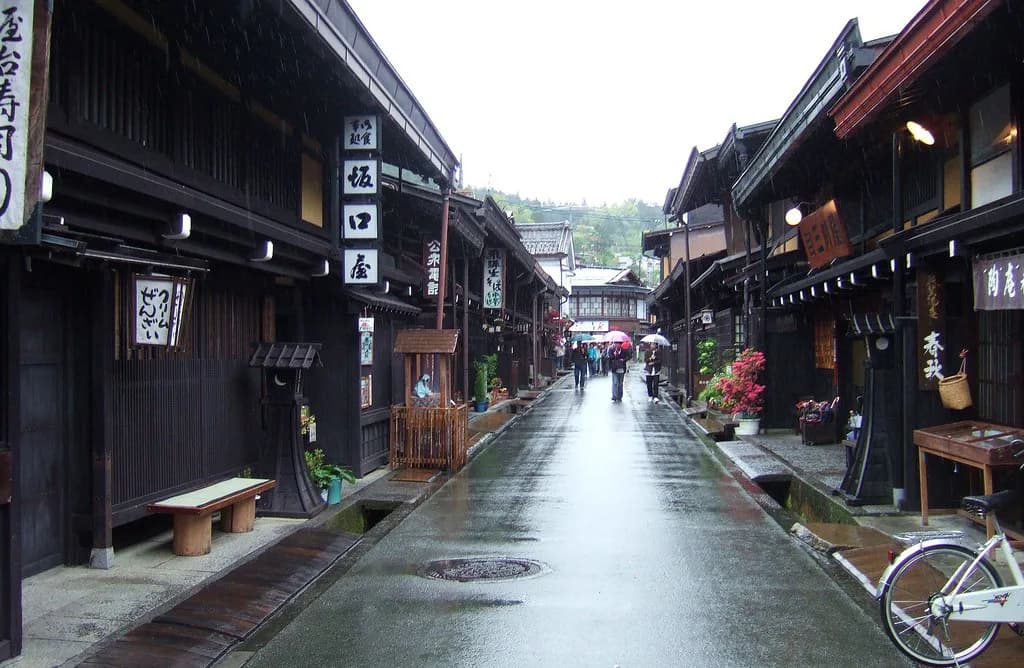
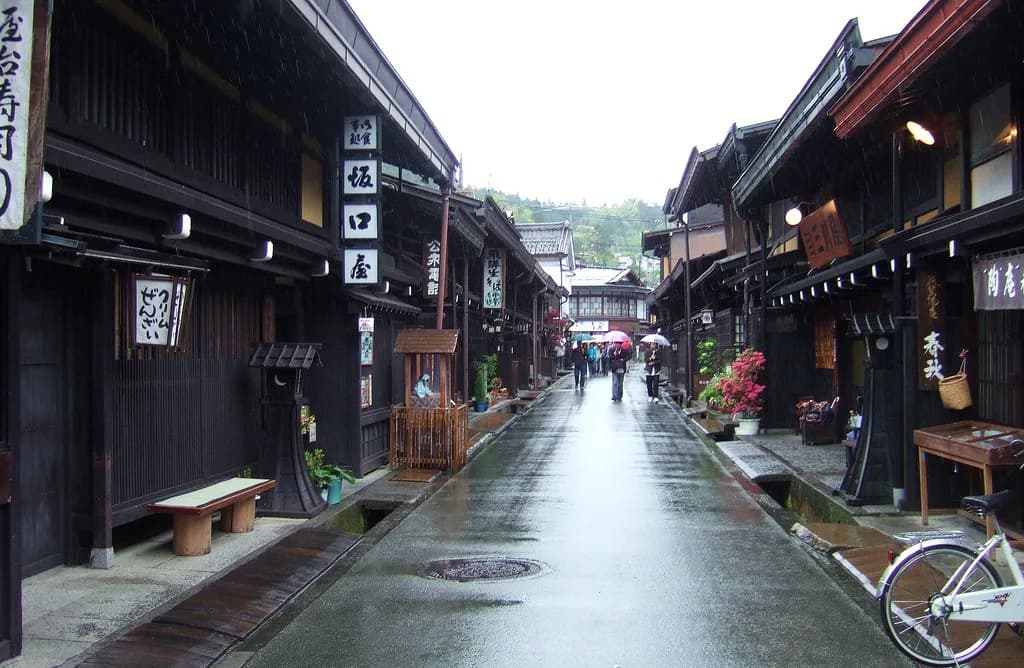
For a mild afternoon around Sanmachi Suji, a light base layer with the shell tied around your waist is often enough, with the midlayer kept in your bag for the evening. After dark the temperature drops quickly, and wooden merchant streets hold the cold. Planning one outfit that moves between these states beats carrying three separate changes of clothes.
If your visit overlaps the mid-October Takayama Matsuri, expect to stand outdoors in a crowd for hours in cold evening air. The float procession is an evening event in an open street, so the layering system applies directly, with the warmest version of your outfit for that night. Comfortable shoes matter here as much as layers, because you may be on your feet far longer than a normal evening.
Footwear for Uneven Ground and Wet Stone
Takayama rewards comfortable walking shoes with real grip. The Higashiyama temple walk and the paths through Shiroyama park are uneven and can be wet or mossy, and the old-town lanes are paved but often slick after rain. A waterproof upper helps on damp mornings, and a sole with tread handles stone steps better than a smooth fashion sole.
Shoe removal is a local custom rather than a dress code, and it shapes what you pack. The Takayama Jinya and many preserved merchant houses are entered in socks across cold wooden floors, and the gassho-zukuri farmhouses at Shirakawa-go work the same way. Slip-on or easy-lace shoes save daily irritation, and thick socks make those cold floors far more pleasant.
If a day trip takes you up into higher ground, the same tread that handles temple steps handles a rougher trail. Pair the shoes with a warm layer for the elevation gain, because temperatures drop as you climb. Check the operator's own guidance for any specific day-trip requirements before you go.
Socks and the Sock-Entry Building Constraint
Warm socks are the most underrated item for an October trip to Takayama. Repeated shoe removal in unheated buildings means your feet are on display and on cold surfaces several times a day. Bring more pairs than you think you need, choose ones without holes, and consider a thicker wool or wool-blend option for the coldest floors.
Socks also solve the gap between a mild afternoon and a cold evening without adding another layer to your bag. A fresh pair at the end of the day is a small comfort that costs almost no space. If your trip continues deeper into autumn, heavier socks are one of the first things to upgrade.
Standing Outdoors at the Mid-October Festival
The Takayama Matsuri takes place in mid-October as well as mid-April, and the autumn edition means evening hours in cold open air. Floats move through the streets and the crowd stands rather than sits, so warmth has to come from what you wear, not from a sheltered seat. The layered outfit you build for the morning market is the same outfit you want after dark, just with everything back on.
Comfortable shoes outweigh any style consideration on festival night, since you may stand and walk for hours on uneven paving. Keep valuables close in a crowd and check the organiser's published information for any rules about viewing areas or access. Attendance details belong to the organiser, so verify them through official channels rather than secondhand posts.
A Compact October Packing List by Trip Length
For a three-day trip, pack two base layers, one fleece or light down midlayer, one packable rain shell, one light scarf, two pairs of walking shoes at most, three or four pairs of warm socks, and one pair of comfortable trousers you can layer over. That covers the crisp morning, the mild afternoon, and the cold evening without a second bag.
For a week, add one more base layer, one more pair of socks, and a second midlayer option if the forecast turns colder toward the end of the month. A small bottle of laundry soap lets you refresh socks and base layers in a hotel sink, which is usually easier than packing for seven separate days. Nothing here is compulsory, it is simply one combination that works for most October trips.
What to Leave Behind
Leave smooth-soled fashion shoes at home. They struggle on wet stone, mossy temple paths, and the uneven lanes around Sanmachi Suji, and they are awkward to remove at sock-entry buildings. If you want one smart pair, make it one you can walk in for an entire day.
Leave the bulky winter coat too, unless your trip runs deep into November or heads for higher ground. The layer system does the same job with far less weight, and you can add a warmer shell if the forecast demands it. Also leave behind umbrellas that turn inside out in mountain wind, and pack a rain shell instead.
Do not bring a packed itinerary of every hour in the day. Mornings are the best window for markets and the old town, and a flexible plan lets you swap an outdoor block for an indoor one when rain arrives. That flexibility is more useful than any extra item in your bag.
Higher Ground and the Start of Autumn Color
Color begins earlier in the higher areas around the Hida Basin than in the valley floor, so a day trip that gains elevation puts you into a cooler, more autumnal version of the same season. Pack the midlayer even if the town feels mild that morning, because the difference on higher ground is noticeable. This is the main reason a light insulated layer earns its place in the bag.
Peak color timing shifts year to year, so check the published autumn color information for the specific area you plan to visit rather than trusting a date you read months earlier. A warm layer, grippy shoes, and a rain shell cover most of what a higher-elevation day asks of you. Keep the rest of the outfit simple so you can move between town and hills without repacking.
Before You Leave: Check the Actual Forecast
Check a reliable forecast for Takayama in the days before departure, and treat any seasonal average as background rather than a packing decision. Historical tendencies tell you that mornings run cool and nights colder, but the specific week could be milder or sharper than the average suggests. Pack for the week you are actually travelling.
As a rule of thumb for the last half of October, a medium-weight jacket or coat becomes more useful as daytime highs drop, and comfortable walking shoes remain essential across the whole month. Use that as a prompt to check the numbers yourself, not as a fixed figure to pack around. Operator and tourism board pages publish the current details when the weather is unsettled.
Answer-First Summary
Three items do most of the work for October in Takayama: a light insulated midlayer, a packable rain shell, and comfortable walking shoes with grip. Add warm socks for sock-entry buildings and a scarf for the cold morning market, then adjust the rest to the forecast. Together they cover crisp mornings, mild afternoons, and genuinely cold evenings.
More packing guides for Takayama
Frequently Asked Questions
Does it rain in Takayama in October?
October can bring wet days, and mountain weather shifts quickly, so a packable rain shell is a better bet than a large umbrella that catches wind. Rather than relying on a seasonal average, check the current forecast for Takayama in the days before you travel and plan an indoor block for any wet stretch.
Can I wear sneakers in Takayama in October?
Sneakers work if they have real tread and handle damp stone, since the Higashiyama temple paths and Shiroyama park paths are uneven and often wet. Smooth-soled fashion sneakers are the wrong choice. Whatever you bring, make sure it is easy to slip off, because several buildings are entered in socks.
How many layers do I need for Takayama in October?
Three layers usually cover the day: a moisture-managing base, a light insulated midlayer such as a fleece or light down jacket, and a packable windproof and waterproof shell. Add a scarf for cold mornings along the Miyagawa river and take the midlayer off when the afternoon warms up, putting it back on for the evening.
What should a woman pack for October in Japan?
The same layer-based approach works well: a couple of breathable long-sleeve tops, a light insulated midlayer, a packable rain shell, warm socks, and comfortable walking shoes. A light scarf and one pair of trousers you can layer over give you flexibility for cooler evenings. Adapt the quantities to your trip length and the forecast rather than buying a new wardrobe.
Is Takayama worth visiting in October?
October is a strong month for Takayama, with crisp mornings, mild days, early color in the higher ground, and the mid-October festival bringing the town to life. The trade-off is colder evenings and more variable weather, which the layer system and grippy shoes handle. Check current conditions and event information before you finalise your dates.
Sources
Free: The Ultimate Packing Cheat Sheet
A carry-on capsule wardrobe, the complete packing checklist, layering made simple, and what to wear by season — one printable page you'll use on every trip.
You might also like

Continue reading
More guides you'll find useful


