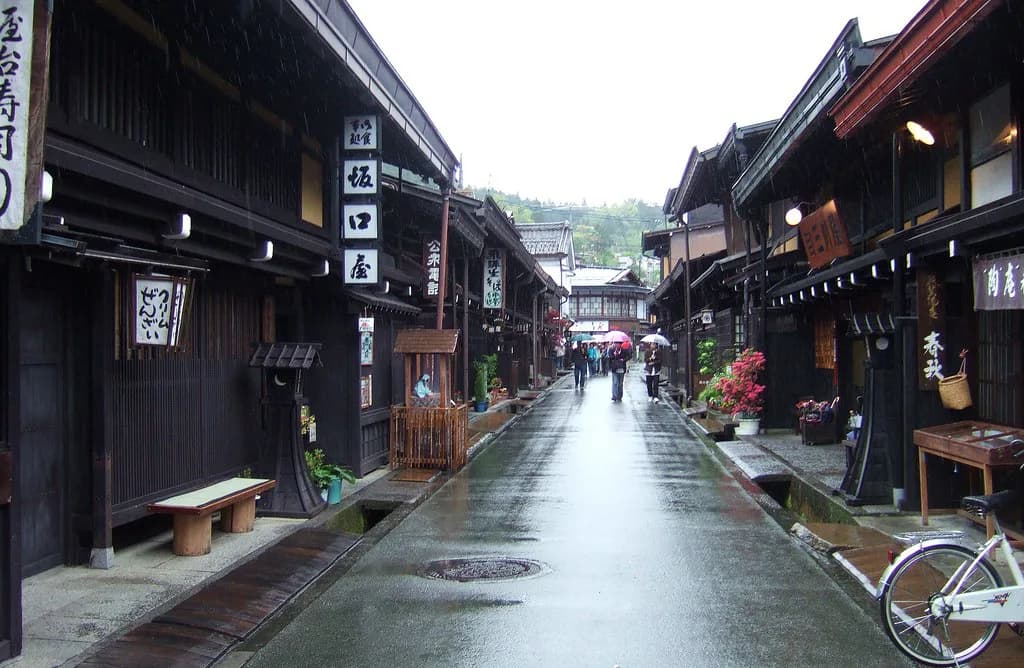
What to Wear in Takayama in Summer: Hida Basin Packing Guide
Pack breathable layers, one warm evening layer, sun protection, a rain shell and grippy shoes for Takayama in summer, plus a four-day bag and what to leave behind.
On this page
Takayama sits on a plateau in the Hida Basin, and summer packing here is a different exercise from packing for Tokyo or Osaka. The town's climate guidance describes a plateau climate with low humidity and a wide gap between daytime and nighttime temperatures, so what you wear at midday in the old town is not what you want on a cooler evening or at higher elevation.
That contrast drives every decision below: breathable fabric for humid walking, one compact warm layer, sun protection, a rain shell that doubles as a windproof layer, and footwear with grip for damp stone and uneven paths.
These are editorial suggestions for comfort rather than required dress, and they are not a description of what all residents wear. Adapt them to your own itinerary, trip length and how much time you plan to spend above the basin floor.
Why Takayama Summer Packing Is Not Tokyo Packing
Takayama's climate differs from Japan's big cities. The town's own climate page notes that it sits on a plateau about 573 metres above sea level and that conditions resemble the Tohoku region and Hokkaido more than the metropolitan centres, being cool at night even in summer with low overall humidity.
Summer in Takayama is generally described as arriving around mid-July and running to the end of August, and as less humid than Tokyo or Osaka. That makes the town a comfortable base, but it does not make it cool: daytime temperatures in that season have been reported as reaching as high as 36°C and dipping to around 24°C at the low end.
Elevation is the second variable. Day trips into the surrounding mountains, which form part of the Japanese Alps, sit cooler and windier than the basin, so a light fleece or hooded mid-layer that feels pointless at noon becomes the most useful thing in your bag by evening or at altitude. Treat the temperature figures as historical seasonal tendencies that shape your packing, not as a forecast for your dates.
July and August Are Two Different Packing Moments
Takayama's rainy season runs until mid-July, and the town's climate guidance pairs July and August with rain gear for exactly that reason. If you travel in the first half of July, treat a rain shell as a core item rather than a backup and expect wet afternoons.
From late July the pattern shifts toward intense daytime heat and strong ultraviolet, and the same official guidance recommends a hat and sunglasses from that point on. August packing therefore leans harder on sun protection and breathable fabric, while the rain shell moves from the top of your day bag to the bottom rather than out of the bag entirely.
Keep the warm layer in both months. The cooler evenings and the cooler air at higher elevation do not take August off just because the days are hotter.
Fabrics and Clothing for Humid Daytime Walking
Thin, breathable tops in quick-drying synthetic or lightweight natural fibres handle humid town walking far better than anything heavyweight. Broad Japan packing guidance recommends light, breathable clothing for the country's humid summer and points to high-tech breathability fabrics for staying cool and dry.
For Takayama specifically, quick-drying matters more than insulation during the day. A second lightweight shirt for the afternoon is more useful than one thick garment, because a damp shirt from a humid morning walk dries slowly against your skin. Packing two thin tops you can rotate beats packing one substantial one you cannot.
For lower-body comfort, choose light trousers or a skirt that dry quickly and do not cling. Heavy denim is the classic mistake here: it holds moisture, dries slowly and stays uncomfortable for hours after a shower passes.
The One Warm Layer You Still Need
Takayama's climate guidance notes that it is cool at night even in summer and that overall the temperature difference between daytime and nighttime is wide. A light fleece, a packable hooded mid-layer or a thin down jacket solves both the town evening and the higher-elevation day without adding much weight. Choose one, not two, so your bag stays honest.
The same layer does double duty if you take a ropeway or a bus into the mountains, where wind and altitude make a summer afternoon feel considerably cooler than the basin. It also covers the gap on an evening in the old town when the air moves off the river, and a hood adds useful wind protection without a separate hat.
Because the warm layer is doing two jobs, keep it compact enough to live at the top of your day bag rather than in your suitcase. If it only works when you plan around it, it will stay behind on the day you actually need it.
Sun Protection as a Packing Category
Strong ultraviolet is a genuine feature of Takayama's late summer. The town's climate guidance recommends a hat and sunglasses for July and August, and descriptions of summer in Takayama note that the mountain sun can be harsh for visitors who spend most of the day outside.
Treat sunscreen, a brimmed hat, sunglasses and lip balm as one group rather than four separate afterthoughts, and keep sunscreen in the outer pocket of your day bag so reapplying after a sweaty walk or a midday break does not mean unpacking. A brimmed hat handles strong light better than a cap on the open stretches between the old town and the temple hillside.
Sunglasses earn their place even on a hazy day, since glare off wet stone and water is more of an issue here than on a dense city street. Japan packing guidance groups sunscreen, lip balm, sunglasses and a hat together as the standard summer sun kit, which is a reasonable checklist to copy.
Rain Gear: Shell, Umbrella or Both
A compact rain shell is the item that earns its space most clearly in a Takayama summer bag. The town's climate guidance pairs July and August with rain gear because the rainy season runs to mid-July and summer afternoons can still deliver a sudden shower. A shell packs smaller than a bulky raincoat and layers over whatever you are already wearing.
The shell-versus-umbrella choice is a genuine trade-off. An umbrella keeps your head and shoulders drier in steady rain and is convenient in town, but it is awkward on a windy ridge or when you need both hands on a railing. A shell wins on higher routes, ropeway days and anywhere wind is a factor; an umbrella wins on flat town errands.
If you only take one, take the shell, because it also works as a windproof layer on a cool mountain afternoon. If you take both, a small folding umbrella adds little weight and covers the town days your shell would leave you damp from the waist down.
Footwear for Wet Stone, Town Streets and Damp Trails
Comfortable waterproof walking shoes with real grip are the practical answer for Takayama in summer. The Higashiyama temple walk and the paths through Shiroyama Park are uneven and often wet, and rain leaves stone and wooden surfaces slick.
If your plans include riverside walks, forested trails or a stop where shoes come off at the door, prioritise a shoe that slips on and off easily as well as one with grip. Laces get tedious fast in a town where you may enter and leave several buildings in an afternoon.
Leave the smooth-soled fashion trainers and the sandals with no heel strap at home. Neither handles wet, uneven ground, and both make a long walking day worse. One versatile pair plus a light backup is plenty for a summer trip.
Insect Repellent and After-Bite Relief
Insect repellent matters most near rivers, forested trails and rural stops, and it is worth carrying from July onward. Japan packing guidance recommends insect repellent and after-bite treatment for summer, specifically flagging rural and forested areas where mosquitoes are more active.
Riverside walking in the evening and forested stretches on a day trip are the two situations where you will notice the difference. If you plan a riverside stop, pack the repellent in your day bag rather than leaving it at your accommodation.
After-bite relief is light and worth one small tube, but it is not a substitute for repellent. Buy locally if you would rather not carry liquids, and check the label for how often reapplication is advised.
A Four-Day Summer Packing Example
For a four-day summer trip, three thin breathable tops, two pairs of quick-drying trousers or skirts and one warm mid-layer cover the clothing side. Add underlayers, socks and sleepwear in quantities that match how often you want to do laundry. Everything here fits in a carry-on-sized bag if the fabric choices are right.
On the gear side, pack one compact rain shell, a brimmed hat, sunglasses, sunscreen, lip balm, insect repellent and one pair of grippy waterproof walking shoes. A small folding umbrella is optional and depends on how much time you plan to spend in town versus on trails. The shell and warm layer are the two items doing the most work across different conditions.
If you are considering a yukata for a summer evening, renting locally is the lower-commitment option, since it takes up space and needs accessories to wear well. Takayama has rental shops, and their own pages list current availability and language support, so check what each shop offers rather than packing one from home.
What to Leave Behind
Leave the heavy denim at home. It holds moisture, dries slowly and gives you nothing in return on a humid walking day. The same applies to cotton-only layers that stay damp against the skin once you sweat through them.
Leave the second bulky rain layer behind. One compact shell covers both rain and wind, and a heavy coat is dead weight in a Takayama summer bag. Similarly, extra shoes you will not wear are the fastest way to turn a light bag into a heavy one, and one versatile pair plus a light backup is enough.
Skip anything built for winter conditions. Traction devices, insulated snow boots and heavy wool base layers belong to a different season and only crowd out the gear this trip actually needs.
Check the Forecast Before You Leave
Historical seasonal tendencies are a planning input, not a prediction for your dates, so check the current forecast for Takayama and for any higher-elevation day trip before you finish packing. Summer weather in the region can be unsettled, which is one more reason to treat the shell and warm layer as fixed items and the rest as adjustable.
If the forecast shows a cooler, wetter pattern than typical, add a slightly thicker mid-layer and plan on the shell being worn rather than carried. If it shows a hot, dry week, keep the warm layer for evenings and altitude but shift your day kit further toward sun protection and breathable fabric.
Asking about specific mountaintop conditions or a particular route is better done locally than guessed at from a general packing guide. Local tourist information and operator pages publish the details that matter for a specific day.
Plan Your Visit
Takayama summer packing comes down to a short list of decisions: breathable fabric for humid town days, one compact warm layer for cooler evenings and higher elevations, sun protection as a category rather than an afterthought, a rain shell that also blocks wind, and grippy waterproof footwear that handles damp stone and trails.
Build the bag around those five decisions, keep it to one versatile pair of shoes, and leave the second rain layer and the denim behind. Before you go, check the forecast for the town and for any higher-elevation day you have planned, then adjust the warm layer and shell up or down rather than rebuilding the whole list.
Frequently Asked Questions
What should I wear in Takayama in July?
Build around thin, breathable tops and quick-drying trousers or skirts for humid daytime walking, then add one compact warm layer for the evening. Early July falls within the rainy season, so treat a rain shell as a core item rather than a backup. A brimmed hat, sunglasses and sunscreen cover the strong daytime sun.
Is Takayama cooler than Tokyo or Osaka in summer?
Takayama is generally described as less humid than the big metropolitan areas and mild for a Japanese summer, while still getting properly hot during the day. Takayama's climate page notes cool nights and a wide day-to-night temperature swing. Treat this as a historical seasonal pattern and check the forecast for your own travel dates.
Do I need a warm layer in Takayama in August?
Yes, one compact warm layer is worth carrying in August. Cool nights are noted for Takayama even in summer, and a day trip to higher elevation will feel noticeably cooler than the basin. A light fleece or packable hooded mid-layer covers both the town evening and the mountain day without much weight.
What shoes should I pack for Takayama in summer?
Comfortable waterproof walking shoes with real grip are the practical choice. Town paths, the temple hillside and the park trails are uneven and stay damp after rain, so smooth-soled fashion trainers and strappy sandals are poor fits. If you expect to enter buildings where shoes come off, prioritise a pair that slips on and off easily.
Do I need rain gear in Takayama in July?
Yes. The rainy season runs until mid-July, and Takayama's climate guidance pairs July and August with rain gear. A compact rain shell is the most versatile single item because it also blocks wind on higher routes, while a small folding umbrella is optional and mainly useful for town days.
Is insect repellent necessary in Takayama in summer?
It is worth carrying if your plans include riverside walks, forested trails or rural stops. General Japan packing guidance recommends insect repellent and after-bite treatment for summer, especially in rural and forested areas. One small bottle is usually enough for a short trip.
How much sun protection do I need for Takayama's mountain sun?
Enough for a full day outdoors: sunscreen, a brimmed hat, sunglasses and lip balm. Late July and August bring strong ultraviolet and strong mountain sun, and reapplying sunscreen after a sweaty walk matters more than any single high-SPF product. Keep it in your day bag so reapplying is easy.
Should I pack a yukata or rent one in Takayama?
Renting locally is usually the lower-commitment option, since a yukata takes up space and needs specific accessories to wear well. Takayama has rental shops, and their own pages list current availability and language support. Check what each shop offers before you rely on a same-day fitting rather than packing one from home.
Sources
Free: The Ultimate Packing Cheat Sheet
A carry-on capsule wardrobe, the complete packing checklist, layering made simple, and what to wear by season — one printable page you'll use on every trip.
You might also like

Continue reading
More guides you'll find useful