What to Wear in Takayama in Winter: Packing Guide
Plan what to wear in Takayama in winter with a three-layer system, insulated waterproof boots, and cold-weather accessories for snow, ice, and sock-entry buildings.
On this page
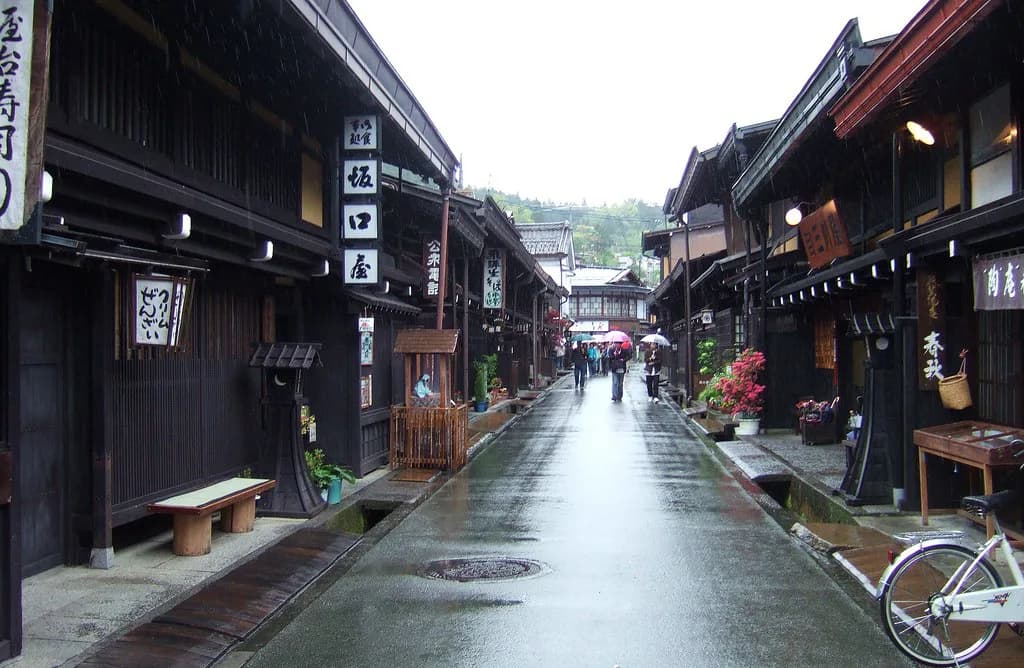
Takayama sits on a highland basin in the Hida region of Gifu Prefecture, ringed by the Japanese Alps, so its winter feels closer to Japan's northern regions than to the big cities many travelers use as a baseline. That difference matters for packing: you are not dressing for a quick dash between heated shops, but for long stretches outdoors in snow and on compacted ice. The town's preserved buildings, morning markets, and heritage sites reward time outside, which means your outfit has to work while you stand still, walk slowly, and repeatedly step indoors.
This guide focuses on the clothing and footwear decisions that make a December to February visit comfortable, rather than on sightseeing. It walks through the layering system, footwear grip and removal, accessories, a short-trip packing example, what to leave behind, and the checks worth making before departure. If you want a broader seasonal overview first, the Takayama packing list covers the full year of clothing decisions.
Winter Conditions to Expect: Snow, Ice, and Cold Mornings
Plan for a genuine mountain winter rather than a mild urban one. The Hida Takayama climate guidance recommends a warm coat or jacket plus gloves and hats for December through February, and specifically advises non-skid boots for walking safely on snow and ice. Treat that as the floor, not the ceiling: the town clears main streets, but side lanes and temple approaches compact into ice, and mornings are often the coldest part of the day, which is also when the markets are at their best.
Winter in Takayama runs December into March, with heavy snow and nights well below freezing. Historical tendencies like these are useful for choosing what to pack, but they are not a forecast for your dates. Check a current local forecast in the final days before departure so you can adjust the number of midlayers and decide whether to add slip-on traction.
The Layering System: Base, Mid, and Shell
Build three layers rather than relying on one heavy coat. A thermal or merino base layer manages moisture next to the skin, a fleece or light down midlayer provides insulation, and a windproof waterproof shell blocks snow and wind. This combination covers the range from cold streets to heated cafes and shops, where a single bulky coat would leave you sweating and then chilled when you step back outside.
Merino wool works particularly well for the base layer because it resists odor across several wears, which matters when you are moving between warm interiors and freezing streets all day. Two merino tops can carry you through a week of winter touring without constant laundry. If you prefer synthetics, choose a moisture-wicking fabric rather than cotton, which holds dampness and makes you feel colder once you stop moving.
Your shell should be roomy enough to fit over the midlayer without compressing it, because squashed insulation traps less warm air. A packable rain jacket doubles as a windproof outer layer on dry but windy days and adds protection when snow turns to wet slush. If your November trip involves an early taste of snow, the What to wear in Takayama in November guide explains how to adapt the same layering approach for the shoulder season.
Footwear: Insulated, Waterproof, and Easy to Remove
Boots are the single most important winter purchase for this destination. Look for insulated, waterproof uppers with a deep lugged sole, because the main hazard is not fresh powder but compacted ice on side lanes, temple paths, and market approaches. The official seasonal advice for the area specifically recommends non-skid boots, so treat grip as a baseline requirement rather than an upgrade.
Easy removal is the underrated feature. Many preserved merchant houses, the Jinya government house, temples, and gassho-style buildings are entered in socks, and many are unheated or barely heated. Boots with long laces become a daily irritation when you are taking them on and off several times a day, so consider side zips, pull-on styles, or a quick lace system. This is also why warm socks matter: you will spend real time standing on cold wooden or stone floors in them.
For icy stretches, slip-on traction devices that pack down small can be an editorial suggestion worth carrying if your dates fall in the coldest weeks. They are not mandatory, and many visitors manage with well-lugged boots alone. If you are unsure whether you need them, check recent local conditions and the forecast rather than assuming every day will be icy.
Accessories: Gloves, Hat, Scarf, and Socks
Accessories do more than style here, because exposed skin loses heat fastest when you are standing still. Pack gloves or mittens that stay warm when damp, a beanie or knit hat that covers your ears, and a scarf or neck gaiter that can be pulled up over your face in wind. A neck gaiter is more versatile than a long scarf because it will not trail into snow or catch on doorways.
Bring more socks than you think you need, ideally merino wool or another warm, moisture-managing fiber. Because so many buildings are entered in socks, your feet are on display and on cold surfaces repeatedly, and a dry pair mid-day is a genuine comfort upgrade. If your hands get cold easily, thin liner gloves under mittens let you use a phone or camera without exposing bare skin.
Disposable heat packs are widely available in Japan and are useful for standing at the morning markets or waiting outdoors for transport. You can buy them on arrival at convenience stores and drugstores rather than packing them. Use them against clothing, not directly on skin, and check the packaging for how long each type is designed to last.
What to Wear at Outdoor Heritage Sites
Outdoor heritage sites such as Hida Folk Village and the Higashiyama temple walk involve more standing, slower walking, and more time in cold air than the town center. Wear your full system, including hat and gloves, and keep the midlayer accessible so you can add it when you stop moving. Uneven stone steps and paths can ice over in winter, so footwear grip matters even more than it does on the flat streets.
Expect to remove your shoes at many preserved buildings, and expect those interiors to be cold. Warm socks become practical equipment rather than an afterthought, and boots you can slip off quickly will make the visit smoother. If you are also considering a mountain day trip, What to pack for Kamikochi day trip from Takayama explains how to adjust layers and footwear for higher, colder terrain.
At the morning markets along the Miyagawa River and in front of the Jinya, you will be standing in one spot in cold air for a while. Heat packs in your pockets, a hat that covers your ears, and a scarf you can adjust will make the difference between lingering and hurrying back to warmth. The same applies when you pause to photograph wooden merchant streets before the crowds arrive.
A Three-Day Winter Packing Example
For a compact three-day winter trip, start with two merino or thermal base layers, one fleece or light down midlayer, and one windproof waterproof shell. Add one pair of insulated waterproof boots, two to three pairs of warm socks, gloves, a beanie, and a scarf or neck gaiter. Pack one pair of trousers or thermal leggings for under a skirt or dress if that suits your style, plus a change of indoor-friendly socks for buildings entered in socks.
This list assumes you will rewear outer layers and rotate base layers and socks. If you run cold or plan long outdoor stretches, add a second midlayer rather than a heavier coat, because it gives you more flexibility across changing indoor and outdoor temperatures. If you run warm, one midlayer plus a good shell is usually enough for moving around town.
Leave room for small purchases, since local markets sell pickles, crackers, and crafts that make good gifts. A reusable tote folds flat and handles market finds without requiring a plastic bag. If you are continuing to a different season later in your trip, a summer-focused guide like What to wear in Takayama in summer can help you plan what to send ahead or leave behind.
What to Leave Behind
Leave smooth-soled fashion boots and dress shoes at home, because they offer no grip on packed snow and ice. Leave thin cotton socks as your only option, since they hold moisture and get cold quickly when damp. An umbrella is usually less useful than a hood or shell in falling snow, and it is awkward when you are also managing gloves and a camera.
Do not overpack bulky items you will only wear indoors, such as heavy sweaters for every day, when a single midlayer plus a shell handles most conditions. If you are day-tripping from a larger city, consider leaving a large suitcase behind and traveling with a smaller bag. This is where a broader Hida Basin packing strategy can help you decide what stays at your base.
Before You Go: Check the Forecast and Transport
Check a current local forecast for Takayama in the final days before departure, and pay attention to overnight lows as well as daytime highs. A cold snap may call for an extra midlayer or a heavier sock, while a milder spell may let you travel lighter. Historical climate patterns are useful for planning, but they cannot tell you what your specific dates will bring.
Heavy snow can disrupt mountain roads and regional bus services, so build some slack into your itinerary rather than booking tight onward connections. Check the operator's current information before you travel, and keep an eye on updates during your stay. If your plans include a village or mountain day trip, confirm the return service times rather than assuming the last bus will run as scheduled.
If snow is forecast during your visit, consider whether slip-on traction devices are worth packing, and make sure your boots are waterproof rather than merely water-resistant. A packable rain shell also earns its place when snow turns wet. Finally, confirm that your accommodation has somewhere to dry wet boots and gloves overnight, or plan to dry them near a heater.
Plan Your Winter Layers for Takayama
The core of a Takayama winter wardrobe is a genuine three-layer system, insulated waterproof boots with real grip, and accessories that protect your hands, head, and neck. Add warm socks you are happy to be seen in, because you will be in them indoors, and keep your midlayer easy to reach so you can adjust when you move between streets and heated interiors.
Verify conditions close to departure rather than relying on seasonal averages, and check transport information if snow is expected. For a broader packing framework that covers every season, use the Takayama packing list as your starting point and adjust the winter-specific items above to match your own cold tolerance and plans.
Frequently Asked Questions
Do I need snow boots for Takayama in winter?
Insulated, waterproof boots with a deep lugged sole are the most practical choice for December through February. The official seasonal advice for the area recommends non-skid boots for walking safely on snow and ice, and side lanes and temple paths can be icier than the cleared main streets. Easy removal is also useful because many preserved buildings are entered in socks.
What layers should I wear in Takayama in December, January, and February?
Use a thermal or merino base layer, a fleece or light down midlayer, and a windproof waterproof shell. This combination lets you adjust between cold streets and heated interiors without carrying one bulky coat. Add gloves, a hat, and a scarf or neck gaiter, and consider a second midlayer if you run cold.
How do I stay warm at the Takayama morning markets?
You will be standing still outdoors, which feels colder than walking, so wear your full layering system plus hat, gloves, and a scarf. Disposable heat packs in your pockets help, and you can buy them locally at convenience stores rather than packing them. Warm socks and insulated boots also matter because the ground can be cold and icy.
What should I wear to visit Hida Folk Village in winter?
Wear your warmest practical combination: base layer, midlayer, shell, hat, gloves, and insulated boots with grip. Expect to remove your shoes at some buildings, so warm socks are important, and expect interiors to be cold. Paths can be uneven and icy, so footwear traction matters more than it does on flat town streets.
Do I need traction devices for icy streets in Takayama?
Slip-on traction devices are an editorial suggestion for icy conditions, not a mandatory requirement. Many visitors manage with well-lugged waterproof boots alone, but if your dates fall in the coldest weeks or you plan to walk temple paths and outdoor heritage sites, they can add confidence. Check recent local conditions and the forecast before deciding.
What should I leave behind when packing for Takayama in winter?
Leave smooth-soled fashion boots, thin cotton socks as your only option, and an umbrella if you already carry a hooded shell. Avoid overpacking multiple bulky sweaters when one midlayer plus a shell handles most conditions. If you are day-tripping from a larger city, a smaller bag is easier than a large suitcase.
Sources
Free: The Ultimate Packing Cheat Sheet
A carry-on capsule wardrobe, the complete packing checklist, layering made simple, and what to wear by season — one printable page you'll use on every trip.
You might also like

Continue reading
More guides you'll find useful