Takayama Packing List: Layers, Footwear and Rain Gear
Plan a Takayama packing list around cool mornings, warm afternoons, sloped lanes and sock-entry buildings, with layers, grippy shoes and compact rain gear.
On this page
Takayama weather month by month
Typical conditions from 30 years of daily weather data — use it to see how much to pack for the month you are travelling.
| Month | High / low | Days with rain | Days with snow | Afternoon humidity | Daylight |
|---|---|---|---|---|---|
| January | 1° / -6°C (35° / 21°F) | 7 in 10 days | 7 in 10 days | 55% | 9.8 h |
| February | 2° / -6°C (36° / 22°F) | 6 in 10 days | 6 in 10 days | 53% | 10.7 h |
| March | 6° / -2°C (43° / 28°F) | 6 in 10 days | 4 in 10 days | 52% | 11.7 h |
| April | 13° / 3°C (55° / 37°F) | 5 in 10 days | 1 in 10 days | 50% | 12.9 h |
| May | 19° / 9°C (66° / 48°F) | 5 in 10 days | Rare | 51% | 13.9 h |
| June | 22° / 14°C (72° / 57°F) | 6 in 10 days | Rare | 59% | 14.4 h |
| July | 26° / 18°C (78° / 65°F) | 7 in 10 days | Rare | 64% | 14.2 h |
| August | 27° / 19°C (80° / 66°F) | 6 in 10 days | Rare | 61% | 13.4 h |
| September | 23° / 15°C (74° / 60°F) | 5 in 10 days | Rare | 61% | 12.2 h |
| October | 18° / 9°C (64° / 48°F) | 5 in 10 days | Rare | 57% | 11.1 h |
| November | 11° / 3°C (52° / 37°F) | 5 in 10 days | 2 in 10 days | 55% | 10 h |
| December | 5° / -3°C (40° / 26°F) | 7 in 10 days | 5 in 10 days | 56% | 9.6 h |
Travelling on specific dates? Use our What to Wear Planner for the weather, outfits and a packing list for your exact days in Takayama.
Averages for 1991-2020, modelled from Copernicus ERA5-Land and ERA5 reanalysis via Open-Meteo open data (CC BY 4.0), adjusted to Takayama's elevation. Modelled afternoon highs can read 1–2°C below airport weather-station records.
Takayama sits on a plateau in the Hida Basin, and the surrounding Japanese Alps give the town a mountain climate rather than a big-city one. That shapes almost every packing decision here: nights and mornings run cool even in summer, winter brings snow and ice, and the gap between daytime and nighttime temperatures is wide through the year.
This is a packing strategy, not a sightseeing plan. It covers a layering system for cool mornings and warm afternoons, footwear for sloped and cobbled old-town streets, socks for buildings you enter after removing your shoes, compact rain and wind protection, seasonal clothing, a compact pack for a four-to-five day trip, and what to leave at home.
Why packing for Takayama differs from Tokyo or Kyoto
According to the town's climate guidance, Takayama's climate is similar to the Tohoku Region and Hokkaido, it is cool at night even in summer, and the temperature difference between daytime and nighttime is wide with low humidity. An outfit that suits a mild city afternoon can leave you cold on a Takayama evening, so two thin layers usually earn their place more than one heavy coat.
Because the town sits low in the basin while day trips climb much higher, a town forecast will not describe the mountain roads you might travel. Treat Takayama as your base and the surrounding terrain as a separate packing problem.
How to build layers for cool mornings and warm afternoons
A Takayama layering system works from the skin out: a thin base layer, a mid layer such as a fleece or light sweater, and a windproof or water-resistant shell over the top. You add or remove the mid layer as the day warms and cool down again after sundown.
The shell does triple duty, cutting wind on a cool morning, shedding rain on a wet afternoon and blocking snow in winter. Choose one with a hood and a fabric you can fold into a day bag rather than a bulky coat you carry all day.
The town's own seasonal clothing advice notes that April and May are warm in the daytime but cold in the morning and evening, with a thin coat or jacket handy, and that September is hot by day but colder morning and evening, so something warm to put on helps. Both point to the same packing decision: thin layers plus one light outer layer rather than a single heavy garment.
Footwear for sloped, cobbled and wet ground in the old town
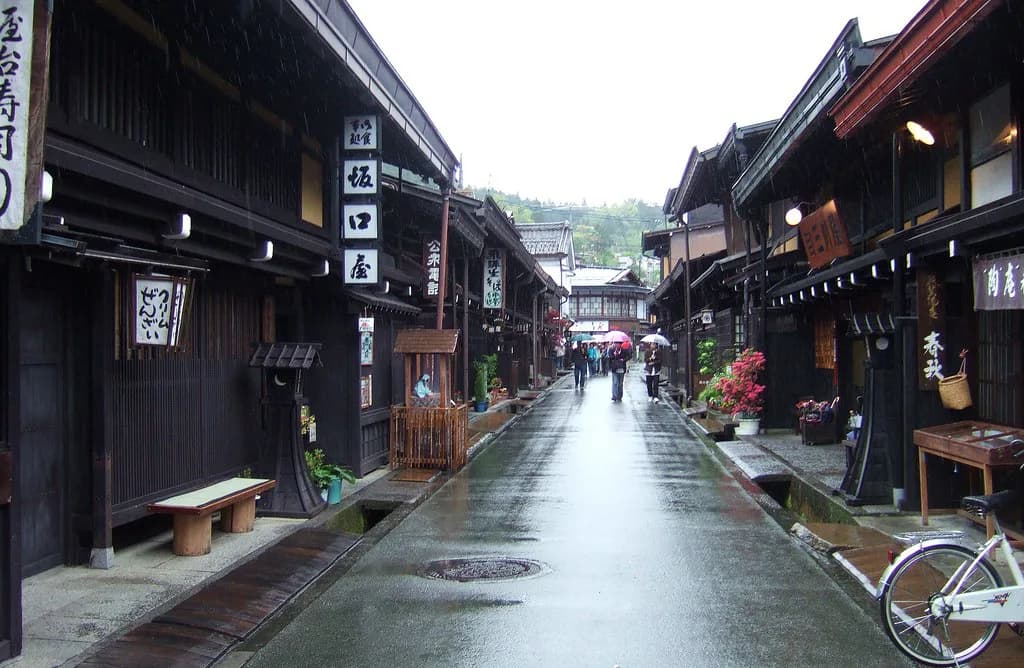
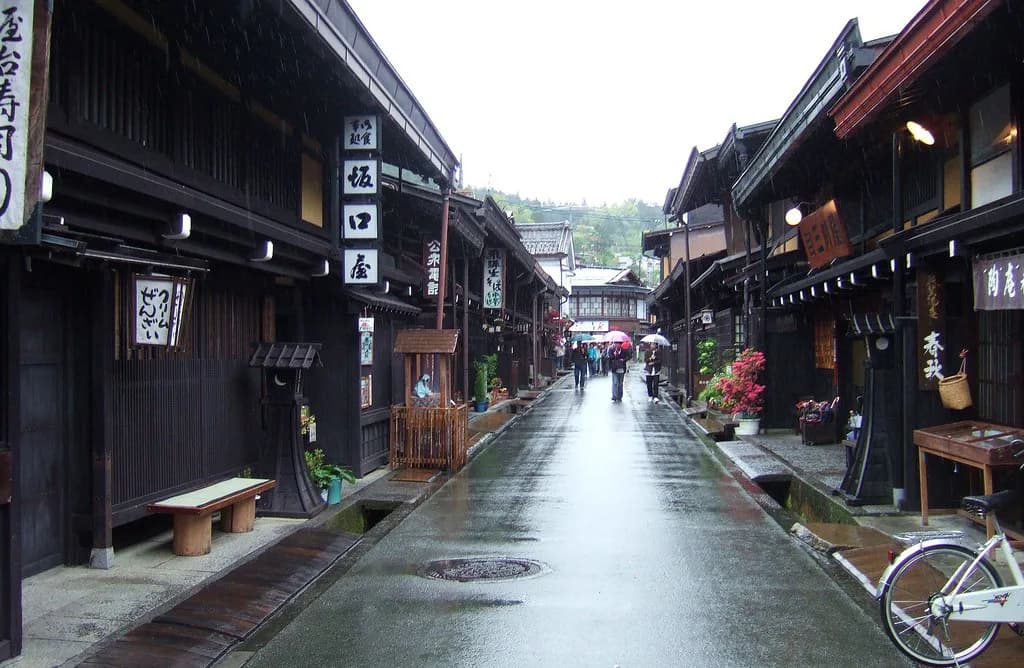
Old-town lanes here are sloped and uneven, and the Higashiyama temple paths and park trails are often wet or mossy. A rubber-soled walking shoe with a grippy tread gives more security on polished stone than the flat sole of a fashion sneaker.
The second requirement is speed of removal. Because you take shoes off in preserved houses, temples and some restaurants, a slip-on or low-lace shoe saves time at every doorway and turns a tiring day into an easy one.
Socks and small kit for repeated shoe removal
As the town's guidance sets out, Takayama's coldest months call for a warm coat or jacket plus gloves and hats, and non-skid boots for walking on snow and ice.
Old wooden floors are cold, and socks stay on display each time you step out of your shoes. Wool-blend socks warm your feet and resist odour between washes, so packing more pairs than you think you need keeps you comfortable without doing laundry every other night.
A coin purse matters more than it sounds, because small coins accumulate from buses, lockers and markets. Pair it with an IC card for the transport that accepts one and a reusable bag for market purchases of pickles, rice crackers or local produce.
Compact rain and wind protection for shoulder seasons and summer
The town's guidance notes that the rainy season begins in the middle of June and continues until mid-July, when rain gear will be handy, and that September can bring typhoons and unpredictable weather. Plan for wet days in the same trip as dry ones.
A packable rain jacket or a compact umbrella both work, though a jacket keeps your hands free for walking and a small umbrella can be awkward in wind. Whichever you choose, add a dry bag or plastic sleeve for your phone and a spare pair of socks for the day a puddle wins.
Winter packing: insulated footwear, traction and wool base layers
Winter brings snow and ice, and the town guide suggests a warm coat or jacket, gloves and a hat, plus non-skid boots so you can walk safely on snow and ice. The practical version is insulated, water-resistant footwear with a lugged sole and a design you can slip on and off easily, since you will still be removing them at doorways.
Packable traction devices are worth considering for icy lanes and temple approaches, and they take up almost no room. They are a suggestion rather than a requirement, so match them to conditions and add a windproof shell over wool base layers.
For month-specific winter choices, see what to wear in Takayama in winter, which expands on base layers, hats and gloves without repeating this list.
Buy everyday consumables such as hand warmers on arrival rather than packing them from home, since convenience stores and pharmacies stock them. Keep the space in your bag for clothing that is harder to replace.
Spring and autumn packing: a warm layer over thin clothing
Spring and autumn are the seasons when you dress for two temperatures in one day. The town guide recommends a thin coat or jacket for April and May, and it notes that October can be warm during the day but windy, so a coat or jacket is needed more often.
Pack gloves and a hat for the colder weeks, especially if you plan to be outdoors early at the markets or out on an evening walk. They weigh little and can stay at the bottom of your bag until the cool sets in. For late autumn specifics, the November page breaks down choices for that month.
Summer packing: thin clothing plus one warm layer for evenings
Summer days can be warm with strong sun, and the town guide advises a hat and sunglasses because ultraviolet rays are strong from late July. Pack thin, breathable clothing for daytime and one warm layer for evenings, since nights stay cool even in summer.
Rain gear stays useful through the season, and a compact umbrella can double for sun and showers. For a finer month-by-month breakdown of summer clothing, what to wear in Takayama in summer goes deeper without repeating this overview.
A compact packing example for four to five days
For four to five days, build around two or three thin tops, one mid layer, one windproof and water-resistant shell, two bottoms or one pair of trousers plus a skirt or dress, and one warm evening layer in a shoulder season. Add three or four pairs of wool-blend socks, underwear for the trip length, a hat and gloves if the season calls for them, and one pair of shoes you can walk in and remove quickly.
To stretch the same pack to a week, add one base layer and one pair of socks rather than doubling everything, and plan one laundry stop. A shorter pack with a wash in the middle is easier to carry on buses and through small rooms than a large suitcase packed for every scenario.
Pack for lowland town days and nearby mountain excursions
Town days call for a light day bag, cash for markets and small shops, and shoes suited to paved lanes and wooden floors. Mountain excursion days call for the same base layers plus a warmer mid layer, a windproof shell and footwear with more grip, because terrain and weather change as you climb.
Buses and mountain roads can be delayed or disrupted, particularly in snow, so keep essentials in a small pack you would be happy to carry for a few extra hours. A reusable bag and a compact rain layer also help when a day trip turns wetter than expected.
If your wider Japan trip includes other climate zones, the Hakodate packing list is a useful comparison for a cool maritime city, and the Hiroshima packing list covers a warmer city-and-island itinerary.
What to leave behind
Leave smooth-soled boots and fashion shoes at home, because they give little grip on sloped, wet or icy ground. Leave the single heavy coat outside deep winter, since layered thin clothing handles the temperature swings more flexibly.
Leave the oversized suitcase if you are moving between towns, because small rooms and station lockers fill quickly and a large case becomes a burden. Leave the winter umbrella, which does little in falling snow, and leave the tight schedule that assumes buses and roads will always run on time.
Before you leave: a quick forecast check
Check the forecast for the Hida region in the days before departure, and look at both the town and the higher terrain if your plans include a mountain day trip. Historical seasonal tendencies tell you what to pack in broad terms; the current forecast tells you which layers to keep in your day bag.
Confirm any transport or facility details you are relying on through the operator or the local tourism office, since schedules and snow conditions change. Then pack the layers, the grip and the socks, and adjust the rest to the conditions you find on arrival.
Plan Your Visit
Takayama rewards a pack built around layers, grip and quick shoe removal rather than one heavy outfit. Thin base layers, a mid layer and a windproof shell cover cool mornings, warm afternoons and cool evenings across most of the year, while a warm coat, gloves and a hat complete the winter version.
Check the Hida forecast before you leave, keep the list short enough to carry on a bus, and adjust the layers for the season you are actually travelling in. That is the whole strategy: a few versatile pieces that work in town and on the mountain roads nearby.
More packing guides for Japan
- What to Pack for a Kamikochi Day Trip from Takayama
- What to Pack for Onsen and Sento in Takayama
- What to Wear in Takayama in April: Spring Packing Guide
- What to Wear in Takayama in November
- What to Wear in Takayama in October: Packing Guide
- What to Wear in Takayama in Summer: Hida Basin Packing Guide
- What to Wear in Takayama in Winter: Packing Guide
- Nagasaki Packing List: What to Wear and Bring Year-Round
- Kobe Packing Guide: Layers for Harbor Wind and Hill Walks
Frequently Asked Questions
What should I pack for Takayama in winter?
Plan for a warm coat or jacket, gloves, a hat, and insulated, water-resistant footwear with a lugged sole for snow and ice. Add wool base layers, a windproof shell and a few pairs of warm socks. Packable traction devices are a sensible extra for icy lanes and temple paths, though they are a suggestion rather than a requirement.
What shoes should I wear in Takayama?
Choose a shoe with a grippy rubber sole that you can also remove quickly, because old-town lanes are sloped and uneven and you take your shoes off in preserved houses and temples. A slip-on or low-lace design saves time at every doorway. Save smooth-soled fashion shoes for another trip.
Do I need hiking boots in Takayama if I am only staying in town?
For town days, a supportive walking shoe with tread is usually enough. If you plan a mountain excursion or a walk on uneven temple paths, a light hiking shoe or boot gives more grip and ankle support. Match the footwear to the terrain you will actually cover rather than packing for the hardest day.
How should I dress for cool mornings and warm afternoons?
Use three thin layers rather than one heavy garment: a base layer, a mid layer such as a fleece or light sweater, and a windproof shell. Add or remove the mid layer as the day warms and cool down again in the evening. This system adapts to the wide day-to-night temperature swing.
Do I need to bring socks for temples and old houses in Takayama?
Yes, bring more pairs than you think you need. You remove your shoes in many preserved buildings, temples and some restaurants, so socks stay on display and your feet stay on cold wooden floors. Wool-blend socks keep feet warm and resist odour between washes.
What should I pack for a summer trip to Takayama?
Pack thin, breathable clothing for warm days, plus one warm layer for cooler evenings, a sun hat, sunglasses and sunscreen. Rain gear is useful through the rainy season and for afternoon showers. Comfortable closed walking shoes remain the main footwear choice.
How much should I pack for four or five days in Takayama?
Aim for two or three thin tops, one mid layer, a windproof shell, two bottoms, three or four pairs of socks, underwear for the trip length, and one pair of walkable shoes you can remove easily. For a week, add one base layer and one pair of socks and plan a laundry stop rather than packing a second wardrobe.
What should I leave behind when packing for Takayama?
Leave smooth-soled fashion shoes, a single very heavy coat outside winter, an oversized suitcase if you are moving between towns, and a winter umbrella. Also leave the tight schedule that assumes buses and mountain roads will always run on time.
Sources
Free: The Ultimate Packing Cheat Sheet
A carry-on capsule wardrobe, the complete packing checklist, layering made simple, and what to wear by season — one printable page you'll use on every trip.
You might also like


Continue reading
More guides you'll find useful