What to Wear in Whistler in July: Packing for Village Warmth and Alpine Chill
Pack for Whistler in July with quick-dry layers, a rain shell, and grippy trail shoes. Warm village days, a cooler alpine, and cool evenings covered.
On this page
Whistler in July: the weather in numbers
Typical July conditions from 30 years of daily weather data, split into early, mid and late month so you can match them to your travel dates.
| Dates | Early Jul (1–10) | Mid Jul (11–20) | Late Jul (21–31) |
|---|---|---|---|
| Afternoon high | 19°C (67°F) | 21°C (70°F) | 23°C (74°F) |
| Night-time low | 11°C (53°F) | 12°C (54°F) | 14°C (56°F) |
| Feels like (afternoon) | 18°C (64°F) | 20°C (68°F) | 22°C (72°F) |
| Range of afternoon highs | 13–26°C | 15–27°C | 16–30°C |
| Days with rain | 4 in 10 days | 4 in 10 days | 3 in 10 days |
| Afternoon humidity | 48% | 46% | 43% |
| Average wind | 4 km/h | 4 km/h | 4 km/h |
| Daylight | 16 h | 15.8 h | 15.4 h |
What this means for your suitcase
- Warm days: T-shirts and light trousers or skirts, plus one light layer.
- Showers on roughly 4 in 10 days — a packable rain jacket or compact umbrella.
- Day-to-day swings: afternoon highs range from about 15°C to 28°C, so pack for both.
Travelling on specific dates? Use our What to Wear Planner for the weather, outfits and a packing list for your exact days in Whistler.
Averages for 1991-2020, modelled from Copernicus ERA5-Land and ERA5 reanalysis via Open-Meteo open data (CC BY 4.0), adjusted to Whistler's elevation. Modelled afternoon highs can read 1–2°C below airport weather-station records.
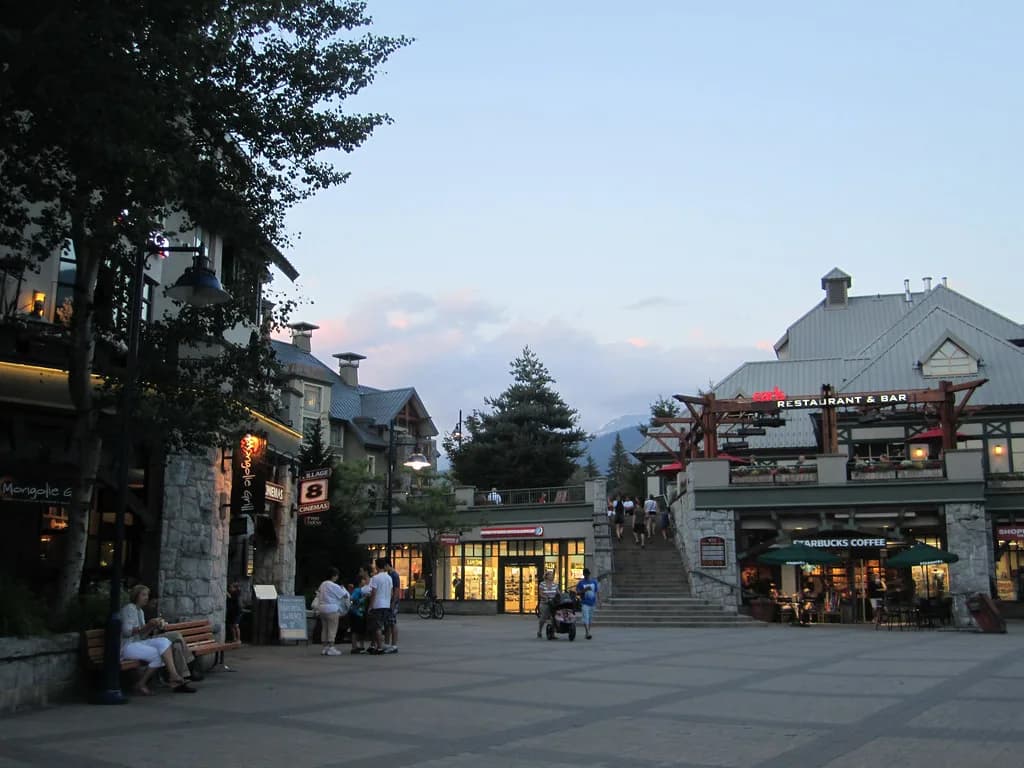
Packing for Whistler in July is less about finding one perfect outfit and more about building a system that shifts as you move between elevation bands. A warm Village morning and a breezier, cooler alpine afternoon can happen on the same day, so the pieces in your bag need to overlap rather than duplicate.
This guide treats the alpine temperature gap as the central packing decision, then moves through layers, footwear, sun and bug protection, a compact trip-length list, and what to leave at home. It covers packing and clothing choices only, so pair it with your activity plans when you decide how much to carry.
Why July packing is a layering problem, not a single outfit
Whistler sits in a mountain valley, and summer temperatures typically drop as you gain elevation, so the clothing that feels right beside Lost Lake may feel thin at the top of Whistler Mountain or Blackcomb Mountain. Tourism Whistler notes that conditions can vary between the village and the alpine even in summer and that it can be around 10°C cooler up top.
The practical answer is a three-piece core: a moisture-wicking base layer, a light midlayer you can remove and stash, and a packable shell that blocks wind and handles a passing shower. That combination covers a walk on the Valley Trail, a gondola ride to the alpine, and a patio dinner without repacking your day bag.
Think in terms of adding and subtracting rather than changing completely. Starting warm in the valley and adding the midlayer and shell as you climb keeps you comfortable with fewer items, and it keeps your carry-on from filling with pieces that only work in one place.
What July typically feels like in Whistler
July is historically one of the warmest months in the Whistler valley. Tourism Whistler lists July and August average highs of 24°C (75°F) with lows around 11°C (52°F), an average daytime range of 21°C to 27°C (70°F to 81°F), and overnight lows rarely below 10°C. Treat those numbers as historical tendencies that describe what July usually brings rather than a forecast for your dates.
Actual daytime warmth, cloud cover, and overnight chill vary year to year, and mountain conditions can shift within a single afternoon. Check the current forecast shortly before you leave rather than locking your layers to a monthly average.
Evenings are the part people underpack for. Accommodation guidance for the area consistently suggests packing pants, a sweater, and a rain jacket because evening temperatures dip and summer can bring the occasional rainy day.
The core three-layer system for a July day
Start with a short-sleeve or light long-sleeve base layer in merino wool or a synthetic quick-dry fabric, because these manage sweat on warm climbs and dry fast if a shower catches you on the trail. Avoid heavy cotton next to your skin for active days, since it holds moisture and cools you down once you stop moving. These principles carry over from the layering habits used in other mountain seasons.
Add a light midlayer such as a thin fleece or a breathable grid fleece that packs small and works alone on a mild evening. Whistler Blackcomb's summer gear guidance emphasizes choosing the right layers because mountain weather shifts unexpectedly, which is exactly the reasoning behind a midlayer you can pull on and off rather than one heavy insulating piece.
Finish with a packable rain shell that doubles as a windbreaker above the treeline, where exposed ridges and lift rides feel cooler than the sheltered Village. A breathable, waterproof shell kept in your day bag handles a brief shower and blocks wind without the bulk of a storm jacket.
Bottoms and footwear for village pavement and rooty trails
For daytime, quick-dry shorts or lightweight hiking pants cover most valley and lower-trail walking, and zip-off pants give you both options from one item. Add a single pair of warmer pants or leggings for evenings, and one pair of shorts for lake afternoons rather than a separate outfit for each day.
Footwear matters more than most people expect on this trip. Grippy trail runners or sturdy walking shoes handle the mix of paved Village lanes, the Valley Trail, and rooty forest paths far better than winter boots. None of that is a formal rule, but it is a useful trade-off: one versatile, supportive shoe beats two specialized pairs you will only wear once.
Pack breathable socks you can rotate, and give wet shoes time to dry overnight rather than wearing damp footwear the next morning. The Village is pedestrianized and easy to walk, so a comfortable walking shoe for the evening is worth the small extra space it takes.
Alpine day versus village day: swapping pieces above the treeline
On a lift-accessed day, add the midlayer and shell before you board and keep them in your pack rather than your accommodation, because the temperature difference shows up quickly once you leave the valley floor. Long pants are the safer choice for alpine trails, where exposed sections feel cooler and breezier than the Village.
Back in the Village, strip back to the base layer or a light top and swap trail runners for sandals or casual shoes if you are heading to a patio. Because Whistler Village is car-free and compact, you can leave the day pack at your accommodation and walk out for dinner with just a light layer for the evening cooldown.
If your trip combines city time before the mountains, a single packing approach for Whistler and Vancouver lets the same quick-dry layers, shell, and walking shoes cover both stops, saving space for the pieces that are unique to each.
Sun and bug protection for forest trails and exposed alpine
Sun exposure is stronger than the valley temperature suggests, especially on open alpine trails and long lift rides, so a brimmed hat, sunglasses, and sunscreen belong in the bag every day. A lightweight long-sleeve sun layer is a smart alternative to reapplying sunscreen constantly, and it doubles as light insect coverage where trails run through forest. Whistler Blackcomb's gear recommendations include quick-dry and UV-protective products, which reflects how much of the day is spent outdoors in summer.
Bugs are a practical annoyance on shaded, forested sections rather than a guaranteed problem everywhere, so treat repellent or a light long-sleeve layer as an optional but useful addition to the day bag. Reports of biting insects are a reasonable prompt to pack something small for wooded stretches.
A compact insect repellent, a small tube of sunscreen, and a lip balm fit in a side pocket without adding weight. If you are sensitive to bites, cover ankles and wrists on forest trails where the canopy keeps things shaded and damp.
Packable extras that earn their space
Swimwear is worth the tiny amount of space it takes, because July is the month people use the glacier-fed lakes around Whistler, including Alta Lake and Lost Lake, as well as hotel pools and hot tubs. Add a quick-dry towel or a small microfibre towel if your accommodation does not supply one, and a dry bag or plastic pouch for a wet swimsuit on the way back.
A reusable water bottle is the other item that pays for itself, and Tourism Whistler encourages refilling with local tap water rather than buying bottled water. That advice is also a light packing decision: one bottle replaces a steady stream of single-use purchases and keeps your day bag lighter over a long trip.
Sample packing list for a two-to-three-day trip
For a two-to-three-day summer trip in a carry-on, aim for two quick-dry base layers, one light midlayer, one packable rain shell, two pairs of bottoms (one lightweight hiking pant or zip-off, one pair of shorts), one warm evening pant, and one pair of grippy walking or trail shoes. Add three to four pairs of socks and underwear so a wet day does not force laundry, plus one swimsuit and one light top you can wear to dinner.
This quantity works because the layers do the work: the same midlayer covers a cool alpine afternoon and a patio evening, and the shell is the only dedicated weather piece you need. If you are staying longer than three days, add one more base layer and plan a quick sink wash rather than doubling every category.
Pack the shell and midlayer in the top of your bag or in an outside pocket so you can reach them without unpacking. That one small choice makes the alpine transition easy when you decide to ride up on a whim.
What to leave behind
Heavy winter boots and bulky insulated jackets are the classic overpack for July in Whistler, where the valley floor is warm and the alpine gap is handled by layering rather than by one heavy garment. Unless you are planning a specific high-alpine outing with its own gear needs, those items take up most of a carry-on for very little value.
Skip duplicate outfits and specialty clothing for every activity. In practice, one versatile walking shoe, one shell, and two base layers cover more of your trip than a separate set for hiking, sightseeing, and evenings, and they leave room for anything you decide to buy in the Village.
If colder weather than you expect arrives, Whistler has plenty of shops in the Village for last-minute layers, so a gap in your bag is recoverable rather than a reason to overpack at home.
Before you go: check the forecast, then adjust
Look at the current mountain forecast and lift-status pages a day or two before departure, then adjust your layers and footwear for the specific days you plan to hike or ride. Because the alpine can run noticeably cooler than the Village, a forecast that looks warm for the valley floor is not a reason to leave the midlayer at home.
If you are planning lift-accessed days, check whether the alpine trails and gondolas you want are operating and plan around that, rather than packing for conditions that may not match the day you are there. Keeping the shell, midlayer, and walking shoes as non-negotiable items makes those last-minute changes easy.
Plan Your Visit
Whistler in July rewards a light, adaptable bag: quick-dry layers, a packable shell, one pair of grippy walking shoes, and a single warm evening layer will carry you from the Village stroll to an alpine viewpoint and back.
Check the forecast shortly before you leave, then adjust quantities rather than swapping in heavier winter gear. If your trip shifts to cooler months, the packing priorities change substantially, so start from a different page for what to wear in Whistler in December instead of reusing this list.
More packing guides for Whistler
Frequently Asked Questions
What should I wear in Whistler in July during the day?
For the valley, a quick-dry short-sleeve or light long-sleeve top with shorts or lightweight pants is a comfortable daytime start. Carry a light midlayer and a packable rain shell in your day bag, because the alpine is typically cooler than the Village and a short shower can pass through. Comfortable walking or trail shoes handle paved Village lanes and forest paths better than a single specialized pair.
How cold does it get in Whistler in July at night?
July nights in the valley are usually mild, and overnight temperatures generally sit well below the daytime high without reaching winter cold. The bigger factor is what you are doing after dark: a patio dinner needs less than a late walk along the Valley Trail. Pack one warm layer such as a light fleece and long pants for evenings, then check the current forecast before you travel.
Do I need a rain jacket in Whistler in summer?
A packable rain shell is one of the most useful items you can bring, not because July is typically wet, but because it also cuts wind above the treeline and takes almost no space. Accommodation guidance for summer visitors suggests packing pants, a sweater, and a rain jacket for the occasional rainy day and cooler evenings. Treat it as a light wind-and-shower layer rather than storm armor.
What shoes should I pack for Whistler in July?
Grippy trail runners or sturdy walking shoes are the most practical single pair for a July trip, because they work on the pedestrian Village lanes, the Valley Trail, and rooty forest paths. Winter boots are not needed in July, and a second pair of sandals or casual shoes is optional for evenings. If you plan serious alpine hiking, choose a shoe with reliable traction rather than a smooth-soled casual sneaker.
Is it warm enough to swim in Whistler lakes in July?
July is when lake swimming becomes part of many visitors' trips, and the glacier-fed lakes around Whistler are popular for it. Water temperature varies with the season and the specific lake, and it can feel bracing compared with the air temperature, so pack swimwear and a quick-dry towel and decide on the day. Hotel pools and hot tubs are a warmer alternative if the lakes feel too cold.
What should I leave at home when packing for Whistler in July?
Leave heavy winter boots, bulky insulated jackets, and duplicate outfits behind unless you have a specific high-alpine objective that requires them. July in the valley is warm, and the alpine gap is best handled with a midlayer and shell rather than one heavy garment. If you find you need something extra, Whistler Village has shops for last-minute layers.
Sources
Free: The Ultimate Packing Cheat Sheet
A carry-on capsule wardrobe, the complete packing checklist, layering made simple, and what to wear by season — one printable page you'll use on every trip.
You might also like

Continue reading
More guides you'll find useful